Seigniorage: How Inflation Acts as a Hidden Tax on Your Dollars
Key Takeaways
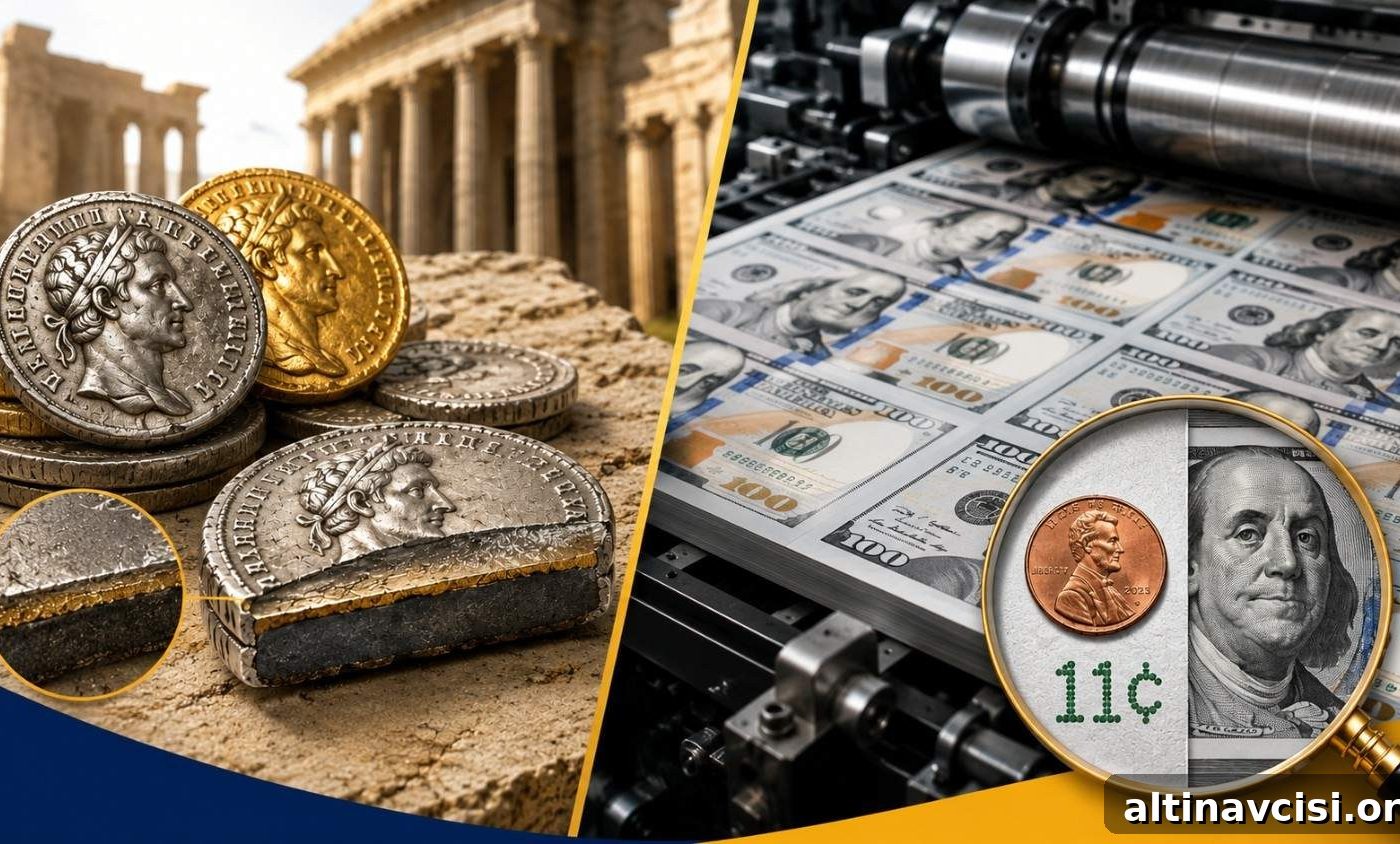
- Seigniorage is the government’s profit from issuing currency — effectively an inflation tax on every dollar you hold. A $100 bill costs roughly 11.3 cents to produce [Federal Reserve, 2025 Currency Budget]; the government captures the difference between production cost and face value.
- Under the classical gold standard (roughly 1880–1914), average annual inflation was close to 0.1% [EconLib, Gold Standard]. Since the end of official dollar‑gold convertibility in 1971, the dollar has lost a large share of its purchasing power [BLS CPI-U].
- The Federal Reserve recorded a large “deferred asset” related to accumulated shortfalls between 2022 and 2025 — an accounting recognition of losses tied to rising rates and its balance sheet mix. The Fed returned to modest profitability in late 2025, but the prior shortfall delays normal remittances to the Treasury for several years [Congressional Research Service; CBO].
- Rome debased the silver denarius from about 98% purity under Augustus to roughly 2–5% by the third century AD [NGC Ancients]. The resulting inflation and monetary breakdown were major contributors to economic dislocation.
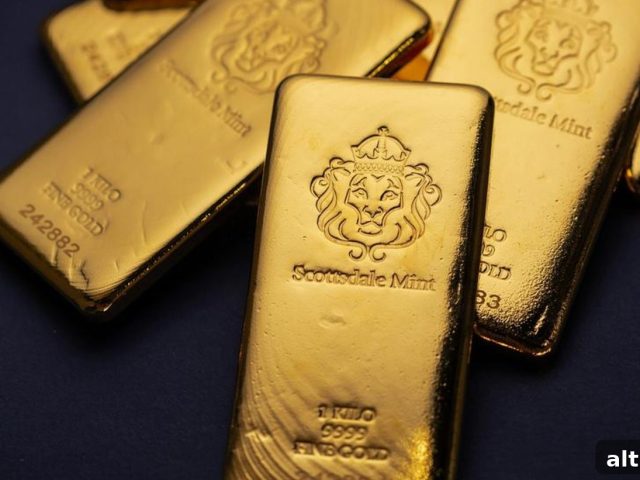
- Physical gold carries no seigniorage. It cannot be printed, debased, or diluted by a government or central bank.
There is a tax embedded in everyday money that you pay without ever seeing a bill. It doesn’t appear on your paycheck or as a line item in your grocery receipt. The entity that collects this “tax” sets the rules that make it legal.
That mechanism is called seigniorage — the profit a government earns from issuing currency whose face value exceeds its cost of production.
What Is Seigniorage?
Seigniorage is simply the gap between a currency’s face value and the cost to produce it. For example, the U.S. Bureau of Engraving and Printing reports that a $100 bill costs roughly $0.113 to produce [Federal Reserve, 2025]. The government spends a small fraction of a dollar to introduce $100 of purchasing power into circulation. That difference — the revenue from issuing money — is seigniorage.
The term traces to the Old French seigneur — a feudal lord who held exclusive coinage rights and profited from minting. The word remains because the underlying economic mechanism endures: whoever controls money issuance captures the economic margin between value and cost.
The Knowledge That Changes Everything

Two essential guides — free. Learn why gold matters and why fiat currencies repeatedly face systemic pressures.
How Does Seigniorage Work in a Modern Fiat System?
Under a gold standard, seigniorage is naturally constrained: governments could profit from minting coins, but they could not create money out of thin air. The monetary base was linked to physical gold, which grows only slowly through mining. That constraint ended on August 15, 1971, when the United States closed the gold window and ended dollar convertibility to gold, effectively terminating Bretton Woods [Federal Reserve History]. The dollar became a pure fiat currency, backed by government authority rather than metal.
Modern seigniorage operates largely through the central bank’s balance sheet. When a central bank creates money to buy government securities, it earns interest on those assets. After expenses, net earnings are typically remitted to the treasury. In recent years the Fed’s balance sheet expanded dramatically — peaking after crisis‑period asset purchases — which changed the dynamics of earnings and remittances.
When the money supply grows faster than real economic output, each unit of currency buys less. That loss in purchasing power is effectively an invisible tax on holders of the currency: no separate legislation, no line item on a receipt, yet real and persistent.
What Happens When Governments Abuse Seigniorage?
History offers clear examples. Rome provides a stark case. The silver denarius was initially a reliable store of value: under Augustus (27 BC–14 AD) it was nearly pure silver. Over time, successive emperors reduced its silver content to finance military campaigns, public works, and court expenditures.
Nero and his successors gradually debased the coin — reducing silver purity and weight while keeping face value the same. Early reductions were small and hard to detect, but they accumulated. By the reign of Septimius Severus the denarius was substantially diluted, and by the 270s it had almost entirely lost silver content. The economy felt the consequences: wages and prices rose, merchants preferred hard assets, barter increased, and the monetary system’s role as a medium of exchange eroded.
In modern economies governments cannot clip coins physically, but they can expand money electronically through bond purchases, reserve creation, and deficit financing. The instruments have changed, but the arithmetic is similar: increasing the supply of a currency relative to goods reduces each unit’s purchasing power.
What Is the Federal Reserve’s Deferred Asset?
Beginning in 2022 the Federal Reserve experienced a period of accounting losses driven by a maturity mismatch: long-duration assets purchased at very low yields and higher‑cost liabilities as interest rates rose. Rather than recognizing an immediate capital loss to government accounts, the Fed recorded a “deferred asset” reflecting the accumulated shortfall between income on its asset portfolio and interest expense on liabilities.
According to public analyses, that deferred asset grew substantially by 2025. As policy rates eased later in 2025 the Fed returned to modest profitability and small remittances resumed. However, the prior accumulated shortfall reduces the amount available to remit to the Treasury for several years, delaying a full restoration of normal remittance levels [Congressional Research Service; CBO].
Over the same period, national debt and interest costs have continued to grow. Interest on public debt is a large and rising fiscal line item; covering it requires taxes, borrowing, or additional money creation — each with different economic consequences.
Why Can’t Gold Be Debased?
Gold is not a government IOU. No central bank can unilaterally create more of the existing stock of gold. Its supply increases only through mining, at modest rates globally, which prevents sudden dilution by policy.
Under the classical gold standard, this physical constraint helped keep inflation minimal. Since official dollar‑gold convertibility ended in 1971, the dollar has lost a large portion of its purchasing power. Over that same period gold’s market price has risen in nominal terms; the underlying metal remained, while the currency used to measure it changed.
Because physical gold has no government-assigned face value and cannot be created by decree, it carries no seigniorage. An ounce of privately held gold is a fixed, undilutable claim on material value.
What Does This Mean for You?
Every dollar in a bank account or as cash is a liability of the issuing central bank — essentially a promise. When the money supply grows faster than the economy, that promise buys less. The cost shows up in higher prices for groceries, housing, and healthcare over time, often outpacing wage gains.
Decisions that affect money supply — central bank policies, reserve interest rates, and balance sheet actions — are typically set by appointed officials and reflected in broad economic trends rather than in a single visible fee. Savers do not directly vote on these policies but feel their cumulative effects in purchasing power.
One practical response is diversification: keep part of your savings in assets that no central authority can dilute. Physical gold, for example, is outside the seigniorage system and has historically preserved purchasing power through multiple monetary regimes. That does not guarantee future performance, but it changes the structural exposure of your portfolio to currency dilution.
Stay On Top of Gold & Silver Prices
Get timely market alerts delivered to your inbox.
People Also Ask
Is seigniorage the same as inflation?
No. Seigniorage is the revenue generated when a government issues money; inflation is the outcome when that money supply grows faster than real output. Modest seigniorage in a growing economy may produce little inflation, but relying on money creation to fund persistent deficits typically leads to rising prices.
How much seigniorage does the U.S. government earn each year?
In typical years, Federal Reserve remittances to the Treasury — a major component of modern seigniorage — have been on the order of tens of billions of dollars annually. From late 2022 through 2025 those remittances dropped sharply as the Fed recorded an accumulated shortfall; small remittances resumed in late 2025, with full normalization projected over subsequent years depending on interest rates and balance sheet evolution.
Why can’t gold be subjected to seigniorage?
Seigniorage requires a currency issuer to set a face value that exceeds production cost. Gold has no government‑assigned face value and cannot be created by fiat. Its supply grows only through mining at relatively modest rates, so an ounce of gold cannot be diluted by policy decisions.
What happened to Rome when it abused seigniorage?
Rome’s denarius was debased over centuries to fund imperial expenses. As silver content fell, inflation rose, trust in coinage declined, merchants and soldiers demanded compensation, and barter became more common. The monetary collapse contributed to broader economic and political instability.
How does holding physical gold protect against seigniorage?
Physical gold lies outside the seigniorage system: it’s not a liability, contains no counterparty risk, and cannot be produced by decree. Historically, gold has been a means to preserve purchasing power across different monetary regimes. Holding it can provide structural diversification against currency dilution.
SOURCES
1. Federal Reserve — How Much Does It Cost to Produce Currency and Coin? (2025 Currency Budget).
2. Federal Reserve History — Nixon Ends Convertibility of U.S. Dollars to Gold (August 1971).
3. Congressional Research Service — Federal Reserve: Policy Issues in the 119th Congress (January 2026).
4. Analyses citing the Congressional Budget Office on remittances and fiscal effects (2025–2026).
5. Foundation for Government Accountability — discussion of reserve interest payments (July 2025).
6. NGC Ancients — studies on Roman silver coinage.
7. EconLib — overview of the gold standard and historical inflation trends.
8. U.S. Treasury Fiscal Data — Debt to the Penny (June 2026).
9. Historical CPI and gold price series.
Disclaimer: This article is informational and not financial or investment advice. Consult a qualified financial adviser before making investment decisions.
You May Also Like:
- Gold Has a 0% Risk Weight and an 85% Funding Penalty. Banks Are Finally Asking Why.
- Deutsche Bank Found Gold’s Price Floor. It’s Not the Buyers You Think.
- 23 Questions to Ask Before Choosing a Gold Storage Provider
- Goldman Just Changed Its Model. Should You Change Yours?
- Gold Is Down 25%. Morgan Stanley Says One Number Unlocks $5,200.
- Solar Cut 19% Silver. The Deficit Widened Anyway.
- Gold Down 26%. Barclays’ $4,791 Target Never Moved.
- Gold Silver Ratio at 64: What It Signals for Silver in 2026
Popular Topics
Picked from the archive
-
01
 Topics
Warsh Says Inflation Too High but Risk Is Fading, Gold Reacts
-
02
Topics
Gold Price Falls to $4,681 as Iran Ceasefire Ends Today
-
03
Topics
Gold Falls After U.S. Wholesale Prices Surge
-
04
Topics
Factory Cost Index Hits 82.1: Why It’s Driving Gold Prices
-
05
Topics
Gold Steadies After 1.8% Drop as Tariffs Raise Inflation Worries
-
06
Topics
February 2026 CPI Report: Inflation Calm Before Oil Shock
-
07
Topics
Why Silver Dropped 3.3% vs Gold’s 1.6%: The Gap Explained
-
08
Topics
CPI 3.3% and GDP Stalling: Is 2026 Stagflation Coming?