Dollar’s Decline: What It Means for Gold and Silver
Key Takeaways
- The U.S. dollar’s share of global foreign exchange reserves has fallen significantly over the past two decades, creating a structural tailwind for gold and silver.
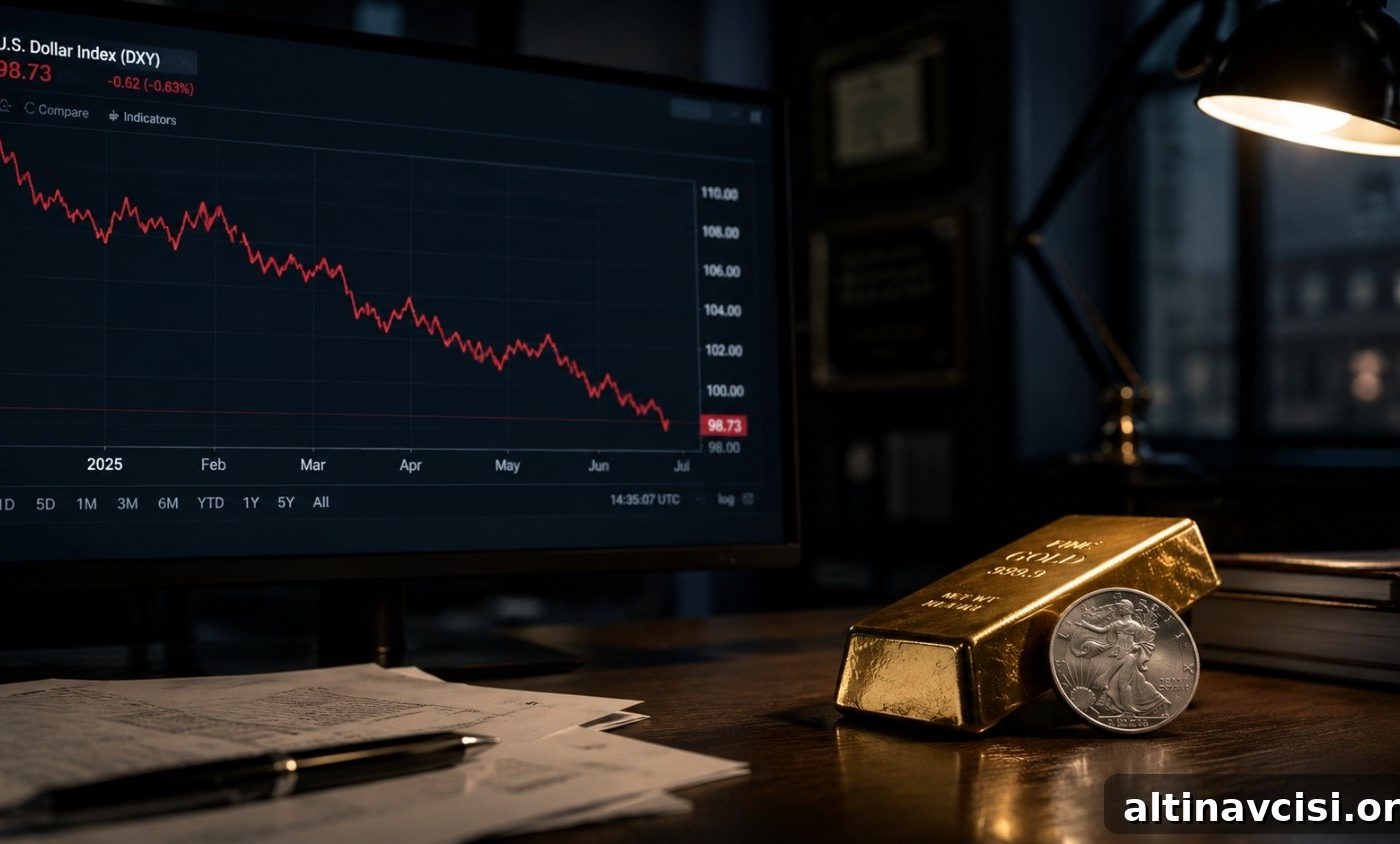
- When the U.S. Dollar Index (DXY) fell about 10–11% in the first half of 2025, gold pushed through successive all-time highs while silver experienced a dramatic surge.
- Central bank purchases of gold reached multi-decade highs in 2022–2024, signaling an institutional shift away from dollar concentration.
Gold and the U.S. dollar have a strong, historically consistent inverse relationship. As the dollar weakens over time, precious metals—especially gold and silver—tend to benefit. With gold trading at very high nominal levels and silver near unprecedented prices following recent market moves, this dynamic is clear: a structurally weaker dollar supports higher metal prices.
Many investors watch inflation, interest rates, and geopolitical events when evaluating precious metals. All of those factors matter, but they commonly operate through a single upstream variable: the dollar. Reading the dollar’s trajectory is the key difference between reacting to price moves and anticipating them.
What Is Dollar Dominance — and How Does It Affect Gold and Silver Prices?
Dollar dominance refers to the U.S. dollar’s outsized role in global finance. Since the postwar Bretton Woods framework, the dollar has been the principal reserve currency, and many international transactions, debts, and commodity prices are set in U.S. dollars. Gold and silver, priced in dollars on global markets, are therefore sensitive to changes in the dollar’s purchasing power and reserve status.
A stronger dollar makes commodities priced in dollars more expensive for holders of other currencies, reducing foreign demand and putting downward pressure on prices. Conversely, a weaker dollar makes dollar-priced goods cheaper abroad and tends to push prices higher. That arithmetic—fewer dollars needed to buy the same real asset when the dollar strengthens, and more dollars when it weakens—explains much of the metals’ historical behavior.
This mechanism operates against a longer-term backdrop: the dollar’s share of global official foreign exchange reserves has fallen from roughly 71% around 2000 to about 57% today. That structural decline in reserve dominance alters the balance of global demand and is an important context for every move in gold and silver prices.
Your Gold Buying Guide Many investors overpay when they buy gold—and again when they sell. This guide explains what to own and why, and how to avoid common mistakes.
Sign up inside the original site to receive a practical guide to buying and storing precious metals.
How Does Dollar Strength Drive Gold and Silver Prices?
The connection is straightforward. Because gold is quoted in U.S. dollars worldwide, a stronger dollar raises the local-currency cost for international buyers and tends to mute demand. When the dollar weakens, gold becomes cheaper in other currencies, demand rises, and prices climb. This relationship is visible across multiple market cycles and remains one of the most reliable macro signals for metal prices.
Market participants often follow the U.S. Dollar Index (DXY), which gauges the dollar versus a basket of major currencies. In the first half of 2025 the DXY declined about 10–11%, a rapid drop that coincided with a sharp rise in gold prices and strong gains for silver. Part of this movement reflects simple purchasing-power math: gold cannot be printed, it carries no counterparty risk, and its nominal dollar price necessarily moves as the dollar’s value changes.
Silver follows the same logic but with greater volatility. Its market is smaller, and because it also has substantial industrial demand, silver often amplifies moves seen in gold both on the upside and the downside.
Why Is the Dollar the #1 Signal — and Not Just One Factor Among Many?
Investors rightly track inflation, real interest rates, central bank policy, and geopolitical risk. Yet nearly every one of those drivers transmits through the dollar. Inflation reduces the dollar’s real value and changes real rates; central bank decisions shift currency and reserve allocations; geopolitical events alter demand patterns across currencies and safe-haven assets. Monitoring the dollar’s strength and reserve status therefore provides a consolidated, early indication of how these forces will affect precious metals.
For example, when inflation outpaces Treasury yields, real interest rates turn negative and cash holdings become less attractive. Gold, which carries no yield but also no currency debasement risk, becomes more competitive as a store of value. Similarly, recent shifts in flight-to-safety behavior show that geopolitical stress sometimes now flows into gold rather than into the dollar, reflecting changing confidence in U.S. fiscal and monetary policy.
What Happens to Silver When Dollar Dominance Fades?
Silver often behaves like a leveraged version of gold. When the dollar weakens, silver typically outperforms because its market is smaller and it has important industrial uses. In market episodes where the dollar declines sharply, silver’s percentage gains have historically exceeded gold’s.
In 2025, silver sharply outperformed as the dollar came under sustained pressure, with large year-over-year gains driven by both the monetary trade (a weakening dollar and rising inflation expectations) and growing industrial demand from renewables, electric vehicles, and electronics. That combination—monetary stimulus hitting a metal with real industrial demand and limited short-term supply flexibility—can produce rapid price moves.
What Are the Long-Term Implications of a Declining Dollar for Gold and Silver?
The long-term perspective is structural. Central banks increased net gold purchases to levels not seen in decades across 2022–2024, signaling a deliberate diversification away from concentrated dollar reserves. Such institutional behavior changes the composition of global reserve assets and creates a persistent tailwind for precious metals over time.
Dedollarization is not a single event but a gradual reallocation of reserves that plays out over years and decades. Even so, when major reserve holders reduce dollar exposure and increase gold allocations, the flow of institutional demand becomes a reliable signal for higher long-term metal prices. The dollar will remain dominant for the foreseeable future, but its reduced share of reserves and the rising institutional demand for alternative assets point to enduring support for gold and silver valuations.
Stay On Top of Gold & Silver Prices
Subscribe for timely market alerts and analysis.
Subscribe on the original site to receive price alerts and insights directly by email.
People Also Ask
How does the U.S. dollar’s dominance affect gold and silver prices?
Because gold and silver are priced in U.S. dollars, a weaker dollar tends to raise demand from foreign buyers and push prices higher, while a stronger dollar can reduce foreign appetite and exert downward pressure.
Why is dollar dominance considered a key signal for precious metals investors?
Nearly every macro factor that moves gold and silver—like inflation, real interest rates, and policy shifts—operates through the dollar first. Monitoring the dollar’s strength, reserve status, and real yield gives investors an early read on potential moves in metal prices.
What happens to gold and silver when the dollar weakens?
A weakening dollar has historically pushed gold and silver higher. For example, when the DXY declined sharply in the first half of 2025, gold rose to new highs and silver delivered especially strong gains during that period.
How do inflation and currency devaluation tie into dollar dominance and precious metals?
Inflation and currency devaluation both reduce the real value of the dollar. When real interest rates are negative—when inflation outpaces bond yields—cash holdings become costly to maintain and investors often move into hard assets like gold and silver, which cannot be inflated away in the same way.
What are the long-term implications of a declining dollar for gold and silver investments?
A sustained decline in the dollar’s reserve share is a structural change. With central banks increasing their gold holdings, the institutional backdrop supports higher long-term prices for precious metals independent of any single economic cycle.
If the Dollar Is the Signal, You Need to Know How to Read It
The dollar’s reserve share has been gradually declining for two decades, while central bank gold purchases surged in recent years. Silver’s recent price action also reflects both monetary and industrial demand drivers. These trends represent a slow, structural shift in global reserve and demand dynamics. For investors, the challenge is translating that information into practical allocation decisions based on risk tolerance and investment horizon.
SOURCES
1. IMF — Currency Composition of Official Foreign Exchange Reserves (COFER).
2. Federal Reserve — The International Role of the U.S. Dollar, 2025 Edition.
3. Industry commentary and market reports on precious metals and reserve flows.
4. World Gold Council — Gold Demand Trends and related research.
Disclaimer: This article is for informational and educational purposes only. It does not constitute investment advice. Consult a qualified financial adviser before making any investment decisions.
You may also like:
- GoldSilver: Home Storage and Vault in One Account
- The Bond King’s Golden Signal: Jeffrey Gundlach on Gold
- Gold Price Outlook May 2026: Why Institutional Forecasters Still See $5,000
- India’s ‘Patriotic’ Gold Buying Freeze: What It Means for Prices
- How to Time Your Gold & Silver Buys Using Technical Analysis
- Silver Jewelry or Bullion? A Buyer’s Guide to the Real Difference
- Gold and Oil Move Opposite Ways. Here’s Why That Matters
- 7 Timeless Warren Buffett Rules for Gold & Silver Investors
Popular Topics
Picked from the archive
-
01
 Topics
Gold Weekly: $9T Swing, Trump Fed Nominee, Record Premiums
-
02
Topics
Silver Price Near $80 as Iran Ceasefire Revives Rate-Cut Hopes
-
03
Topics
Bond King Jeffrey Gundlach’s Gold Signal for Investors
-
04
Topics
Gold-to-Silver Ratio Widens: Why Investors Misread It
-
05
Topics
Swiss Gold Exports Surge to the US Ahead of 39% Tariff
-
06
Topics
Why Central Banks Are Buying Gold Again and What It Means
-
07
Topics
Gold Rally 2026: Why Prices Are Set to Rise
-
08
Topics
Why a Stalled Federal Reserve Matters for Gold Prices