Gold vs Silver: How to Balance Risk and Role in Your Portfolio
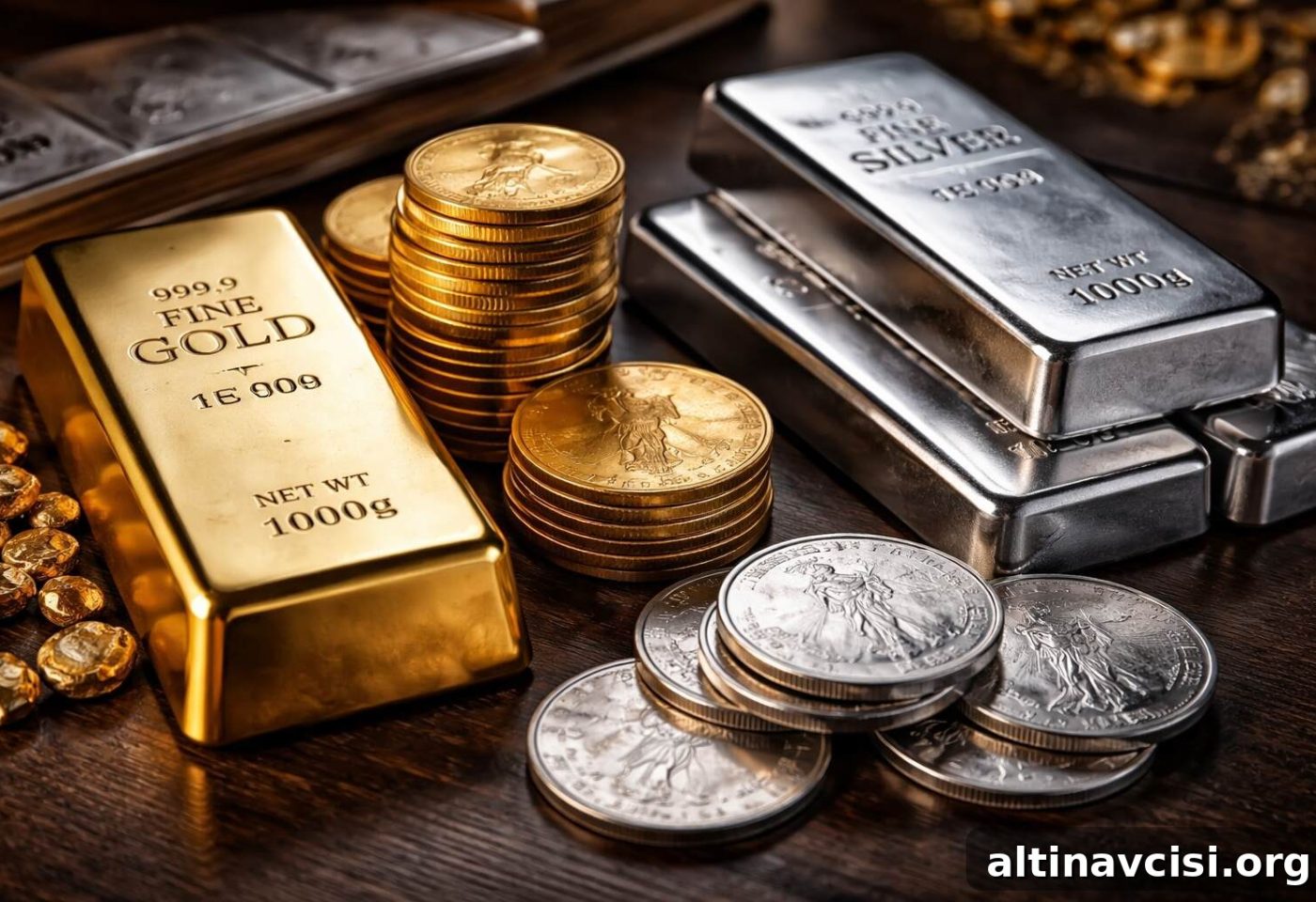
After an extraordinary run for precious metals, investors are no longer only asking whether to own gold or silver — they’re asking how to think about those investments heading into 2026.
The gains in 2025 were dramatic: gold rose by roughly 65%, breaking past $4,500 per ounce, while silver surged about 147%. Both metals outpaced many traditional asset classes over that period.
Strong past returns don’t guarantee what comes next. Markets adjust, conditions change, and with policy uncertainty, rising public debt, and heightened geopolitical risk, the more useful question is not which metal will outperform — it’s what role each should play in a resilient portfolio.
This article does not attempt to forecast prices. Instead it outlines the key differences between gold and silver: their primary uses, the risks they carry, and the ways experienced investors typically think about holding both within a diversified allocation.
The Macro Context: Why Precious Metals Still Matter
Before contrasting the two metals, it helps to step back and consider why precious metals remain part of the investment conversation.
Monetary policy and real interest rates
Gold and silver tend to perform well when real interest rates — nominal interest rates adjusted for inflation — are low or negative. Non-yielding assets become relatively more attractive when alternatives deliver little or negative real return.
Markets currently incorporate expectations for easier monetary policy at some point, but the path is uncertain. If inflation remains stubborn while growth weakens, policymakers may be constrained. Historical environments like stagflation have generally favored gold.
Currency confidence and fiscal imbalances
Large structural fiscal deficits and elevated global debt raise long-term questions about fiat purchasing power for some investors. Gold plays a unique role here: it carries no counterparty risk and functions as a neutral reserve asset, which helps explain why many central banks have added to their gold holdings in recent years. Silver shares some of the same monetary tailwinds, but it does not have the same official reserve status.

The Financial System Isn’t Safer — And You Know It
As risks mount, understand why gold and silver are expected to remain relevant in 2026 and beyond.
What Gold Does Well: Stability and Liquidity
Gold’s main contribution to a portfolio is dependability rather than excitement.
Gold is one of the world’s most liquid assets, trading across global markets around the clock. In episodes of systemic stress — financial crises, currency weakness, or major geopolitical shocks — gold has often preserved value better than many other assets.
Prominent macro investors and institutions have long argued for a meaningful gold allocation, emphasizing its role as a hedge against inflation and currency debasement. That structural rationale has shaped how many institutions and individuals allocate capital to precious metals.
Gold’s risks in 2026
After a multi-year rally, consolidation would be normal. Rising real yields could pressure prices temporarily, and if geopolitical tensions ease significantly, some safe-haven demand could wane. These scenarios could lead to short-term weakness even if gold’s long-term structural case remains intact.
Many banks and analysts publish a range of forecasts for gold; investors should consider those diverse views without treating any single projection as certain.
What Silver Does Well: Industrial Demand and Leverage
Silver plays a dual role: it is both a monetary and an industrial metal. That duality creates both opportunity and complexity.
Silver is a key input in technologies such as solar panels, electric vehicles, semiconductors, and a wide range of electronics. As renewable energy infrastructure and electronic manufacturing expand globally, industrial demand for silver has grown, contributing to recurring supply deficits in recent years.
Because the silver market is much smaller than gold’s, capital flows can move prices more sharply. Investors sometimes call silver “gold with leverage” because, when conditions favor precious metals broadly, silver often amplifies those moves.
Experienced resource investors note that the same small-market dynamics that make silver volatile on the downside also create the potential for outsized gains when sentiment turns positive.
Silver’s risks in 2026
That leverage cuts both ways. A slowdown in global growth or a drop in industrial activity would weaken silver’s demand in a way that gold’s would not. Post-rally speculative positions can unwind quickly in smaller markets, producing sharp price swings.
Silver tends to reward investors who understand and can tolerate volatility. For those who cannot, the metal’s swings may undermine the rationale for exposure.
Analysts publish varying silver forecasts; these are useful reference points but not guarantees.
The Gold-to-Silver Ratio: A Useful (But Imperfect) Lens
The gold-to-silver ratio measures how many ounces of silver it takes to buy one ounce of gold. For much of monetary history this ratio was effectively fixed by governments — commonly around 15:1 or 16:1 — but that changed after the early 1970s when metals began to trade freely.
Over recent years the ratio swung widely. In the decade before the 2025 rally it often sat between roughly 70:1 and 90:1, well above a longer-run average of 40:1 to 60:1. That divergence led many to argue silver was undervalued relative to gold. After silver’s rally, the ratio compressed into the mid-50s, closer to historical norms.
Gold-to-Silver Ratio Over 10 Years
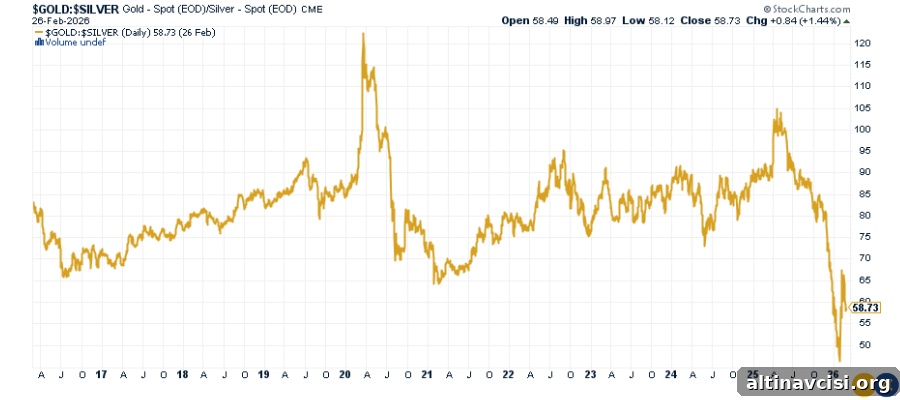
Historically, extreme readings in the ratio have often reverted toward the mean. When the ratio rose above 80–90, silver was frequently the metal that later caught up; when it compressed near 40 or lower, gold tended to reassert relative strength. Traders sometimes use the ratio to inform tactical allocations between the two metals, though it is not a precise timing tool.
What’s different now is the starting point: the ratio sits near a historically normal relationship, so the gold-versus-silver question is less about an obvious arbitrage and more about selecting a risk profile that matches your objectives.
How Many Investors Approach Owning Both
Although the debate is often framed as a binary choice, many seasoned investors hold both metals as complementary positions.
Gold typically anchors the allocation, delivering stability, liquidity, and long-term purchasing-power protection. Silver can act as the growth component of the metals sleeve, offering more upside potential with greater volatility.
A conservative metals allocation might be 70–80% gold and 20–30% silver, while growth-oriented investors could choose a heavier silver weighting. There is no single correct split — the right balance depends on time horizon, risk tolerance, and the role precious metals are intended to play in the broader portfolio.
Dollar-cost averaging is a practical approach for many investors, especially after large multi-year gains. Spreading purchases over time reduces the risk of poorly timed entries.
The Bottom Line
This piece is not a price forecast. No one can know future prices with certainty, and anyone claiming certainty is promoting a product or an opinion rather than delivering a fact.
Both metals have played meaningful roles in investor portfolios across modern financial history. Gold offers stability, deep liquidity, and structural demand from official buyers. Silver brings industrial tailwinds, a smaller market, and higher volatility with the potential for larger percentage moves when conditions favor precious metals broadly.
The smarter framework for thinking about gold and silver in 2026 is to understand what each metal does, be honest about your own risk tolerance, and build a position that can withstand multiple economic scenarios — not just the one you expect to occur.
In an uncertain world, long-term financial security is not built on confident predictions alone; it is built on assets that have preserved purchasing power through many different conditions.
Stay On Top of Gold & Silver Prices
Receive timely market alerts and price updates by email.
People Also Ask
Is gold or silver a better investment in 2026?
There is no single answer — it depends on your objectives. Gold generally suits investors seeking stability and wealth preservation backed by liquidity and steady official demand. Silver often offers greater upside because of its smaller market and industrial uses, but with meaningfully more volatility. Many investors hold both: gold as an anchor and silver for growth exposure.
Why did silver outperform gold so dramatically in 2025?
Silver’s strong gains reflected its dual monetary and industrial roles. Persistent supply deficits, robust industrial demand from solar, semiconductors, and electric-vehicle production, and the metal’s smaller market size all amplified price moves. Silver often lags gold early in a metals bull market and then catches up decisively, which helps explain the pattern seen in 2025.
What is the gold-to-silver ratio telling investors in 2026?
After an extended period well above long-run averages, the ratio compressed back toward the mid-50s, near historical norms. Extreme readings historically tend to mean-revert, which happened as silver rallied. Today’s ratio implies the two metals are in a more typical relationship, so decisions between them are more about risk preference than clear arbitrage.
How much of my portfolio should be in gold and silver?
Allocations vary by goals and risk tolerance. A commonly cited range for total precious-metals exposure is 5%–15% of a portfolio, with the split between gold and silver reflecting comfort with volatility. Conservative allocations tilt toward gold; those seeking higher potential returns may allocate more to silver. Consider consulting a financial advisor for personalized guidance.
What are the biggest risks of investing in silver in 2026?
Key risks include a slowdown in global industrial activity, which would reduce demand, and elevated volatility after a large rally. Smaller commodity markets can reverse quickly, and speculative positions built during an uptrend can unwind sharply. Silver suits investors who accept rapid price movement and understand its drivers.
Disclaimer: This article is for informational purposes only and does not constitute investment advice. Past performance is not indicative of future results. Consult a qualified financial advisor before making investment decisions.
You May Also Like:
- Gold Silver Prices: Short-Term Noise, Long-Term Signal
- Silver Canadian Maple Leaf: Why It’s One of the World’s Top Bullion Coins
- Gold Portfolio Allocation 2026: What Forecasts Mean for Investors
- How Government Debt Affects Gold and Silver
- Gold vs Silver: The Liquidity Difference That Matters
- Silver Price Components: Premium, Spot, and Dealer Markup Explained
Popular Topics
Picked from the archive
-
01
 Topics
Gold Price Could Reach USD 5,000 by 2026: Institutional Forecast
-
02
Topics
Silver Squeeze Pushes Silver Prices Above $51
-
03
Topics
Gold Rises as Bitcoin Slips and Bubble Fears Grow
-
04
Topics
Bessent Urges 1.5% Rate Cut, Boosting Gold Prices
-
05
Topics
Tariff Deadline Fears Push Gold Prices Up as Other Metals Slide
-
06
Topics
Gold Fields Urges Major Miners to Boost Gold Exploration
-
07
Topics
Tech Giants Drive 90% of Earnings Growth Despite Trade War Fears
-
08
Topics
Brazil Threatens Retaliation After Trump Imposes 50% Tariff