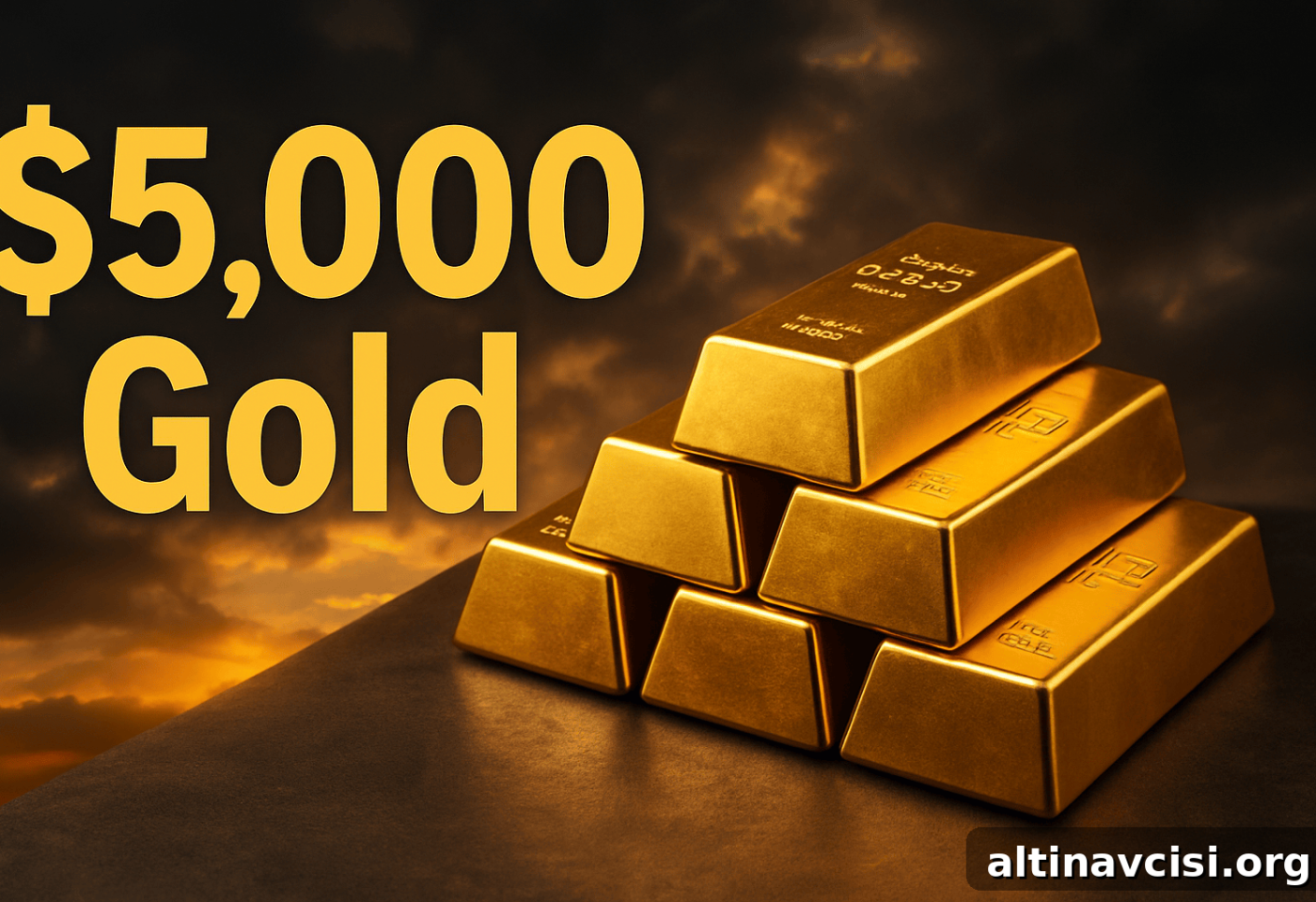
Bank of America Predicts $5,000 Gold Amid Inflation and Fed Cuts
Daily News Nuggets | Today’s top stories for gold and silver investors
October 13th, 2025
Gold and Silver Surge Past Records on Trade Threats and Fed Pivot Hopes
Gold broke through previous record highs on Monday, trading intraday above $4,078 per ounce and settling near $4,068, while silver climbed to roughly $51.70 per ounce. The move reflected a combination of escalating U.S.–China trade tensions and growing market expectations that the Federal Reserve may be forced into aggressive rate cuts. For reporting on price action, see the Reuters coverage here.
Investors are increasingly positioning ahead of policy shifts rather than simply reacting to them. When precious metals begin to anticipate Fed easing before it occurs, that often indicates market participants see central banks constrained by conflicting economic forces. That contention between weaker growth and persistent inflation can amplify demand for safe-haven assets, driving sharper and more sustained moves in gold and silver.
Bank of America Raises Gold Target to $5,000 — Silver Could Hit $65
Bank of America raised its 2026 gold price target to $5,000 per ounce, citing persistent safe-haven demand amid growing macroeconomic uncertainty. The bank also projects silver could test $65 per ounce, with an average forecast near $56.25, while warning that short-term technical pullbacks remain possible. The bank’s revised outlook is summarized in Reuters reporting here.
Major institutional forecasts like this tend to reinforce market momentum. Public upgrades from large financial firms can validate the rally for institutional investors who have been hesitant to increase exposure. That validation can accelerate flows into physical metal holdings and related instruments, contributing to stronger price action even when near-term volatility rises.
Growth Forecast Moderate, But Inflation Refuses to Cooperate
The most recent NABE survey points to modest U.S. GDP growth around 1.8% for 2025, supported in part by business investment, while employment gains are expected to slow significantly—projected at roughly 29,000 jobs per month. At the same time, survey respondents anticipate inflation remaining above 3% through the end of the year. That combination of sluggish growth and sticky inflation was highlighted in coverage available here.
This environment—slow expansion paired with persistent price pressures—is typically favorable for gold. Policymakers face a difficult trade-off: cutting rates risks reigniting inflation, while holding rates tight could stall growth. When central banks appear boxed in with no clear good option, investors often flock to metals as a hedge against policy uncertainty and an erosion of purchasing power.
Fed Minutes Expose Deep Division on Rate Cuts
Recent Federal Reserve minutes reveal significant internal debate over the timing and scale of possible rate cuts. Some officials favor quicker, larger reductions to support growth, while others worry that easing too soon could imperil price stability and financial conditions. Reporting on the minutes and the differing views among policymakers is available here.
Beyond policy direction, it is the lack of consensus that markets often punish most. When Fed communications reflect deep division, uncertainty rises and volatility becomes more likely—conditions that historically have benefited safe-haven assets. Additionally, the recent government shutdown has delayed the release of key economic indicators, complicating the Fed’s ability to make fully informed decisions and increasing market unease.
Government Shutdown Deepens Economic Fog
The federal government shutdown that began on October 1 has led to large-scale furloughs and interruptions in agency operations, including the suspension of certain data collection activities. Estimates of the number of furloughed workers and the broader operational impact were widely reported during the early days of the shutdown; background on the event is available here.
With GDP reports, employment figures and other key metrics delayed or reduced in frequency, both policymakers and investors are operating with less timely information. Reduced transparency and the prospect of policy paralysis increase the appeal of physical assets that act as insurance against systemic risk. In periods when institutional confidence is strained, demand for gold and other safe-haven instruments commonly rises.
Summary: Recent headlines show a convergence of geopolitical risk, divergent central bank views, and domestic political disruption creating an environment that has lifted gold and silver to multiyear highs. While short-term technical volatility is possible, the fundamental backdrop—weak growth expectations, sticky inflation, and policy uncertainty—continues to support interest in precious metals among investors seeking protection and portfolio diversification.
Popular Topics
Picked from the archive
-
01
 Topics
Silver Could Double in 2025 as Dollar Dominance Fades
-
02
Topics
Gold, Silver Gain in Trump-Fed Standoff Over Governor Dismissal
-
03
Topics
Investors Flock to China Gold ETFs as Inflows Hit Record
-
04
Topics
Trump Imposes 25% Tariff on India’s Oil Imports From Russia
-
05
Topics
Record Gold Floods Shanghai as Traders Exploit Futures Arbitrage
-
06
Topics
Gold Prices Hold as Fed Faces Tough Interest Rate Decision
-
07
Topics
Geopolitics, Copper Tariffs and OPEC Plus Drive Oil Prices
-
08
Topics
RBA Warns Inflation Risks Remain Despite Current Calm