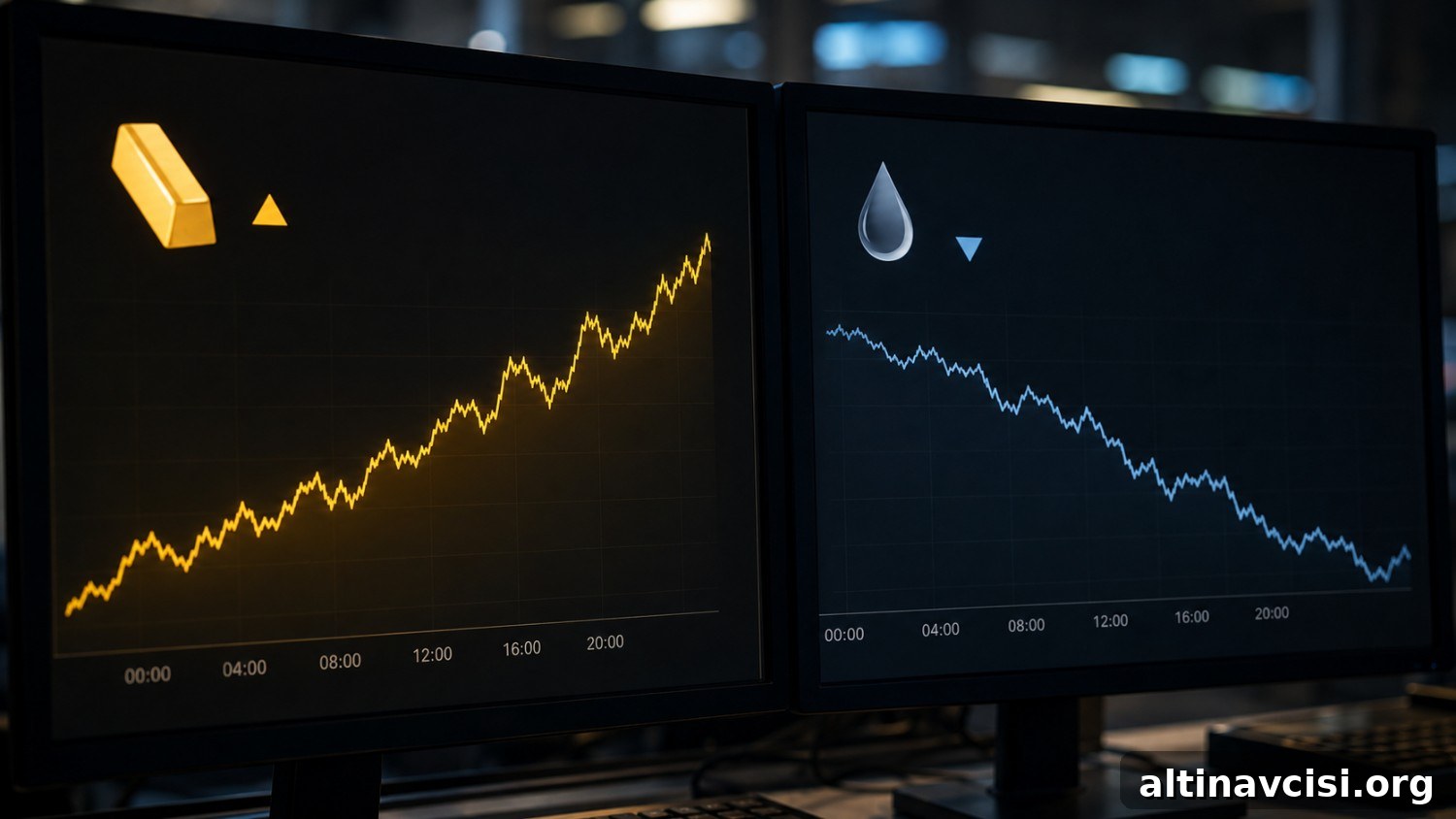
In a few hours, the U.S. Treasury will attempt to reshape global commerce with Iran. Markets are responding already. Gold, silver, and oil are moving — and not in the straightforward way you might expect from news about tougher sanctions.
Oil is falling while gold is rising. Both moves are reactions to the same set of headlines, and their divergence is the key development for traders and investors to understand.
What Are Gold and Silver Prices Doing Today?
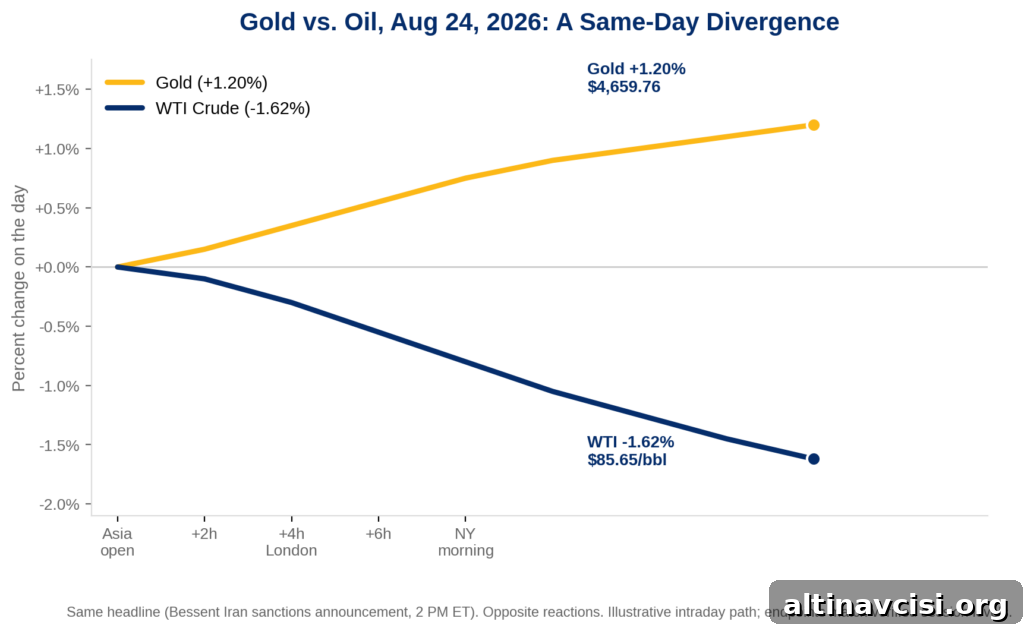
This morning, gold is trading near $4,659.76 per ounce, up about 1.20% on the day and marking its highest level in roughly three months. Silver has climbed to approximately $69.36 per ounce, up about 0.45% after a brief dip overnight. The gold-silver ratio stands around 67.18, showing gold outpacing silver in today’s move despite both metals being higher.
Crude oil is moving in the opposite direction. West Texas Intermediate (WTI) is down roughly 1.6% to about $85.65 per barrel, and Brent has slipped near $93.09, off about 1.4%. Typically, a Middle East flashpoint drives oil and gold higher together. Today, they are separating — and that split is telling.
What Is Bessent Announcing at 2 PM Today?
U.S. Treasury Secretary Scott Bessent will hold a press conference at 2:00 PM ET to unveil new sanctions targeting Iran. He has described the initiative as “the toughest sanctions in history,” framing it as a coordinated economic effort to isolate any country that continues trading with Tehran, including major buyers of Iranian oil. Markets are reacting to the anticipation and the rhetoric, not to a detailed package of measures — those details will come later today.
Because the announcement itself has not yet been made, traders are pricing expectations and risk rather than confirmed policy actions. That difference — expectation versus execution — helps explain some of the unusual market behavior we see this morning.
Why Would Oil Fall Ahead of Tougher Iran Sanctions?
If traders believed the sanctions would significantly reduce Iranian oil exports, crude prices would typically rise into the announcement. Instead, the oil market is discounting a large near-term disruption. Two explanations are plausible: traders doubt the sanctions will be as restrictive in practice as the rhetoric suggests, or much of the expected impact has already been priced into the market after days of escalating warnings.
Treasury officials have pushed back on the view that oil is underpricing the risk. In public comments ahead of the event, officials warned that markets may be misreading the implications of the economic pressure being planned. Whether markets have it right or officials do, the oil reaction will be a crucial signal once the measures are detailed.
So What’s Actually Pushing Gold Higher Today?
Gold’s rise today is driven more by domestic fiscal mechanics than by the Iran sanctions story itself. The immediate catalyst is an expanded Treasury buyback program: the Treasury has increased repurchases of longer-dated government bonds in recent days to support market liquidity and address weak auctions. Those buybacks have pressured long-term yields lower and helped weaken the dollar. A softer dollar makes gold less expensive for international buyers and increases its appeal as a store of value.
This mechanism differs from earlier episodes when geopolitical escalation pushed oil higher, raised inflation expectations, lifted real yields and therefore reduced gold’s attraction. Today’s move has the fiscal channel at its center: lower long-end yields and a softer dollar are supporting precious metal prices even as crude falls.
What Does the Treasury Buyback Program Have to Do With Gold?
The Treasury buyback program is a fiscal operation — the Treasury repurchases its own long-dated notes while funding through short-term bill issuance. It is separate from Federal Reserve monetary policy and signals the Treasury’s active management of its borrowing costs and market functioning. For investors in gold and silver, that distinction matters: a Treasury-managed intervention points to structural issues in debt issuance and liquidity that can persist beyond short-lived shifts in central bank policy.
Put simply, a Treasury leaning on buybacks suggests auctions are harder to clear at prevailing yields, which may lead to a longer-lasting environment of lower real yields and a weaker dollar — conditions that tend to support precious metals over a sustained period.
What Should You Watch After the 2 PM Announcement?
After the press conference, don’t focus solely on the count of sanctioned entities. Track oil’s reaction in the hours that follow. If crude spikes sharply, markets will likely conclude sanctions will materially restrict Iranian oil flows; that could trigger additional safe-haven buying of gold. If oil remains muted or falls further, that would support the current market read that the rhetoric may overstate the immediate practical impact.
Beyond the immediate reaction, pay attention to upcoming policy-relevant dates: speeches by central bank officials and incoming inflation data will shape real yield expectations and therefore the next leg for gold and silver. Those macro factors often matter more for precious metals’ medium-term trajectory than a single fiscal announcement.
SOURCES
1. Gold and silver spot prices and ratio reported by market data providers.
2. WTI and Brent crude price moves on the trading day cited above.
3. Public statements and scheduled press briefings by the U.S. Treasury.
4. Reporting of Treasury buyback operations and market commentary on their impact.
Disclaimer: This article is for informational purposes only and does not constitute investment advice. Past performance is not indicative of future results. Consult a qualified financial advisor before making investment decisions.
You May Also Like:
- Gold’s Speculative Crowd Hit a 60-Week High. Almost Nobody Bought.
- Gold Hit a Three-Month High. Silver Hit a Two-Month High. One Story Connects Them.
- The National Debt Hit $40 Trillion. Jefferies Just Turned Bullish on Gold.
- Gold Fell and Silver Rose on the Same Report. Here Is the Mechanism.
- Trump Declared Economic War on Iran. Gold Barely Blinked. Here’s Why.
- Gold’s Pullback Isn’t About ETFs. It’s About a Treasury Buyback.