You’re ready to buy precious metals — but which is the better choice: gold or silver? At first glance they look similar: both are monetary metals, both are scarce, and both can protect purchasing power in uncertain times. Yet, for a resilient portfolio the differences matter.
Understanding those differences separates casual buyers from strategic investors. Below are five key distinctions between gold and silver that matter in 2026.
Difference #1: The Silver Price is More Volatile
Annual mine supply hasn’t changed dramatically in recent years, but dollar values have — because prices have risen sharply. The result: silver is far more volatile than gold.
- Gold annual supply: ~120 million ounces
- Silver annual supply: ~1 billion ounces
At today’s prices:
- Gold supply (~120M oz × $4,200) ≈ $504 billion
- Silver supply (~1B oz × $60) ≈ $60 billion
In dollar terms the gold market is now more than eight times larger than the silver market, despite silver’s higher physical volume. Silver remains a relatively small market in dollar terms — and small markets move more easily. A relatively modest flow of capital from investors, hedge funds, or industrial buyers can push silver sharply higher or lower.
Historically, in bull markets silver outperforms gold by a wide margin; in bear markets silver falls faster and farther. That amplifies both upside and downside.
Investor implication: Be prepared for bigger swings with silver. If you buy early in a bull cycle, volatility acts like leverage and can produce outsized percentage gains. If you prefer steadier returns and less emotional strain, gold is the calmer option.
Market Value of 2025 Supply: Gold vs Silver
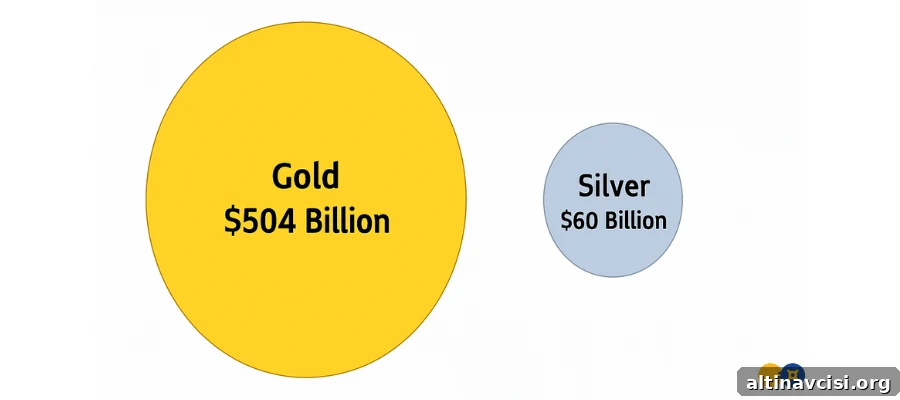
To put the difference in perspective: many major corporations have market caps far larger than the annual silver market. That structural smallness amplifies silver’s price sensitivity.
Difference #2: Silver is More Affordable
One of silver’s long-standing advantages is affordability. Even at $60+ per ounce, silver allows investors to acquire physical precious metal at a low entry point.
Like gold, physical silver is:
- a tangible, fraud-resistant asset
- a monetary metal with millennia of use
- free of counterparty risk
- immune to default
- capable of offering privacy not found in many digital finance products
Crucially, silver offers fractional optionality naturally: 1-oz rounds, 10-oz bars, 100-oz bars, and other sizes are available with relatively low premiums compared with fractional gold. Buying small amounts of gold is possible but often incurs higher premiums on fractional coins or bars.
That matters for everyday liquidity. Imagine needing $600 for a repair, $2,000 for a short-term expense, or $500 for emergency cash. Selling silver in the required denomination is simpler and more practical than parting with a full ounce of gold (a single ounce of gold was a multi-thousand-dollar asset as of late 2025).
Investor implication: Silver’s affordability makes it the ideal metal for smaller purchases, incremental accumulation, and practical liquidity. A diversified physical stack typically benefits from both metals — gold for long-term wealth preservation, silver for flexibility and practical use.
Difference #3: Silver Requires Much More Storage Space
Silver’s low price per ounce brings a logistical trade-off: bulk. Silver is far less dense in dollar terms than gold, so equal dollar amounts occupy very different volumes and weights.
- $50,000 in gold weighs roughly 2.6 pounds and fits in your hand.
- $50,000 in silver weighs roughly 800 ounces — about 55 pounds — and fills several shoeboxes.
A safe deposit box that holds $200,000 in gold might hold only a few thousand dollars’ worth of silver. This matters for home storage, transport, and professional vaulting. Many depositories charge more for storing bulk metals, and silver also tarnishes over time, making proper packaging and storage more important.
Investor implication: Storage strategy matters more with silver. Keep silver for liquidity, diversification, and upside, but understand you’ll need more space and logistics than with gold.
Difference #4: Silver Has Higher Industrial Use
Gold sees demand from jewelry, investment, and some technology. Silver, however, is indispensable across many industries. Over half of annual silver demand is industrial:
- Electronics
- Medical equipment
- Solar panels
- Batteries
- EV manufacturing
- Chemical catalysts
- 5G infrastructure
Silver is the most conductive metal for electrical, thermal, and optical uses, and modern technology depends on it. The critical distinction: most industrial silver is consumed, not recycled. Tiny amounts are embedded across billions of products that often get discarded long before recovery becomes economical, meaning millions of ounces are effectively lost each year. That limits secondary supply.
Even amid economic cycles, demand for silver in green-energy technologies has expanded. Solar manufacturers and other clean-energy producers have consumed significant volumes of silver per gigawatt in recent years.
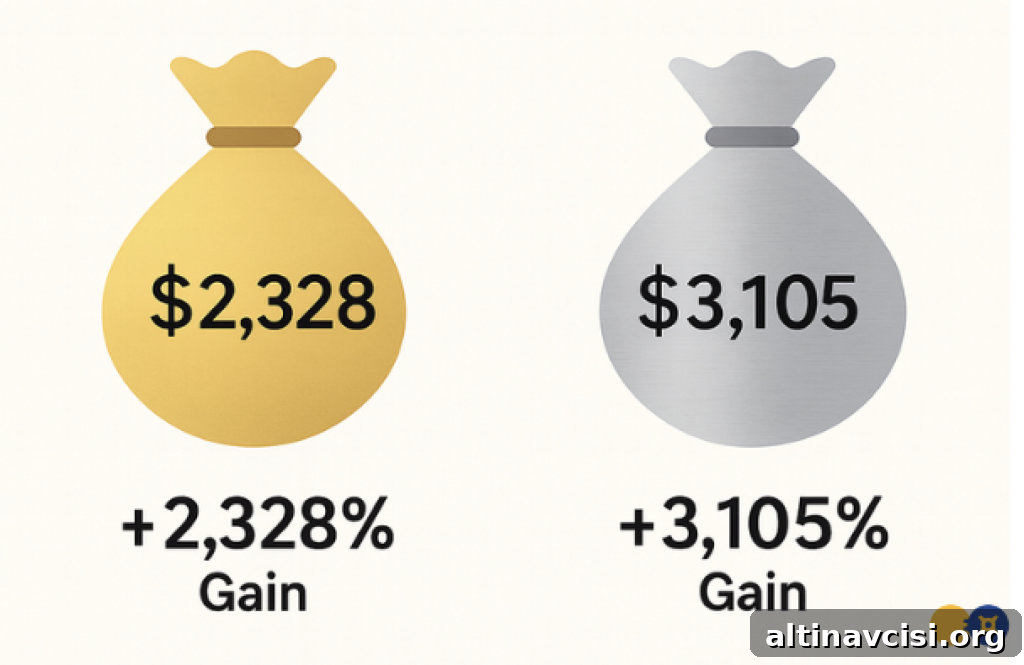
Investor implication: Industrial demand makes silver more sensitive to economic cycles, but in monetary crises silver can behave like gold. Historical episodes — such as the stagflationary 1970s — show that monetary fear can overpower industrial weakness and drive silver prices higher.
$100 In Gold or Silver From 1970–1980 Became
In an environment of currency dilution, geopolitical fragmentation, and accelerating electrification, silver sits at the intersection of monetary demand and industrial necessity.
Difference #5: Silver Stockpiles are Falling, Gold’s are Rising
Governments and institutions once held larger silver inventories; today most no longer keep substantial silver stockpiles. Only a few countries maintain notable silver reserves. In contrast, central banks hold tens of thousands of tonnes of gold and continue net buying in many cases, adding to gold’s structural demand.
The result: if industrial needs rise, supply chains are disrupted, or investment demand spikes, governments are largely ill-equipped to supply silver from official inventories. That structural imbalance makes the silver market more precarious: if official buyers entered the market in force, limited stockpiles could cause sharp price moves.
Investor implication: A sudden increase in official or industrial demand for physical silver could have an outsized effect on price because secondary supplies and government reserves are limited.
5 Major Distinctions Between Gold and Silver
| Gold | Silver | |
| Volatility | Less volatile. Falls less in bear markets and rises less in bull markets. | More volatile. Falls more in bear markets and rises more in bull markets. |
| Affordability | One ounce costs many times more than an ounce of silver. Small denominations are available but carry higher premiums. | More affordable with similar benefits; enables meeting small financial needs and easier gifting. |
| Storage | Requires less space, cheaper to store, and does not tarnish. | Requires far more storage space, is heavier to transport, more expensive to store, and will tarnish over time. |
| Industry | Relatively small industrial demand; price driven more by investment and jewelry. | Large industrial demand (major share of supply); much is consumed and not recovered. |
| Stockpiles | Central banks hold and often buy sizable gold reserves. | Governments hold only small silver reserves, leaving the market with limited official supply. |