Why London Still Sets the Global Gold Price, Not Asia
Key Takeaways
- Hong Kong is aiming for a trial launch of a government-backed gold clearing platform in July 2026 — the first clearing infrastructure in Asia designed to settle physical gold in Asian time zones.
- Asia accounts for roughly 60% of annual global gold demand, yet the LBMA benchmark, set in London, remains the dominant global reference. The new platform aims to create a parallel settlement system focused on physical delivery rather than paper claims.
- For holders of physical, allocated gold: improved price discovery tied to real metal should, over time, favor allocated holdings over paper proxies.
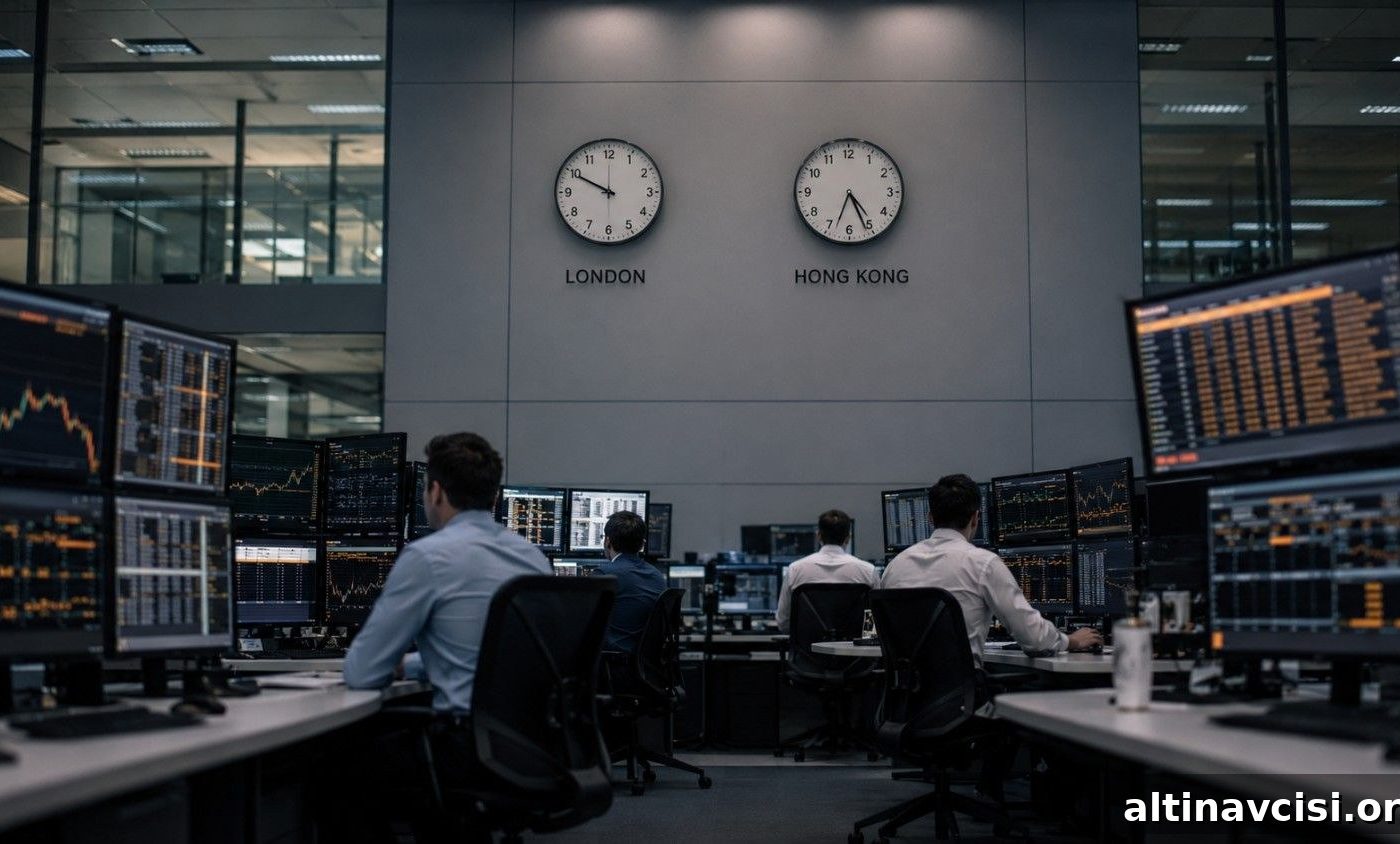
For much of the last century, London has been the center of global gold price discovery. A relatively small group of banks and institutions running benchmark mechanisms in a European time zone have set the price that buyers across the globe reference — even though Asia is the largest consumer of physical gold.
Asia consumes about 60% of the world’s gold each year, yet pricing and settlement have been driven by infrastructure anchored in London’s business day. That mismatch has prompted authorities in Hong Kong to pursue a new clearing model designed for the region.
Reports indicate Hong Kong plans to establish the Hong Kong Precious Metals Central Clearing Company, a government-owned entity working with the Shanghai Gold Exchange. The target is trial operations in 2026, with a tentative focus on July for initial testing, subject to regulatory approval and operational readiness.
As of May 20, 2026, spot gold traded around $4,533 per ounce and silver near $75.91 per ounce; these levels underscore active interest in precious metals as market participants watch structural developments in Asia.
What Is the Hong Kong Gold Clearing Platform?
Currently, spot gold trading in Hong Kong typically settles through bilateral arrangements between buyers and sellers. A central clearing house simplifies that process by becoming the counterparty to both sides of a trade — guaranteeing settlement and reducing operational friction. This is the same fundamental model used in London by the London Precious Metals Clearing Limited (LPMCL).
The planned Hong Kong clearing platform is expected to support unallocated accounts, enabling faster, standardized settlement without requiring immediate allocation of specific bars. By partnering with the Shanghai Gold Exchange, Hong Kong intends to leverage technical standards, risk management frameworks, and regulatory input from an established domestic market operator.
Hong Kong’s Financial Secretary has described the shift as a growing eastward “centre of gravity” in gold trading, reflecting demand patterns and a desire for settlement infrastructure aligned with Asian trading hours.
Why Does London Still Dominate Gold Price Discovery?
The London market, through the LBMA and its associated clearing mechanisms, clears millions of ounces of metal each day and operates a twice-daily auction that many global participants use as a reference. That benchmark underpins central bank valuations, mining contracts, and ETF pricing, giving it outsized influence.
However, the benchmark’s structure reflects an ecosystem optimized for European time zones and long-established market participants. When Asian physical buyers — among the largest in the world — are active, they often price against a system that was not built to accommodate their settlement needs or time zone.
Previous attempts by Hong Kong Exchanges and Clearing (HKEX) to create competing products, such as gold futures launches in 2008 and 2017, faltered largely because the supporting ecosystem was missing: vault capacity, a clearing house, and robust regulatory arrangements were not yet in place. The current effort is different in that the government and market partners are building the underlying physical and clearing infrastructure together.
How Serious Is the Infrastructure Commitment?
Hong Kong authorities have signaled significant commitments to support a regional gold hub. Plans include large-scale vaulting capacity — with targets cited in public discussion suggesting storage for thousands of tonnes within a few years — and tax incentives aimed at commodity trading activity. Those measures are intended to create a commercially attractive environment that can compete with other regional centers.
Lawmakers and market participants have noted that government involvement and mainland China’s cooperation give this initiative a stronger chance of success compared with earlier, exchange-only efforts. Physical infrastructure, credible clearing, and favorable fiscal measures are all necessary components for a settlement system that can alter the mechanics of price discovery.
Physical infrastructure matters: a futures contract or benchmark without vaults and credible settlement cannot meaningfully shift how the market values an ounce of metal.
What Does This Mean for Gold Price Discovery in Asia?
Much of global gold turnover is paper — unallocated claims, futures, and derivatives — and the LBMA benchmark largely reflects those market dynamics. If a Hong Kong-based clearing and settlement system attracts substantial physical flows, price discovery will increasingly incorporate the actual physical market in Asia.
A stronger link between physical demand and benchmark pricing would narrow the historical gap between paper gold and allocated, physically-backed metal. Allocated gold — each ounce tied to a specific, held bar — represents a direct claim on real metal rather than a contractual promise. Over time, improved physical settlement infrastructure could increase the premium for allocated holdings relative to paper substitutes.
The Hong Kong platform will not instantly overturn global benchmarks, but it represents a structural shift that could redistribute influence in pricing as Asian settlement becomes more central to global flows.
What to Watch
There are two key indicators to monitor. First, will the platform’s July trial launch proceed and demonstrate operational resilience under market conditions? Formal announcements from Hong Kong’s financial authorities and regulatory approvals will be important milestones.
Second, will institutional participants — Asian banks, commodity traders, refiners, and vault operators — route meaningful volume through the new clearing house? Without participant flow, even well-designed infrastructure will struggle to influence global pricing. The partnership with the Shanghai Gold Exchange is a leading signal that mainland institutional volume could be channeled into the platform.
From a price perspective, market watchers are noting short-term technical levels near the $4,500 area for support and a reclaim of $4,600 as a potential sign that a recent downtrend is reversing. Those levels will evolve with market activity and broader macro conditions.
SOURCES
1. Hong Kong Government Information Services — Speech by Financial Secretary Paul Chan at LME Asia Metals Seminar, May 7, 2026.
2. Media reports on the cooperation agreement between Hong Kong and the Shanghai Gold Exchange regarding gold clearing and warehousing, January 2026.
3. London Bullion Market Association — clearing and price benchmark descriptions and market data.
4. Coverage of Hong Kong’s previous gold futures initiatives and market commentary, 2008–2017 and more recent reporting in 2026.
5. World Gold Council — market size and structure of the global gold market, 2025–2026 updates.
6. Commentary from regional press and market observers on Hong Kong’s hub ambitions and storage plans.
Disclaimer: This article is for informational purposes only and does not constitute financial or investment advice. Consult a qualified financial adviser before making investment decisions.
You May Also Like:
- Gold Price at ~$4,502: Is the Dip a Buy? BofA Says $6,000
- Gold Didn’t Fall on Iran Peace News. That’s the Point.
- Trump Called Off the Strike. Gold’s Real Risk Is Still $39 Trillion.
- The Gold Market Is Mostly Paper. Dubai Disagrees.
- The Institutions Are Buying. Yields Are Rising. What Does That Tell You?
- Gold Up 40% in a Year. The Moody’s Downgrade Explains Why.
- No Deal, No Premium: Why Silver Fell 7% at the Trump-Xi Summit
- Gold Fell. China Bought Its Most in 17 Months. Here’s Why.
Popular Topics
Picked from the archive
-
01
 Topics
What’s Driving Gold Demand from Washington, D.C. to Mumbai
-
02
Topics
Q2 2025 Gold Demand Trends from the World Gold Council
-
03
Topics
Uganda Opens 250M Chinese-Backed Gold Refinery to Boost Mining
-
04
Topics
Gold Could Reach $4,000 as Silver Surges and Oil Falls
-
05
Topics
JPMorgan Predicts Gold Could Top $5,400 by 2027
-
06
Topics
Why Gold Is Defying Market Signals in 2025
-
07
Topics
Why Gold Hit $5,100: What’s Driving the Rally Next
-
08
Topics
Silver Price Drops 7% After No-Deal at Trump-Xi Summit