Why Investors Overlook Gold’s Inflation Paradox
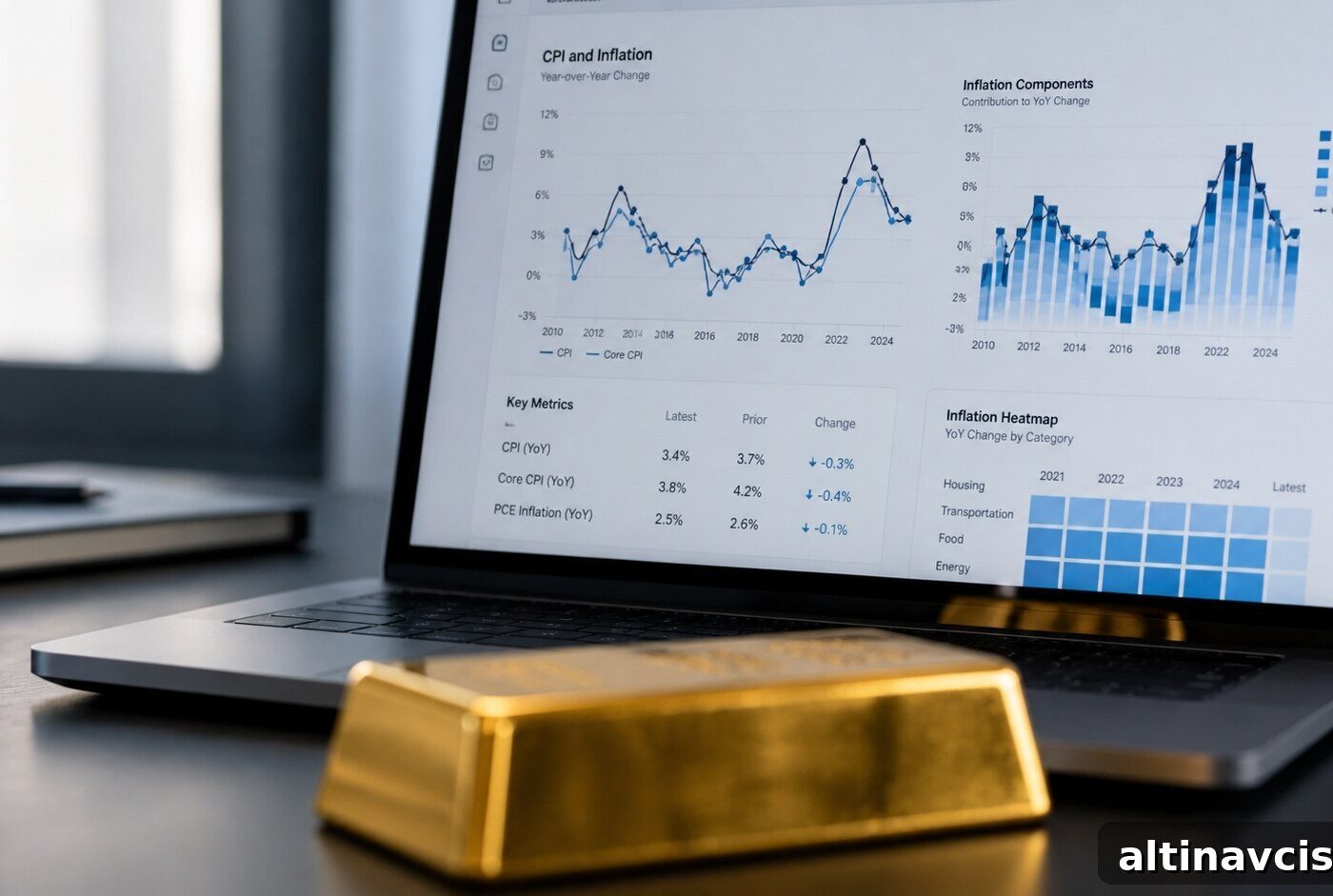
Gold is often described as a straightforward hedge against inflation, but the evidence tells a more complicated story. At times gold outpaces inflation dramatically; at others it declines while consumer prices rise. The true drivers are real interest rates, central bank credibility, and systemic risk—not the headline CPI alone. Investors who grasp this paradox make more informed decisions than those who react only to monthly inflation prints.
As of this writing, gold trades near $4,592 per ounce — up more than 41% year-over-year — while the Fed’s preferred inflation gauge printed 3.5% annually in late April 2026 [CNBC, April 30 2026]. That snapshot can make the classic narrative seem true. Yet gold is about 15% below its January 2026 high of $5,405 [World Gold Council, Q1 2026], and that decline occurred even as inflation accelerated. This is the gold–inflation paradox: price behavior that contradicts the simple “inflation up = gold up” rule. Most investors never interrogate that rule closely enough.
What Is the Gold–Inflation Paradox, and Where Did the Idea Come From?
The basic claim is familiar: when consumer prices rise, gold rises with them. Repeated often, it has become conventional wisdom. The important question is whether gold reliably tracks inflation over short horizons—and history shows it does not.
There is a valid foundation to the myth. Gold has no counterparty risk, cannot be printed, and has preserved purchasing power across centuries. A U.S. dollar from 1971 buys far less today, while an ounce of gold from 1971 retains far more purchasing power. That long-term preservation is real.
But preserving wealth over decades is not the same as matching monthly CPI readings. Conflating those two concepts leads many investors astray.
Your Gold Buying Guide Most investors overpay when they buy gold and again when they sell. This guide explains what to own and why.
When Did Gold and Inflation Actually Move Together?
The 1970s created the strongest evidence linking gold and inflation. After the U.S. left the gold standard in 1971, gold rose from about $35 per ounce to roughly $850 by January 1980 — a nominal gain of over 2,300% while CPI roughly doubled over the same period [GoldSilver.com — Gold vs Inflation: What 100 Years of Data Shows].
That decade saw gold not merely keep pace with inflation but vastly outpace it. Still, those outcomes were driven by unique conditions: oil shocks, large fiscal deficits, a Federal Reserve lacking credibility, and deeply negative real interest rates. It was an exceptional environment, and treating the 1970s as a universal rule is misleading.
Why Did Gold Fall in the Early 1980s While Inflation Remained High?
Inflation alone did not determine gold’s path. When Fed Chair Paul Volcker pushed the federal funds rate toward 20% by mid-1981 [Federal Reserve History], real rates rose sharply. Gold then fell about 65% from its January 1980 peak over the next two years, even though inflation was still elevated.
The same principle showed up in 2022: the Fed raised rates rapidly from near zero to around 5.5% — the fastest tightening cycle since the 1980s — and gold slid from about $2,000 to $1,600 while inflation ran at multi-decade highs. Inflation rising did not automatically lift gold when real yields climbed.
Why Did Gold Rally as Inflation Cooled between 2022 and 2026?
Gold’s significant advance from late 2022 into early 2026 unfolded largely while headline inflation fell. CPI peaked above 9% in mid-2022 and retreated toward 3% by the time gold was near record levels.
That rally was driven by three structural factors rather than rising CPI. First, central banks added record amounts of gold to reserves — in Q1 2026 alone they purchased 244 tonnes, led by emerging-market nations diversifying away from dollar assets [World Gold Council, Q1 2026]. Second, geopolitical fractures reduced confidence in the dollar’s unquestioned reserve role. Third, institutional demand, including inflows into gold-backed ETFs, rose as fiscal outlooks raised long-term concerns. In short, inflation was a background factor, not the primary cause.
What Actually Drives the Gold Price?
Real interest rates—the difference between nominal yields and inflation—are the most consistent driver of gold. When real rates are negative, the opportunity cost of holding non-yielding gold falls, supporting higher prices. That dynamic was central to the 1970s surge and the post-2008 rally.
After the 2008 crisis the Fed cut rates near zero and gold rose roughly 50% in subsequent years while real rates stayed deeply negative [CME Group OpenMarkets]. The 2022–2026 cycle was unusual because 10-year TIPS yields remained in positive territory (roughly 1.6%–2.4%) even as gold rallied. By then, structural central-bank and institutional demand had become decisive.
Ultimately, gold acts as a hedge against threats to monetary and systemic credibility. Those risks sometimes coincide with high inflation and sometimes do not. Gold is therefore a protection against loss of confidence in paper money and against prolonged monetary debasement, not a mechanical tracker of monthly CPI readings.
What Did the 2026 Correction Reveal?
The early 2026 pullback highlighted the paradox in real time. Gold fell about 15% from its January all-time high of $5,405 [World Gold Council, Q1 2026] while personal consumption expenditures (PCE) accelerated to 3.5% [CNBC, April 30 2026]. If simple inflation logic ruled, gold should have risen—but it did not.
The sequence was clear: geopolitical tensions pushed energy prices up, lifting inflation expectations. That raised expectations for policy rates and boosted real yields. Higher real yields increase the opportunity cost of holding gold, which pressured prices. This was not a refutation of gold’s long-term case, but a demonstration that real-rate mechanics matter.
Should You Own Gold as an Inflation Hedge?
Yes—if you understand what you are buying. Gold is an effective hedge against monetary disorder, fiscal imprudence, and systemic risk over multi-year horizons. It is not a reliable tool for timing based on monthly CPI releases.
Practical guidance: stop treating each CPI print as a buy or sell signal. Instead, monitor real interest rates, central bank balance sheets, and fiscal trajectories. Gold’s case strengthens when real yields are negative or falling and when deficits and reserve diversification suggest rising structural demand. Conversely, when policymakers undertake aggressive rate hikes—similar to the Volcker era—gold can struggle even if CPI is elevated.
Central banks have acknowledged this distinction: since 2022 they have been buying gold at a pace far above historical averages, driven by a deliberate shift in reserve policy rather than by short-term data releases [J.P. Morgan Global Research]. This trend appears likely to persist for years.
Stay On Top of Gold & Silver Prices
Get timely market alerts sent to your inbox.
People Also Ask
Does gold always rise when inflation is high?
No. Gold has fallen during periods of high inflation when real interest rates rose sharply, most notably in the early 1980s. Real interest rates — the return on cash or bonds after adjusting for inflation — are the more reliable influence on gold than the headline CPI number. When real rates climb, gold tends to weaken regardless of where inflation stands.
What is a gold inflation hedge?
A gold inflation hedge is the idea that holding gold preserves purchasing power when consumer prices rise. The concept rests on gold’s scarcity and its lack of counterparty risk. In practice, however, gold responds more to real rates and systemic credibility than to short-term CPI prints. The hedge is most effective against prolonged monetary debasement and loss of confidence in fiat currency.
Why did gold fall in early 2026 while inflation was rising?
Gold dropped about 15% from its January 2026 all-time high of $5,405 while PCE accelerated to 3.5%. Rising inflation expectations prompted higher rate forecasts and lifted real yields, which increased the opportunity cost of holding non‑yielding gold. That sequence explains the decline.
What really drives the gold price?
Key drivers include real interest rates, central bank buying, dollar strength, geopolitical risk, and broader confidence in monetary systems. Inflation affects gold through its impact on real yields and policy expectations, not as a direct one-to-one driver.
How much have central banks been buying?
Central bank purchases have been substantial: 244 tonnes in Q1 2026 alone, and annual purchases since 2022 have generally exceeded 1,000 tonnes—well above historical averages—as some nations diversify reserves away from dollar‑denominated assets.
Gold Won’t Always Behave as You Expect — That’s Not a Flaw
Many investors want a simple rule: inflation up, gold up. History refuses to obey that bumper‑sticker logic consistently. Gold fell in 2022 amid high inflation, then rallied through 2023 into early 2026 while inflation cooled, then corrected 15% as PCE climbed. These moves reflect different underlying forces at different times.
A more accurate perspective is that gold hedges monetary disorder, fiscal recklessness, and erosion of confidence in paper money. Those dynamics are structural and slow-moving; they do not show up neatly in a single monthly CPI reading. Understanding the paradox makes corrections less confusing and helps investors hold through volatility with a clear rationale.
If you are evaluating gold’s role in your portfolio, seek detailed research and objective information before acting. The market’s drivers are complex and often structural rather than cyclical.
SOURCES
1. CNBC — PCE Inflation Rate March 2026
2. World Gold Council — Gold Demand Trends Q1 2026
3. GoldSilver.com — Gold vs Inflation: What 100 Years of Data Shows
4. Federal Reserve History — Recession of 1981–82
5. Morgan Stanley — Gold Price Rally 2025: Drivers and Opportunities
6. CME Group OpenMarkets — How Does Gold Perform with Inflation, Stagflation and Recession?
7. J.P. Morgan Global Research — Gold Price Analysis 2026
Disclaimer: This article is for informational and educational purposes only. It does not constitute investment advice. Please consult a qualified financial adviser before making any investment decisions.
You may also like:
- Insurance vs. Upside: Balancing Your Portfolio with Gold and Silver
- Gold Bullion vs. Jewelry: Why Serious Investors Choose the Bar
- Gold & Silver IRA: Why Starting Early Costs You Less
- Silver Fair Value: What the Data and History Show
- Gold or Silver Price Dip: Temporary Correction or Trend Reversal?
- What Switzerland’s Gold Freeze Means for Investors
- What History Shows About Buying Gold After a Pullback
- Should You Sell Gold During a Bull Market Pullback?
Popular Topics
Picked from the archive
-
01
 Topics
Oil Drops 11% as Gold Rises: What Investors Need to Know
-
02
Topics
Gold Prices Slip as Fed Officials Delay December Rate Cut
-
03
Topics
Is Gold Overpriced or Undervalued? What 3 Models Reveal
-
04
Topics
Why Turkey Sold Its Gold and What It Means for Sound Money
-
05
Topics
Gold and Silver Prices: Short-Term Volatility, Long-Term Trend
-
06
Topics
Switzerland’s Gold Freeze: What Investors Need to Know
-
07
Topics
Inside the Fed’s Most Contentious Jackson Hole Meeting
-
08
Topics
Silver Price Forecast 2026-2027: Bull and Bear Scenarios