Why Gold Is Still a Safe Haven, Says Switzerland’s Top Refiner
Gold’s role as a monetary and store-of-value asset has not changed in 5,000 years. What has changed is who validates that role today: not only academics or advocates of sound money, but the institutional players who refine and move gold for central banks and bullion markets. Their behavior — buying, storing, and insisting on provenance and certification — is a practical endorsement of gold’s ongoing role as a strategic reserve.
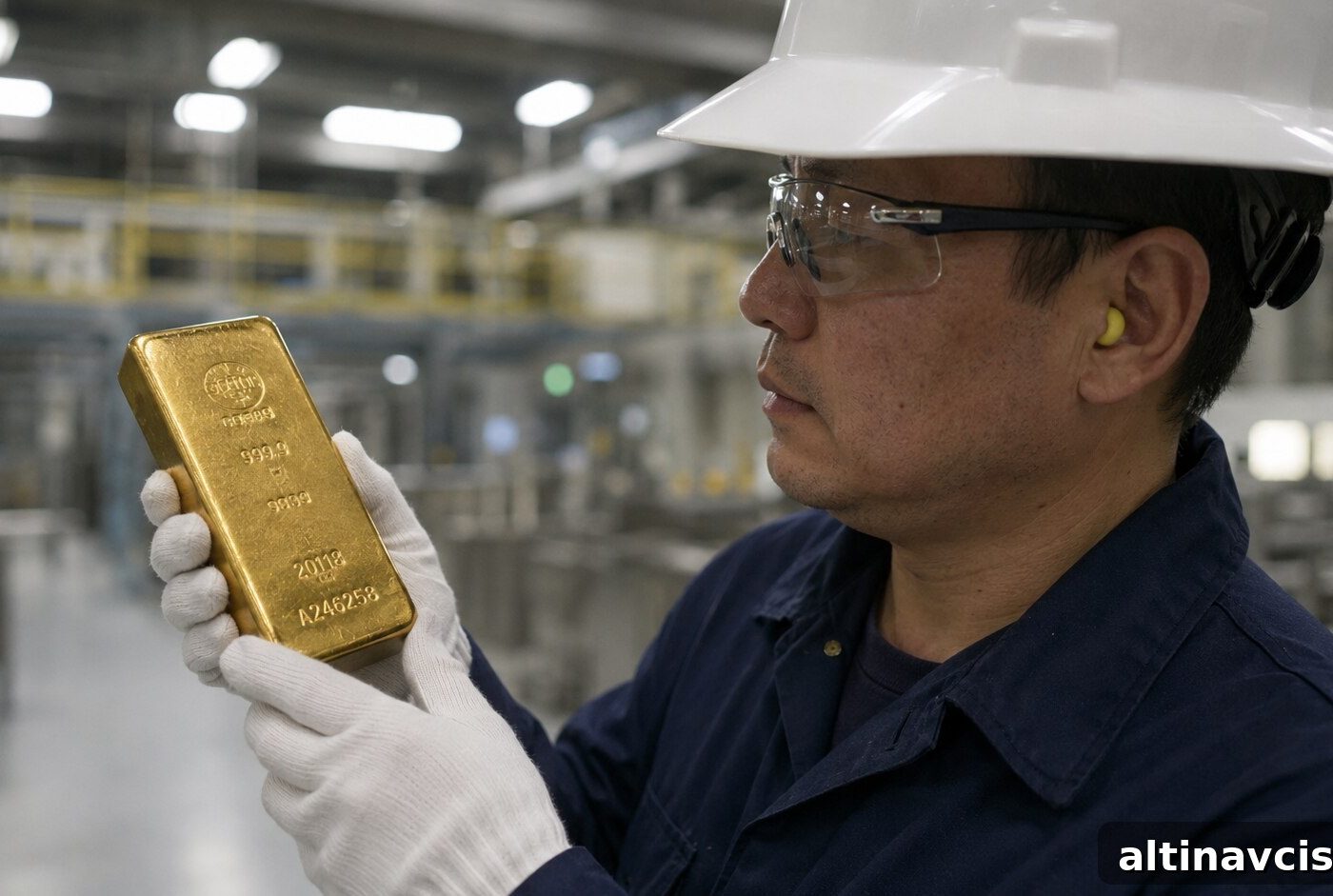
Simone Knobloch became CEO of Valcambi on June 1, 2026. Valcambi’s refinery processes around 1,000 tonnes of precious metals per year and serves central banks, bullion banks, and major international metal traders that influence global spot prices. When Knobloch states, “In an unpredictable world, gold is still a safe haven,” he is describing how those institutional clients deploy gold in their reserve strategies, not merely expressing hope.
In this article:
- Why the CEO of one of the world’s largest refineries still calls gold a safe haven, and what institutional behavior reveals
- What drove central banks to buy over 1,000 tonnes of gold per year for three straight years
- Why the source and certification of gold matter more than ever for institutional and private investors
What Is a Gold Safe Haven — and Is It Still True?
Gold’s reputation as a safe haven is long-standing, but in 2026 it carries renewed institutional weight. Knobloch’s public statement reflects real activity: Valcambi processed roughly 1,000 tonnes of precious metals in 2025, and its customers include national banks and large bullion traders. These clients are not driven by retail sentiment; their allocations are driven by balance-sheet needs, currency diversification and risk management.
Central banks purchased over 1,045 tonnes of gold in 2024, continuing a multi-year buying streak that now stretches more than a decade. They have recorded annual net purchases above 1,000 tonnes for three consecutive years, a roughly twofold increase versus the 2010–2021 annual average. Institutional buyers act on quantitative considerations — supply dynamics, reserve composition, geopolitical risk — not short-term emotion.
Why Do Central Banks Still Buy Gold?
Gold differs from nearly every other reserve asset because it is not consumed and is highly durable. The total above-ground stock of gold — roughly 201,000 tonnes — remains in circulation as a tangible store of value. Unlike oil, copper, or agricultural commodities, gold’s supply expands only modestly through mining (about 1.5–2% annually), creating predictable and constrained supply growth that underpins its quality as a reserve asset.
Holding gold gives central banks a physical asset they can access and control independently of correspondent banking networks. That structural property makes gold attractive for diversification and resilience in times of systemic stress.
Why the 2022 Sanctions Changed the Calculation Permanently
The acceleration in sovereign gold buying since 2022 reflects more than supply mechanics. In February 2022, Western authorities froze a large portion of a major economy’s foreign-exchange reserves held in Western financial systems. That event demonstrated that liquid currency reserves held inside another jurisdiction can be rendered inaccessible. Gold, when held domestically in a national vault or in trusted custody arrangements, cannot be frozen in the same way. It cannot be blocked by payment systems or easily sanctioned.
As a result, many central banks — particularly in emerging markets and among BRICS nations — viewed gold as an essential non-freezable reserve asset. Surveys of central banks indicate a majority plan to increase gold allocations over coming years, signaling a long-term strategic shift rather than a short-term trade.
What Makes Swiss Gold Different — and Why It Matters for Investors
Swiss-refined gold often trades at a premium because Switzerland’s industry provides three institutional advantages beyond the metal itself:
Regulatory Certainty: Sworn Assayers and LBMA Accreditation
Swiss refineries operate under a system of sworn assayers who certify bar purity independently. That third-party oversight reduces counterparty and quality risk. Maintaining LBMA Good Delivery accreditation — the global benchmark for institutional-grade gold — is vital for refineries that service national banks and global bullion markets.
Financial Infrastructure: Credit Lines During Processing
Switzerland’s established precious-metals financing ecosystem lowers the cost of capital while gold is processed, reducing operational friction. This financing advantage helps refiners process and deliver institutional-standard bars more efficiently than many emerging hubs can.
Security and Insurance Advantages
Switzerland’s political stability translates into lower insurance and security costs for moving and storing high-value metals. That stability is a measurable input cost advantage for large-scale processing and custody that global institutions value highly.
These elements explain why Swiss refineries — Valcambi among them — remain central in the institutional gold supply chain and why LBMA- and COMEX-specification bars are preferred by national banks and large traders.
The Knowledge That Changes Everything

Two essential guides — free. Learn why gold matters and the historical pressures on fiat currencies.
Why the Source of Gold Now Matters More Than Ever
Knobloch’s interview is notable for how plainly it addresses sourcing. Institutional buyers and major refiners insist on provenance, declarations of origin, and rigorous due diligence. For example, Switzerland recently imported about 420 tonnes of gold from the UAE in a single year — well above historical averages. In response, prominent Swiss refiners maintain tight supplier whitelists and require statements of conformance and origin for every delivery to ensure no sanctioned or questionable material is processed.
Refiners act as service providers; they receive metal from international banks and traders. That means responsibility for sourcing runs throughout the chain, and institutional standards such as LBMA Good Delivery and OECD due diligence guidelines are embedded in the supply chain long before gold reaches retail investors.
Where Gold Stands Now — and Why the ATH Isn’t the Story
As of June 5, 2026, gold traded near $4,379 per ounce, below the January 2026 peak of roughly $5,590 per ounce. Short-term price moves reflect rate expectations and macro volatility, but the deeper drivers that lifted gold sharply from early 2025 through January 2026 — central bank accumulation, de-dollarization trends, and real yield compression — remain in place. Institutional demand of this scale is not erased by temporary policy moves.
Knobloch frames gold as a “strategic asset and commodity,” underscoring the shift from treating gold solely as crisis insurance to treating it as an integral element of national reserve architecture.
The Second Corner: What Most Gold Commentary Misses
Many commentaries isolate one driver — inflation, rates, or geopolitics. The institutional reality is a structural convergence: geopolitical uncertainty makes gold strategically necessary; financial weaponization increases the value of non-freezable reserves; and producing countries are retaining more of their output in national reserves. That combined trend constrains secondary-market supply precisely as institutional demand rises, creating a lasting revaluation in gold’s monetary role.
For private investors holding physical gold outside the banking system, the logic is straightforward: the same motivations that guide central banks — preservation of value, non-freezability, and diversification — apply at a smaller scale.
People Also Ask
Is gold still considered a safe haven in 2026?
Yes. Institutional actors including national banks continue to treat gold as a safe haven and strategic reserve, as evidenced by sustained net purchases and demand for institutional-grade, certified bullion.
Why are central banks buying so much gold?
Central banks buy gold to diversify away from fiat currency concentrations, to hold an asset that cannot be frozen or easily sanctioned, and to strengthen reserve resilience in an era of heightened geopolitical risk.
What makes Swiss-refined gold different from gold refined elsewhere?
Swiss-refined gold benefits from sworn assayers, established financing during processing, and lower insurance costs tied to political stability — combined with LBMA and exchange delivery certifications that institutional buyers require.
Key Takeaways
- Valcambi’s CEO, Simone Knobloch, highlights gold’s continued role as a strategic safe haven for national banks and bullion institutions.
- Central banks recorded net purchases above 1,000 tonnes for three consecutive years, reflecting a structural accumulation trend.
- The 2022 freezing of large foreign reserves accelerated demand for non-freezable assets and reinforced gold’s strategic value.
- Swiss refining offers institutional advantages — rigorous assaying, financing and insurance benefits — that support global reserve requirements.
- Source and provenance matter: institutional-grade certification and due diligence precede retail distribution and protect resale value.
SOURCES
Swissinfo — Valcambi CEO interview (2026); World Gold Council — Gold Demand Trends and Central Bank Surveys (2024–2025); industry reports on 2022 reserve freezes and LBMA Good Delivery rules; live market price observations from June 5, 2026.
Disclaimer: This article is for informational purposes only and does not constitute financial or investment advice. Consult a qualified financial adviser before making investment decisions.
Popular Topics
Picked from the archive
-
01
 Topics
Fed Rate Cut Sparks Silver Rally Above $62
-
02
Topics
Gold, Silver Rally as Federal Reserve Independence Is Questioned
-
03
Topics
Bank Safety Deposit Box vs Gold Vault: Which Is Safer for Gold?
-
04
Topics
Gold Price Drops Below $5K After Jobs Revisions Roil Markets
-
05
Topics
GoldSilver: One Account for Home Storage and Secure Vaults
-
06
Topics
Treasury Secretary Urges Fed to Cut Rates by 1.5-1.75%
-
07
Topics
US Jobless Claims Jump to 3-Month High, Point to Labor Softening
-
08
Topics
Gold Rises While Silver Falls: What Investors Need to Know