
Daily News Nuggets | Today’s top stories for gold and silver investors
September 19th, 2025
Gold Notches Fifth Straight Weekly Win
Gold is on a notable run, set to post its fifth consecutive weekly gain after the Federal Reserve’s recent rate cut. The metal sits near record highs and has gained roughly 39% year-to-date, outperforming many traditional assets as stocks and bonds react to mixed economic signals.
The momentum is straightforward: lower interest rates reduce the opportunity cost of holding non-yielding assets like gold. With markets anticipating more rate cuts and real yields remaining negative, investors are increasingly viewing gold as portfolio insurance against economic uncertainty and inflation risks.
The Triple Threat Pushing Gold to Records
Three major forces are driving gold higher: rising tariffs, persistent inflation, and a more dovish Fed. Trade tensions contribute to inflationary pressure while central bank policy tries to support a slowing economy—a combination many analysts describe as a “stagflation cocktail.”
In this environment, traditional risk assets often underperform and gold tends to stand out. The metal has outpaced both equities and bonds in recent months as investors seek reliable value amid policy trade-offs and mounting macroeconomic uncertainty.
India’s Wedding Season Sparks Gold Buying Spree
Demand in India is heating up with the approach of the festival and wedding season. Local premiums have reached a 10-month high as jewelers stock up for Dussehra and Diwali, the peak buying period for Indian consumers. Meanwhile, dealers in China are offering discounts, highlighting a divergence between Asia’s two largest gold markets.
India’s seasonal appetite matters for global prices because it represents a significant portion of world demand. When the second-largest consumer steps in at a time of already tight supply, it tends to support a price floor and contributes to upward pressure on spot markets.
Consumer Confidence Takes a Dive
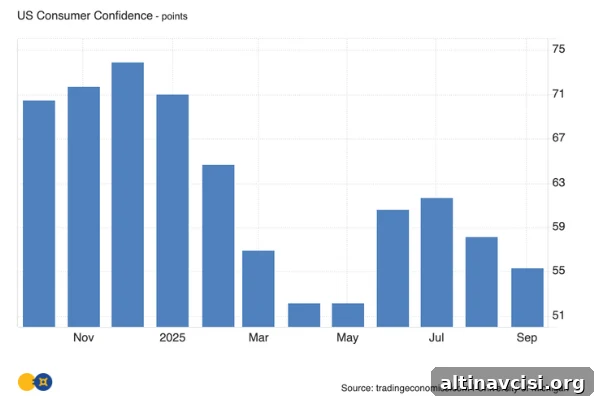
Consumer sentiment slipped to 55.4 in September from 58.2 in August, marking the lowest reading in six months and surprising many economists. The drop underscores a widening gap between financial markets and everyday households, with middle-class Americans expressing concerns about job security and persistent inflation eroding purchasing power.
That erosion of confidence has implications for gold: as households worry about the economy, demand for tangible assets often increases. Historically, periods of weaker consumer sentiment coincide with higher interest in gold and silver as investors seek safety and inflation protection.
Ray Dalio’s Gold Warning Goes Mainstream
Ray Dalio has raised alarm about the scale of U.S. government debt and its potential consequences. He argues that as public debt rises—now topping trillions of dollars—hard assets like gold will outperform financial claims that can be eroded by monetary expansion.
Dalio’s perspective echoes a long-standing thesis: when fiscal pressures encourage monetary easing, investors rotate into assets that cannot be created by central banks. The view is gaining traction among institutional players who are mindful of past currency debasements and the potential long-term effects of expansive policy.