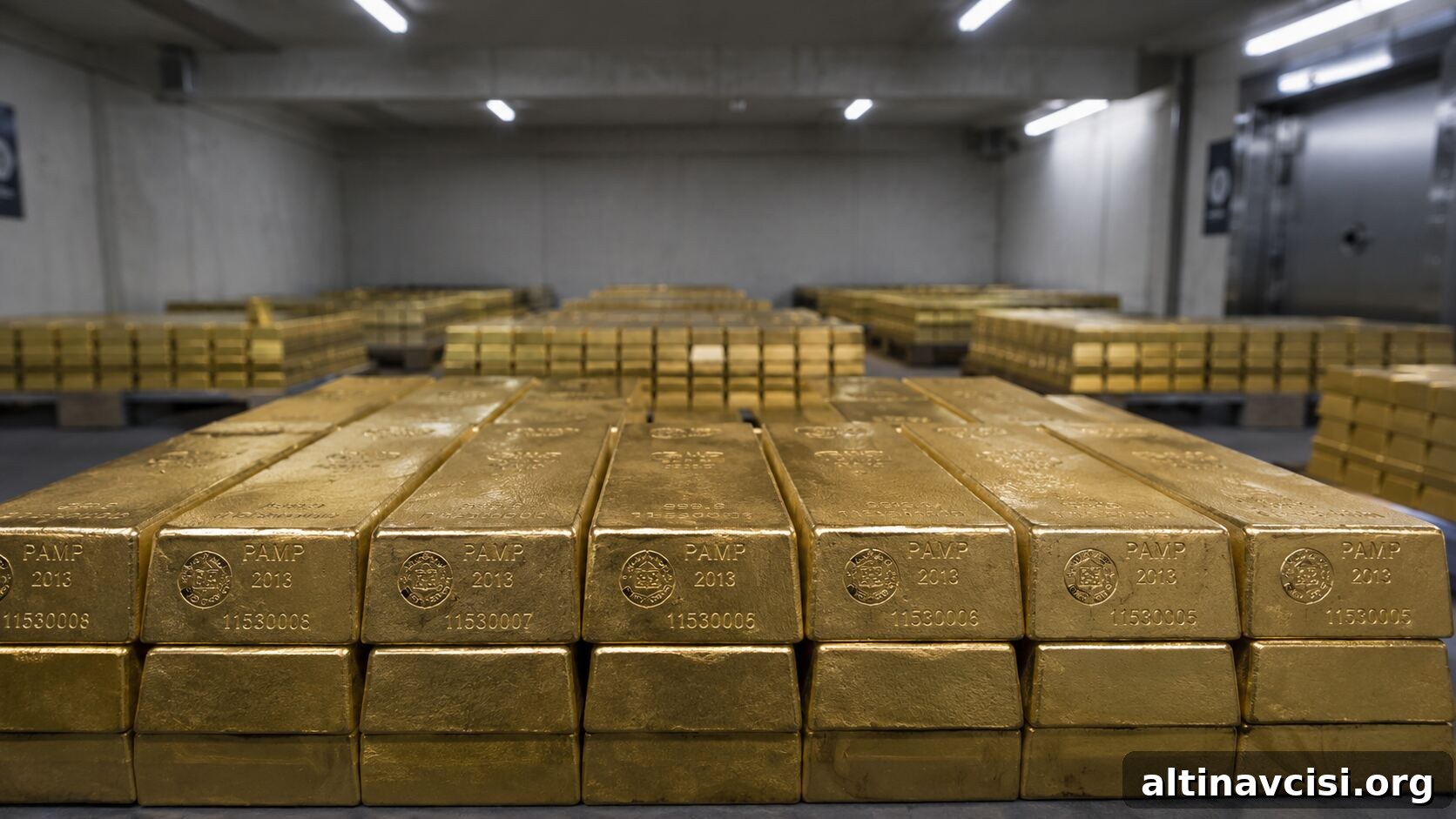
Central banks are reshaping the gold market, but they are only one of five powerful forces driving prices today — and those forces don’t all point the same way. Sovereign buying by a small group of central banks is providing a structural floor under prices. At the same time, a historic shift in demand is underway as physical investment in gold rises and jewelry demand falls. Russia’s production claims conflict with independent estimates, while China’s central bank has tightened liquidity, creating near-term pressure. Across these trends runs a common theme: the global financial system is reorganizing in ways that often favor holders of physical metal outside paper markets. Below are the details you need to understand these dynamics.
How Did Central Banks Quietly Become Gold’s Biggest Structural Supporters?
Sovereign gold buying didn’t start with the 2022 sanctions on Russia — it began after the 2008 crisis, when the math of reserve management changed permanently. Recent analysis from UBS makes clear that almost all net sovereign accumulation since 2022 has come from a handful of countries. Most central banks are not buying, but a few large institutional purchasers are accumulating at a pace that establishes a durable price floor.
That distinction changes the common narrative. Official buying is less about short-term inflation fears and more about systematic diversification away from dollar-denominated reserves. Because it’s driven by reserve strategy rather than market sentiment, this demand tends not to unwind in response to an unfavorable CPI print or a Fed move. When the largest institutional buyers act on strategic reserve objectives, their purchases create one of the most persistent tailwinds for gold in decades.
The Edge Every Investor NeedsSmarter precious metals investing starts here. The Nuggets Newsletter brings essential market insights, Fed updates, global trends, educational videos, and more.
Why Is the World’s Largest Gold Refinery Now Talking About Trust?
Valcambi is the largest gold refinery by capacity in Switzerland and one of the largest globally. On June 1, 2026, Simone Knobloch took over as CEO during a delicate moment: gold prices are near historic highs, while scrutiny of sanctions compliance and responsible sourcing has intensified across the refining sector.
In his first interview Knobloch emphasized due diligence rather than disengagement when it comes to sourcing. That matters because Valcambi’s bars meet both LBMA Good Delivery and COMEX standards and play a central role in the physical market’s infrastructure. When the organizations that certify the world’s gold treat traceability as a competitive advantage, the industry listens. Supply chain scrutiny is not going away, and refineries that adapt early will help define what “good delivery” means over the next decade.
Is Physical Gold Investment About to Overtake Jewelry Demand for the First Time?
Yes. Consultancy Metals Focus forecasts that 2026 will be the first year physical investment surpasses jewelry demand. Investment demand is expected to rise roughly 15% to its highest level since 2013, while jewelry demand is projected to fall by double digits. High prices are pricing some consumers out of the jewelry market, particularly where higher energy costs are squeezing disposable income. As a result, more buyers are choosing bars and coins, treating gold as a financial asset rather than an ornament — a behavioral shift that has been building for years.
Metals Focus projects an average gold price of $4,920 per ounce for 2026. That forecast is important context as the market digests gold’s roughly 20% pullback from January’s record high near $5,589 per ounce.
Should Russia’s Gold Production Figures Be Taken at Face Value?
Russia’s Natural Resources Minister recently claimed 2025 production of 480–485 metric tons. If true, that would be about a 50% rise from the World Gold Council’s 2024 estimate of 330 tons and would put Russia ahead of China as the top global producer. Many analysts are skeptical.
Independent estimates are much lower: Metals Focus places 2025 Russian output near 345 tons, while regional mining data compiled by Gold and Technologies magazine suggests closer to 360 tons. No major new mine has come online that would justify a surge of the magnitude the ministry claimed. Russia stopped publishing detailed production statistics after 2022, increasing opacity and complicating verification. Still, the broader trend is clear: Russian output is rising, and development of Sukhoi Log — one of the world’s largest undeveloped deposits — by Polyus could materially shift global supply later this decade when it reaches full production.
What Does China’s Liquidity Pullback Mean for Gold’s Near-Term Outlook?
Gold priced in Chinese yuan is testing a key technical level around RMB 30,000 per ounce, and recent charts point to downside pressure rather than support. The driver is monetary: the People’s Bank of China removed roughly RMB 1.8 trillion (about $260 billion) of market liquidity in the 12 weeks after its March 2 peak injection. That withdrawal, equal to about 4.5% of injected liquidity, has weakened one of gold’s more consistent tailwinds.
China’s capital controls mean yuan-denominated gold flows feed through into dollar markets. When the PBoC tightens liquidity, Chinese investors have less capital available for gold purchases. A sustained liquidity contraction won’t negate the structural case for gold, but it can create short-term price dislocations. Historically, those dislocations have favored patient buyers who understood the underlying mechanism rather than reacting emotionally to the move.
Stay On Top of Gold & Silver Prices
Get important market alerts sent straight to your inbox.
SOURCES
1. UBS via FXStreet — Since 2022, a handful of countries have driven sovereign gold demand. 2. SWI swissinfo.ch — Valcambi CEO on gold as a safe haven. 3. World Gold Council — Gold Demand Trends Q1 2026. 4. The Moscow Times — Russia’s production claim and industry reaction. 5. Bloomberg — Russia’s gold estimate and coverage. 6. Bloomberg — PBoC cash operations and liquidity moves.
Disclaimer: This article is for informational purposes only and does not constitute financial or investment advice. Consult a qualified financial adviser before making investment decisions.
You May Also Like:
- Gold Holds $4,481 With Rate Hike Risk Rising. Here’s the NFP Decision Map.
- Gold Surges 1.5%: ADP, ISM, and Beige Book Trap the Fed
- Gold at $4,454 Says the Fed Is Trapped. Here’s Why.
- Central Banks Picked Gold Over Treasuries. Should You?
- Central Banks Just Crossed a Line Not Seen Since 1996
- Factory Costs Hit 82.1. That Number Is Now Working for Your Gold.
- Gold at $4,500: What Fort Knox, China, and Silver Are Telling You
- Silver Has Two Engines. Stagflation Is the One Condition That Fires Both at Once.
- The Buyer List for Gold Just Got Longer. These Countries Have Never Bought Before.
- PCE Hit 3.8%. GDP: 1.6%. Gold Went Up. Here’s the Mechanism.
- Gold Targets Are Falling. The $8,000 Forecast Isn’t.