Why Gold Holds Value: The 5,000-Year Truth Investors Miss
Key Takeaways
- Gold’s value comes from a rare combination of physical scarcity (roughly 218,000 tonnes above ground, growing about 1.7% per year), chemical resilience, and millennia of cross‑civilizational use as money [World Gold Council, 2026].
- Since 1971 the nominal gold price has risen from $35/oz to about $4,565/oz — roughly a 130x increase — reflecting the U.S. dollar’s long decline in purchasing power over the same period [BLS CPI data].
- Central banks have been significant buyers: they added 244 tonnes of gold in Q1 2026, and China’s central bank had increased reserves for 18 consecutive months as of April 2026 [World Gold Council].
Why is gold valuable? At its core, gold answers a basic economic question: how do you preserve purchasing power across time? Nearly every major society has settled on the same practical solution — not by decree but because gold’s physical and chemical properties make it uniquely suited to that role.
As of May 2026, an ounce of gold trades near $4,565 and central bank official reserves exceed 36,000 tonnes [World Gold Council]. Over long horizons, gold has historically protected wealth better than most fiat currencies. Understanding this requires looking past short‑term price moves to the qualities that give gold its lasting utility.
What Does Chemistry Tell Us About Why Gold Is Money?
Chemistry narrows the field: when you eliminate gases, liquids, radioactive or violently reactive elements, and those that corrode or are too common, gold remains one of the few viable candidates for money.
Columbia University chemist Sanat Kumar illustrated this point by reviewing the periodic table: many elements are impractical as money because they are gaseous, liquid, dangerously radioactive, or highly reactive. Some metals are too abundant or corrode easily; others were historically impossible to refine. After excluding unsuitable elements, only a handful remain — notably gold, silver, platinum, and palladium. Of these, gold and silver were historically usable as everyday money, but gold’s combination of scarcity, durability, and density makes it the superior long‑term store of value.
This is a matter of material science, not mere cultural preference.
How Scarce Is Gold?
All the gold ever mined could fit in a cube about 72 feet on a side — small enough to stand inside a single tennis court.
The above‑ground stock of gold is estimated at roughly 218,000 metric tonnes as of 2026 [World Gold Council]. Annual mining adds about 3,600 tonnes, or roughly 1.7% of the existing stock, giving gold a stock‑to‑flow ratio near 60 — it would take about 60 years of current mining to double the existing supply [World Gold Council].
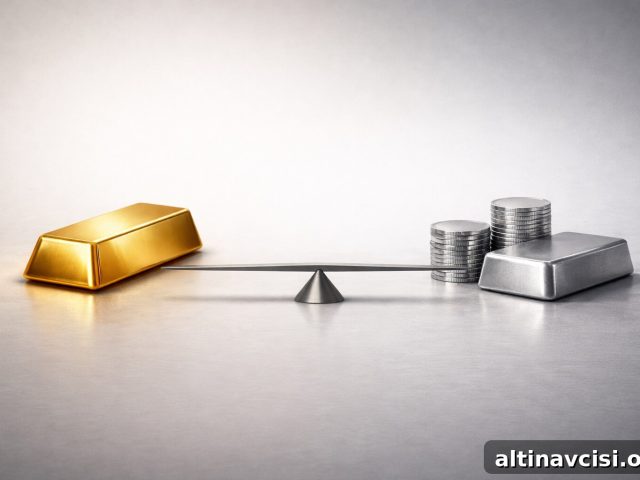
Other commodities behave differently: oil is consumed, crops are eaten, and silver is used at scale in industrial applications such as solar panels and electronics, which prevents the same accumulation. Gold, by contrast, is rarely destroyed: nearly every ounce ever mined still exists in some form.
High cumulative stock, low annual additions, and minimal physical consumption make gold’s scarcity structurally distinct from other physical assets.
Why Doesn’t Gold Deteriorate?
Gold resists oxidation, rust, and corrosion; it is one of the least reactive elements.
Gold withstands most acids and corrosive agents; the only common chemical mixture that dissolves it is aqua regia. Archaeological finds confirm its longevity: gold artifacts recovered from ancient Egyptian tombs remain intact after thousands of years. That enduring durability is a central reason gold functions so well as a store of value.
Other historical monetary materials decay: seashells rot, copper corrodes, and paper breaks down. Digital records rely on infrastructure. Gold’s persistent, physical nature sets it apart.
Doesn’t the Dollar Work Fine as Money?
The dollar functions well as a medium of exchange, but it does not reliably preserve purchasing power over decades.
Since the U.S. left the gold standard in 1971, the dollar has lost a large share of its purchasing power — approximately 88% according to CPI measures — meaning a dollar in 1971 buys far less today [BLS CPI data]. Over the same period, gold’s nominal price rose from $35/oz to about $4,565/oz, roughly a 130‑fold increase. The relationship shows that gold retained value while the dollar’s purchasing power declined; gold’s rise largely reflects the shrinking value of the currency used to price it.
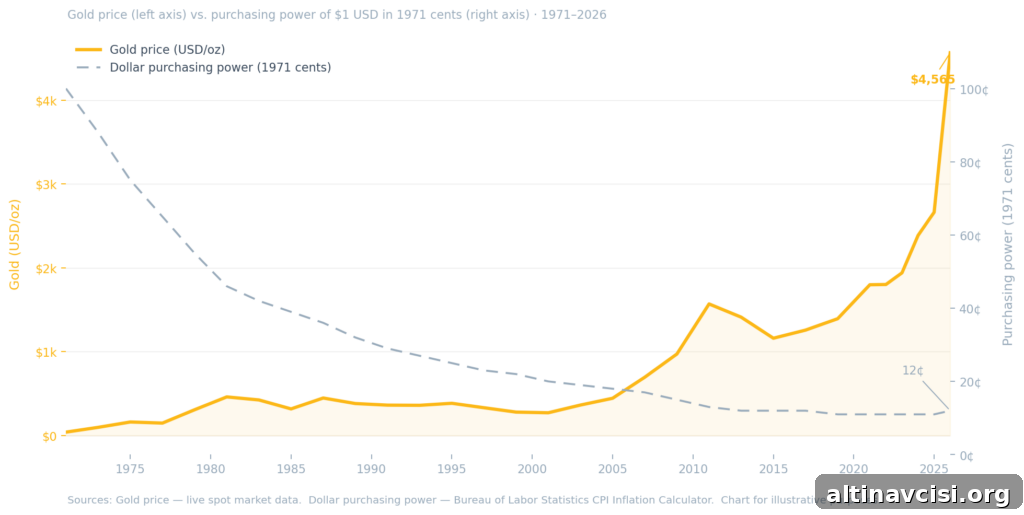
The key point: gold is valuable because it preserves purchasing power while fiat currencies tend to erode over time.
Why Are Central Banks Buying Gold at Historic Rates?
Central bank purchases have accelerated: more than 1,000 tonnes per year in 2022–2024, and steady buying into 2026.
In Q1 2026, central banks added 244 tonnes, with major buyers including Poland, Uzbekistan, and China [World Gold Council]. One catalyst for renewed accumulation was the 2022 freezing of a large portion of a sovereign reserve held abroad, which highlighted the political risk of holding foreign‑custodied assets. Gold held in a country’s vault cannot be frozen or sanctioned in the same way, making it attractive as a geopolitical hedge.
That practical lesson changed reserve managers’ calculations and contributed to the recent surge in official buying.
Is the Case for Gold Getting Stronger Over Time?
Gold’s relevance increases whenever governments expand money supply or run persistent deficits; those conditions have been present since 1971.
The United States pays over $1 trillion per year in interest on a large national debt and maintains a high level of broad money supply [CBO, 2026]. When fiscal deficits are financed by money creation, purchasing power erodes gradually over time. That economic dynamic strengthens the argument for allocating part of one’s savings to an asset designed to preserve purchasing power.
This is an observation of current fiscal and monetary trends, not a short‑term market forecast.
Stay On Top of Gold & Silver Prices
Get timely market alerts delivered to your inbox.
People Also Ask
Is gold actually worth anything, or is its value just belief?
Gold’s value is rooted in tangible properties: scarcity, chemical stability, divisibility, and portability. Those characteristics — documented by scientists and historians — explain why many societies independently adopted gold as money. Its value is therefore grounded in material reality as well as long‑standing social consensus.
Why does gold rise when the dollar weakens?
Gold is conventionally priced in dollars. When the dollar’s purchasing power falls, more dollars are required to buy the same ounce of gold. Thus, nominal gold prices often move higher when the dollar weakens, even if the intrinsic qualities of gold remain unchanged.
Is silver as good a store of value as gold?
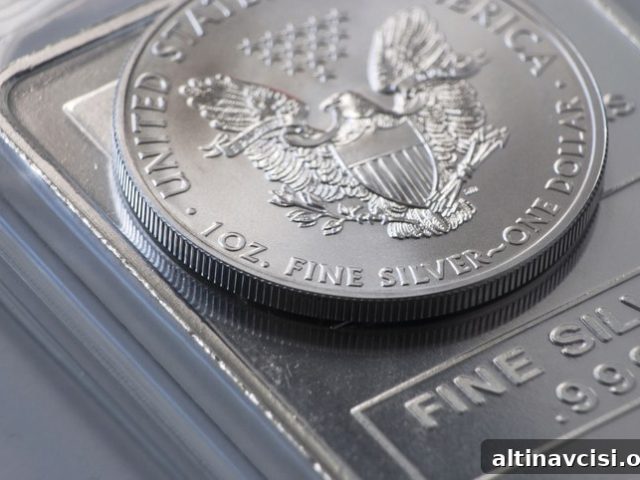
Silver shares a monetary history with gold but differs in industrial use. Significant industrial demand consumes silver over time, preventing the same level of above‑ground stock accumulation that gold enjoys. Consequently, gold’s higher stock‑to‑flow ratio makes it generally the stronger long‑term store of value.
Why can’t governments just create more gold?
Gold is a chemical element and cannot be produced at scale by policy decisions. New supply comes only from mining, which increases existing stock by a few percent per year and is limited by geology. Fiat currency, in contrast, can be created by monetary authorities, creating a structural asymmetry between gold and paper money.
How much gold should an individual investor hold?
There’s no single correct allocation. Gold serves as a purchasing‑power anchor rather than a growth engine. Common adviser guidance places allocations in the range of 5–15% of a diversified portfolio, depending on risk tolerance and the degree of exposure to fiat currency depreciation one wishes to hedge.
So, why is gold valuable?
Gold is valuable because it performs one function exceptionally well: preserving purchasing power. Unlike financial instruments that depend on policy and infrastructure, gold’s value stems from its physical scarcity, chemical durability, and historical acceptance. The U.S. dollar has lost a large share of purchasing power since 1971, and central banks have increasingly added gold to reserves. Those trends make gold a logical hedge for individuals and institutions seeking to protect wealth over decades.
If this reasoning aligns with your goals, consider researching how physical gold fits into a diversified savings plan and consult a qualified financial adviser before making decisions.
Sources
- World Gold Council — Gold Demand Trends Q1 2026
- World Gold Council — Gold Supply Data, Full Year 2024
- World Gold Council — Above‑Ground Stock Data
- World Gold Council — China Gold Market Update, May 2026
- U.S. Bureau of Labor Statistics — CPI inflation data
- Congressional Budget Office — The Budget and Economic Outlook: 2026 to 2036
- U.S. Treasury — REPO Task Force joint statements
- NPR — Interview with Sanat Kumar, chemist
- World Gold Council — Central Bank Gold Reserves Survey
- Peter Bernstein — The Power of Gold: The History of an Obsession
Disclaimer: This article is for informational and educational purposes only and does not constitute investment advice. Consult a qualified financial adviser before making investment decisions.
You may also like:
- 72% of Family Offices Hold No Gold. What They’re Missing.
- Gold Remonetization: Six Forces Restoring Gold’s Monetary Role
- Silver Industrial Demand: Solar, EVs, and the Supply Gap
- Bank of America’s $6,000 Gold Forecast: A Systemic Perspective
- Silver IRA Complete Guide: Rules, Limits, and Custodians Explained
- Silver’s Tesla Moment: The Solid‑State Battery Thesis
- Physical Gold vs. Digital Gold: Which Is the Ultimate Safe Haven?
- BRICS Is Hoarding Gold. Here’s What It Means for Your Portfolio.
Popular Topics
Picked from the archive
-
01
 Topics
Stronger Economy Delays Rate Cuts, Pressures Bond Market
-
02
Topics
Gold Price Rebounds Amid Iran Tensions, Fed Moves, Dollar Surge
-
03
Topics
401(k) Rollover to a Gold IRA: Step-by-Step Guide
-
04
Topics
Silver Slides While Gold Holds as Markets Reduce Risk
-
05
Topics
Gold Price Tops $3,600 After $1,000 Rally This Year
-
06
Topics
Gold Prices Rise on Fed Policy, Debt Concerns and Asian Demand
-
07
Topics
Gold vs Silver: Liquidity Explained for Investors
-
08
Topics
Dollar’s Decline: What It Means for Gold and Silver