Why $88 Billion a Month in US Debt Is Lifting Gold Prices
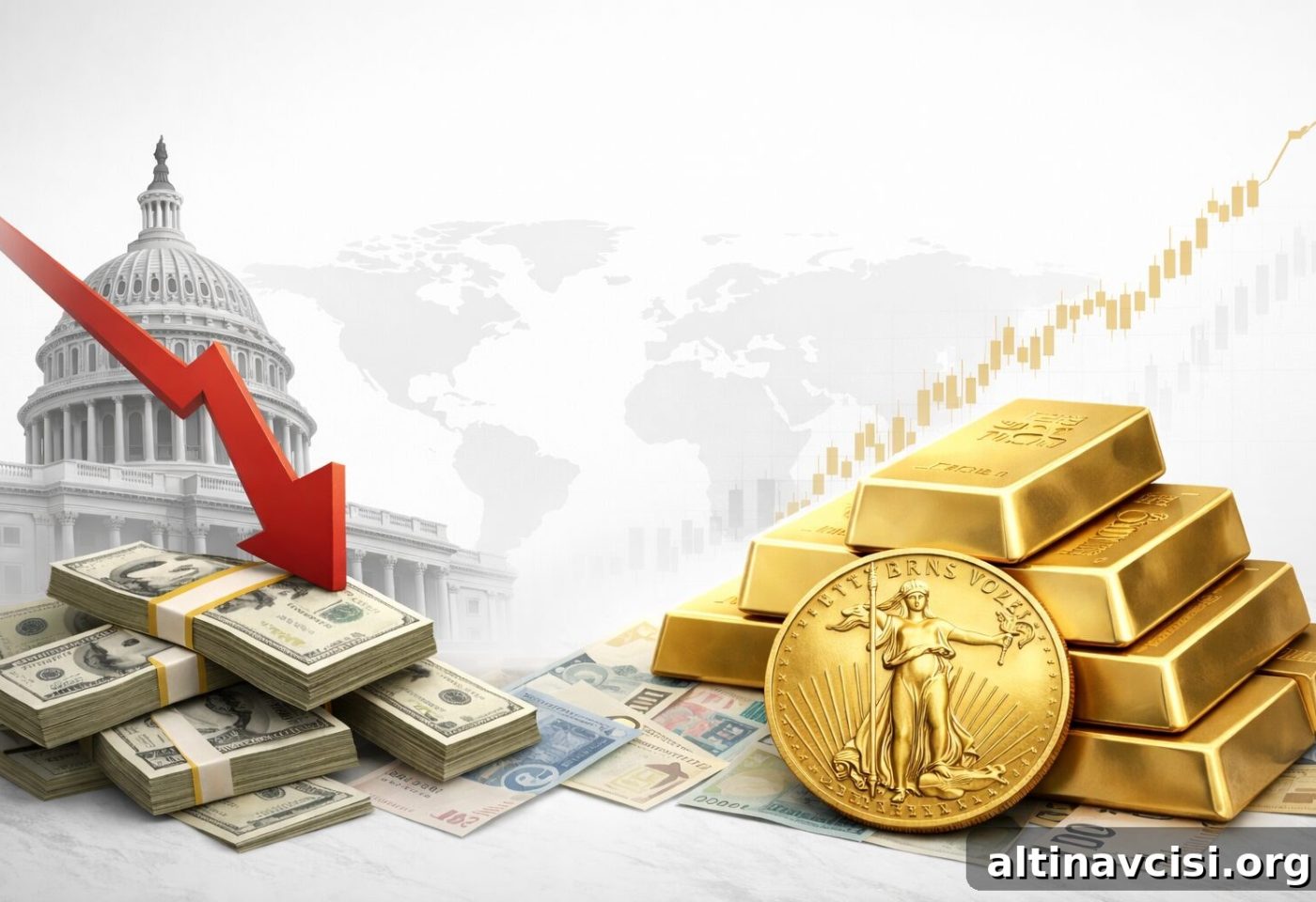
Does U.S. debt push gold higher? The CBO reports the U.S. paid $529 billion in interest in the first half of fiscal 2026 — roughly $88 billion per month. Gold is at record highs and still rising. Below is the fiscal mechanism every saver should understand before the next $88 billion bill arrives.
One headline investors and savers should not ignore: $88 billion. That is the approximate monthly cost the federal government now pays just to service its debt — not for defense, schools, or infrastructure, but interest alone.
The Congressional Budget Office’s Monthly Budget Review for March 2026 documents this reality: roughly $529 billion in interest payments over the first half of fiscal 2026. Gold has responded. With prices up more than 46% year-over-year, the market is pricing in sustained fiscal and monetary pressure.
Does US debt drive gold prices?
Yes — the link is clearer today than in many recent years. An $88 billion monthly interest bill annualized is well over $1 trillion. When that obligation sits alongside a weakening dollar, energy-driven inflation, and rising central-bank demand for bullion, gold’s rally becomes easier to understand. Central banks bought more than 1,000 tonnes of gold in 2025, reflecting reserve diversification and de-dollarization trends that support higher prices.
To put the scale in context: the monthly interest payment is roughly the same magnitude as combined federal spending on defense and education. With the national debt above $39 trillion and the CBO projecting interest costs could double to about $2.1 trillion by 2036, interest is the fastest-growing item in the budget. That dynamic changes expectations for currency purchasing power and helps explain why investors seek stores of value like gold.
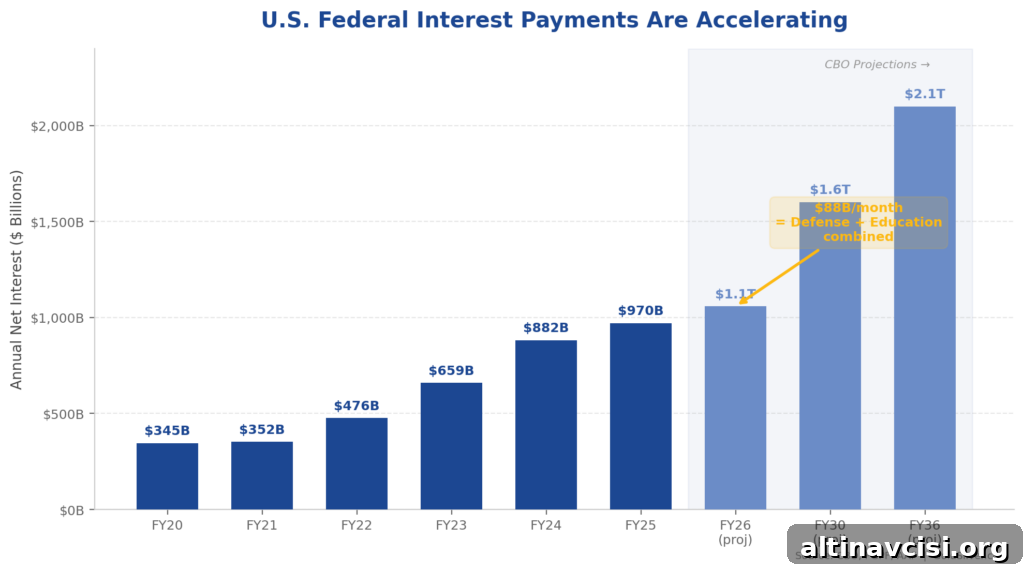
U.S. Federal Interest Payments Are Accelerating | Source: CBO, PGPF
This is the core mechanism of monetary pressure: rising debt-service obligations shift fiscal priorities and influence market expectations about inflation, currency strength, and central-bank policy. Gold is reflecting those expectations. On April 10, gold traded near $4,749 an ounce and remained elevated despite short-term volatility tied to geopolitical developments.
Geopolitical risk has compounded fiscal pressure. The April ceasefire between the U.S. and Iran produced a brief market relief rally, but shipping disruptions in the Strait of Hormuz kept oil and risk premia elevated. The strait carries a meaningful portion of global oil shipments, and delayed transit of tankers has kept oil prices well above pre-conflict levels — a factor that feeds inflation and supports precious metals as an inflation hedge.
Oil fell sharply on ceasefire headlines but recovered quickly, trading near $97 per barrel — substantially higher than pre-conflict levels and a direct contributor to headline inflation. That energy-price backdrop limits how quickly central banks can ease policy even as growth concerns rise.
Why isn’t the Fed cutting rates to ease the debt burden?
Because inflation and inflation expectations restrain them. At the March FOMC meeting the Federal Reserve left its policy rate unchanged in the 3.50%–3.75% range and raised its 2026 inflation forecast to 2.7% for both headline and core PCE. That creates a familiar dilemma: energy-driven price pressures push for tighter policy, while labor-market softness argues for easing. Large federal borrowing makes rate cuts politically tempting, but cutting too soon risks rekindling inflation and further weakening the dollar — outcomes that would likely boost gold even more.
Market pricing and Federal Reserve member forecasts reflect that tension. Several FOMC participants now see little or no room for cuts this year, and sudden dollar weakness tends to support precious metals by increasing the dollar price of commodities.
Is silver a better buy than gold right now?
Silver is historically cheap relative to gold. It spiked to about $76.70 per ounce on April 8, its highest level since mid-March, then eased back. Silver remains well below its January all-time high near $121. A steep, early conflict-driven selloff erased much of silver’s gains, leaving the gold-to-silver ratio around 63 — a level that suggests potential upside for silver if the broader precious-metals thesis persists.
Beyond short-term trading, structural demand matters. Central banks’ significant gold purchases in 2025 represented the second-largest annual total recorded, driven by diversification away from a single reserve currency. That trend continued into 2026 and reinforces the case for bullion as a reserve and portfolio diversifier.
The fiscal side of the story complements those forces. When a government spends more on servicing debt than on major public programs, it signals a long-term shift in the expected purchasing power of its currency. Gold and silver have historically preserved value in such environments because they cannot be created by central banks. For many investors, a measured allocation to physical precious metals is not speculation but risk management.
The debate is not simply whether gold is expensive at current quotes. The more relevant question is whether the dollar’s purchasing power is priced to reflect a $39 trillion national debt and rapidly rising interest obligations.
Stay On Top of Gold & Silver Prices
Get important market alerts delivered to your inbox.
Subscribe for concise updates on precious metals markets.
SOURCES
1. Congressional Budget Office — Monthly Budget Review: March 2026, April 8, 2026
2. Reporting on Strait of Hormuz shipping and oil-market impacts, April 2026
3. Kpler vessel-tracking data and industry commentary, April 2026
This article is for informational purposes only and does not constitute financial or investment advice. Consult a qualified financial advisor before making investment decisions.
You May Also Like
- CPI Hits 3.3%, GDP Stalls — Is Stagflation 2026 Here?
- War Risk, Stagflation Signals, and a $6,300 Gold Target
- Gold and Oil Brace for the Strait of Hormuz Deadline
- Iran War Deadline Puts Gold and Silver Prices on Edge
- Why Is Gold Falling When the World Is on Fire?
- Gold Jumps 2% as Major Geopolitical Address Looms
Popular Topics
Picked from the archive
-
01
 Topics
How Fed Pause and Rising PPI Affect Gold Prices
-
02
Topics
Gold Rebounds from Two-Week Low Ahead of Trump-Zelenskiy Summit
-
03
Topics
Shutdown Ends, Gold Price Climbs to Three-Week High
-
04
Topics
Silver Fair Value: Historical Trends and Market Data
-
05
Topics
How CPI Inflation Data Drives Gold Prices
-
06
Topics
Gold Price Could Reach USD 5,000 by 2026: Institutional Forecast
-
07
Topics
Trump’s 50% Metal Tariffs Hit Extinguishers and Auto Parts
-
08
Topics
Trump Names Tariff Architect Stephen Miran Interim Fed Governor