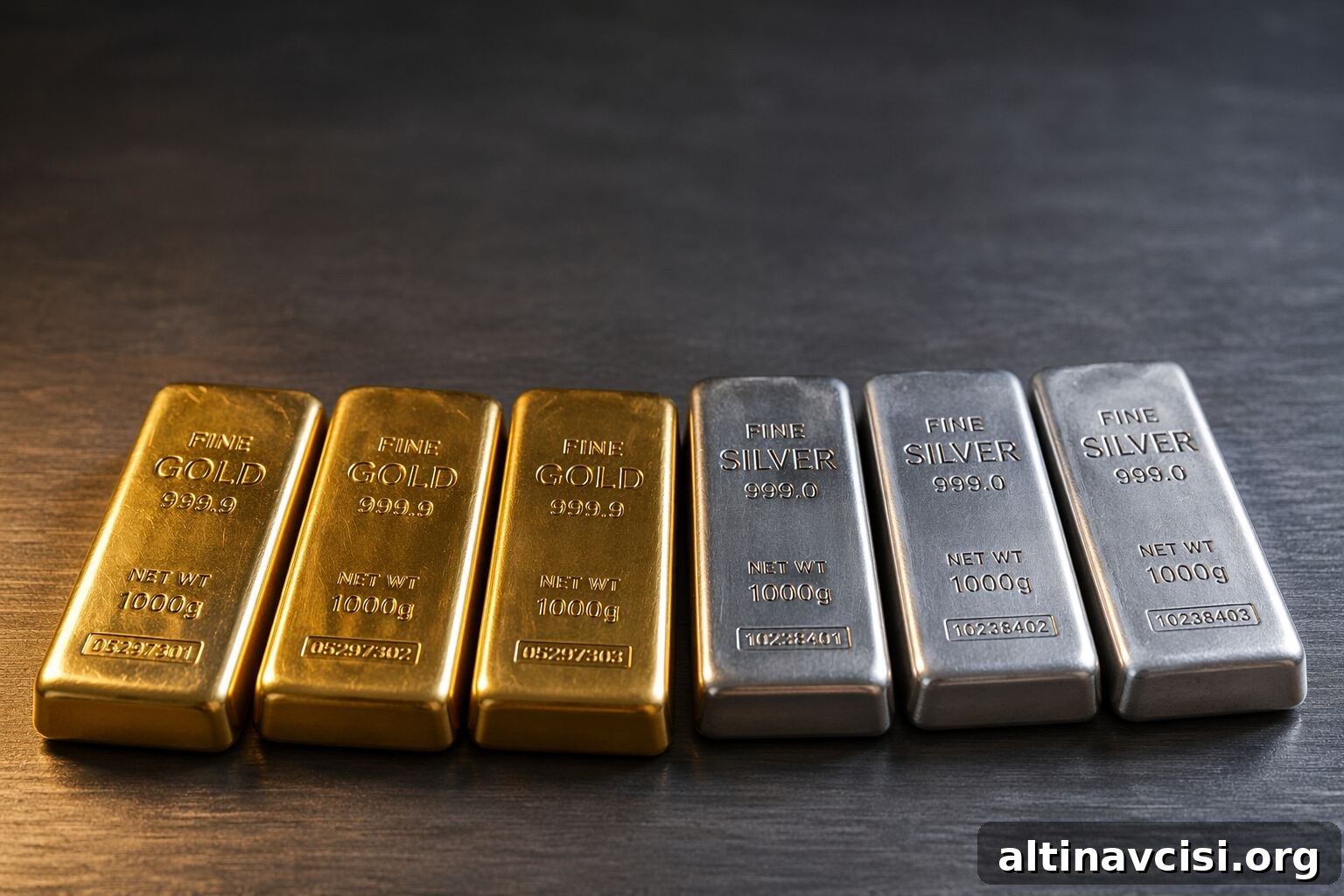
Precious metals have attracted investors, policymakers and markets for millennia. While the basic answer to what moves gold and silver prices is supply and demand, the reality is more complex. Central bank policy, mining production, industrial use and macroeconomic trends all interact to determine price direction, often in ways that differ for gold and silver.
This article outlines the principal supply and demand drivers for each metal, highlights why their price behavior diverges, and provides a framework to interpret medium- and long-term movements.
What Drives Gold & Silver Supply and Demand?
Gold Supply: Scarce by Nature
Gold supply is dominated by newly mined production and recycled gold (scrap). Global mine output has remained broadly stable in recent years because gold deposits are finite and costly to develop. When prices rise, miners can increase investment, but meaningful production gains typically require years of exploration and development.
Central banks also play a central role. Sales of official reserves add to market supply and can press prices lower; conversely, net purchases by central banks reduce available supply and support prices. In recent years emerging market central banks have been prominent buyers, tightening the supply available to private investors.
Gold Demand: Investment, Jewelry and Institutions
Demand for gold comes from investors (including ETFs and physical buyers), jewelry markets—especially in India and China—and official sector purchases. Investment demand reacts quickly to macro signals: inflation, changes in real interest rates, and geopolitical stress often drive flows into gold as a store of value. These monetary and sentiment-driven forces are the primary drivers of gold’s price over most cycles.
Silver Supply: Mining and a Byproduct Challenge
Silver’s supply picture is structurally different. A large share of silver is produced as a byproduct of mining for other metals such as copper, lead and zinc. Because so much silver supply is tied to base metal production, silver output doesn’t always respond directly to changes in the silver price. Slowdowns in base-metal mining can tighten silver supply even if silver prices are rising.
Primary silver mines and recycling supply the remainder, creating a more complex and sometimes less flexible supply base than gold.
How Do Economic and Geopolitical Events Impact Prices?
Gold is widely regarded as a safe-haven asset. During recessions, banking stress, currency crises and geopolitical conflicts, capital often shifts into gold as a store of value, pushing its price higher when confidence in financial systems falls.
Real interest rates—the difference between nominal rates and inflation—are particularly important. When real rates are low or negative, the opportunity cost of holding non-yielding assets like gold declines, making gold more attractive. That relationship helped support gold across periods of low interest rates in the 2010s and during the pandemic.
Silver is subject to many of the same macro drivers, but because a substantial portion of silver demand is industrial, its price is also tied to economic activity. During economic downturns industrial demand for silver can weaken, which may push silver lower even as gold rallies. Conversely, when growth returns, silver can rally strongly as industrial demand recovers and investor interest increases.
The pandemic year illustrated this duality: gold delivered solid gains as a safe haven, while silver’s combination of investment demand and improving industrial outlook produced even larger percentage gains once confidence and manufacturing activity rebounded.
Why Is Silver More Volatile Than Gold?
Silver tends to be more volatile than gold for three main reasons.
First, the silver market is smaller. The total market value of silver is a fraction of gold’s, so modest changes in demand can produce larger percentage moves.
Second, silver has a dual demand profile. It functions as both an investment asset and an industrial commodity. Applications in electronics, solar panels, electric vehicles and medical devices make silver sensitive to manufacturing cycles as well as to investor flows.
Third, the gold-to-silver ratio introduces additional volatility. Large swings in this ratio can trigger tactical rotations between the metals. In stressed markets the ratio can spike as investors favor gold’s liquidity and safety, then compress sharply when silver rebounds, amplifying price swings in both directions.
The Gold-to-Silver Ratio: A Window Into Market Dynamics
The gold-to-silver ratio measures how many ounces of silver equal one ounce of gold. When the ratio is high—meaning silver is cheap relative to gold—some investors view that as an opportunity to overweight silver in anticipation of ratio compression. Movements in the ratio reflect shifts in investor sentiment, industrial demand cycles and broader economic trends, and can help frame tactical decisions within longer-term allocation strategies.
Silver’s Industrial Demand: A Growing Long-Term Driver
A defining long-term trend for silver is rising industrial demand tied to the green energy transition and electrification. Solar photovoltaic panels, electric vehicles and expanded electrical infrastructure all rely on silver’s conductivity. As these sectors scale up, structural demand for silver increases in a way that does not apply to gold.
This industrial tailwind can support a higher baseline level of silver demand over time and helps explain why long-term forecasts often treat silver’s outlook as distinct from gold’s despite overlaps in investor-driven demand.
What Does This Mean for Your Portfolio?
Viewing gold and silver through a supply-and-demand lens clarifies their roles in a diversified portfolio. Gold, influenced primarily by monetary conditions and investor sentiment, is often used as a stabilizer—a hedge against currency debasement, inflation and systemic risk. Silver, which combines monetary and industrial demand, offers more upside potential but also larger short-term swings.
Over long cycles both metals frequently move in the same direction, though their short-term paths may differ. Identifying the phase of the cycle and the dominant supply-demand pressures helps set expectations and guide allocation decisions that match your risk tolerance and investment horizon.
Conclusion
Gold and silver prices reflect a mix of structural and cyclical forces: mine production, central bank activity, macroeconomic conditions, real interest rates and geopolitical risk. Silver’s increasing industrial role—particularly in green technologies—adds another persistent demand driver. Investors who understand these dynamics can better interpret price action, manage expectations and make informed decisions aligned with long-term goals.
Whether you prefer gold’s relative stability or silver’s growth potential, a supply-and-demand framework provides the clearest view of what moves prices and why.
Your Gold Buying Guide Most investors overpay when they buy gold. Then overpay again when they sell. This guide shows you exactly what to own — and why.
Stay On Top of Gold & Silver Prices
Get important market alerts sent straight to your inbox.
People Also Ask
What are the main factors that drive gold and silver prices over time?
Gold is primarily driven by investor demand, real interest rates, central bank activity and macro uncertainty. Silver is affected by the same monetary forces plus industrial demand from sectors such as electronics, solar energy and electric vehicles. Significant shifts in any of these areas move prices.
Why is silver more volatile than gold?
Silver’s smaller market size makes percentage moves larger for a given flow. Its combined roles as an industrial metal and an investment asset mean it can be pulled in opposite directions by manufacturing data and investor sentiment.
What is the gold-to-silver ratio and why does it matter?
The ratio indicates how many ounces of silver equate to one ounce of gold. High readings can suggest silver is cheap relative to gold and may prompt tactical shifts, while low readings imply silver has performed strongly versus gold.
How do industrial uses of silver affect its price compared to gold?
More than half of silver demand is industrial—solar panels, semiconductors and medical applications—making silver sensitive to global economic activity and technological adoption in ways that have limited impact on gold.
Does gold protect against inflation?
Gold has historically preserved purchasing power over long periods and tends to perform well when real interest rates are negative or when confidence in fiat currencies declines. It is commonly used as an inflation hedge, though outcomes vary across episodes.
SOURCES
1. World Gold Council — Gold Demand Trends: Full Year 2024
2. World Gold Council — Global Gold Demand Hits New High as Prices Soar in 2024
3. The Silver Institute — Silver Supply & Demand
4. Silver Institute — Silver Industrial Demand Reached a Record 680.5 Moz in 2024
5. Silver Institute — Silver Demand Forecast to Expand Across Key Technology Sectors
This article is for informational purposes only and does not constitute investment advice. Past performance is not indicative of future results. Consult a qualified financial advisor before making investment decisions.
You May Also Like
- Is Gold Jewelry a Good Investment? What Most Buyers Get Wrong
- How to Spot Fake Gold and Silver
- Numismatic vs. Bullion Coins: Know What You’re Buying
- Silver in AI Infrastructure: The Hidden Metal Behind Every AI Model
- Gold Price Forecasts for 2026, Revisited After Q1
- Gold ETFs Are Booming. But Do You Actually Own Gold?