
In April 2025 precious metals markets experienced a notable event: the gold-to-silver ratio briefly rose above 100-to-1, meaning it required more than 100 ounces of silver to equal the value of one ounce of gold. At the time, GoldSilver published an analysis highlighting this as a historic extreme and a compelling buying opportunity for silver.
Nine months later, entering 2026, the ratio has compressed to roughly 57-to-1. Gold delivered an impressive 67% gain during 2025.
Silver, however, outpaced gold by a wide margin. Silver surged roughly 147% — more than doubling returns for investors who acted when the ratio reached extreme levels.
That outcome was not random. It followed long-observed market patterns rooted in centuries of monetary history and modern market behavior.
The Gold-to-Silver Ratio: A Historical Perspective
For much of history, governments and monetary authorities fixed the gold-to-silver ratio rather than leaving it to markets. Ancient civilizations established ratios such as 15:1 in Rome and 12:1 in Byzantine times. Throughout the Middle Ages the ratio typically remained between 10:1 and 15:1. In the United States, the Coinage Act of 1792 legally fixed the ratio at 15:1, defining silver’s value relative to gold for currency purposes. Under those systems the relationship between the metals was predictable because it was legally enforced rather than market-driven.
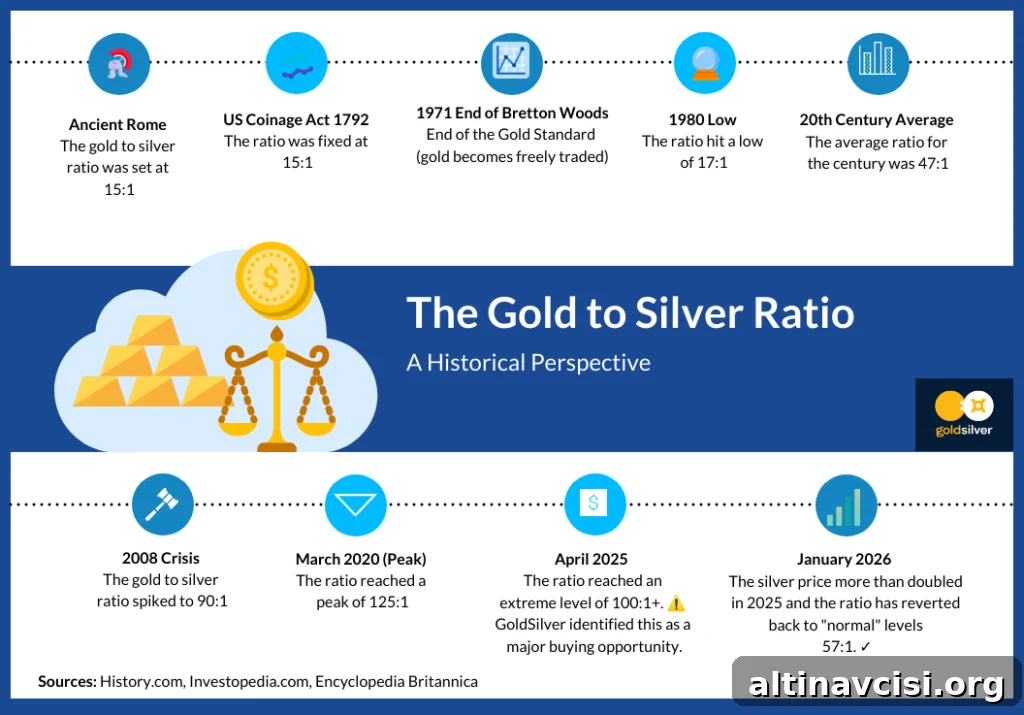
That structure changed in the 20th century as nations abandoned fixed exchange systems and precious metals standards. When gold became freely traded on modern markets after the end of the Bretton Woods system in the 1970s, the ratio came to be set by supply, demand and investor sentiment rather than government decree.
Volatility Creates Opportunity
Freed from government control, the gold-to-silver ratio has proven highly volatile. Instead of the narrow historical range around 15:1, the modern ratio has swung widely — from a low near 17:1 in 1980 to a peak around 125:1 during the March 2020 panic.
Decades of data show a recurring tendency: when the ratio reaches statistical extremes, it often reverts toward its long-term mean. During financial stress, investors seek gold as a safe haven, pushing the ratio higher — for example, near 90:1 in 2008 and 125:1 in 2020. Those extremes typically unwind as conditions stabilize, and silver — with both industrial and monetary demand — frequently catches up in sharp moves.
This pattern has repeated in recent market history. After a 100:1 peak in 1991 the ratio fell to about 40:1 by 1998 while silver significantly outperformed gold. Following the 2008 spike to roughly 90:1, silver rose toward $50 per ounce by 2011 and the ratio compressed to around 30:1. Investors familiar with these dynamics view extreme ratios as signals of potential opportunity.

The Financial System Isn’t Safer — And You Know It
As risks mount, see why gold and silver are projected to keep shining in 2026 and beyond.
April 2025: Identifying the Extreme
When the gold-to-silver ratio crossed above 100:1 in April 2025, analysts flagged it as a significant statistical extreme. Only a few times in modern history had the ratio exceeded that level — during the early 1990s and notably during the March 2020 market panic.
The case for silver at that extreme was based on several factors:
- Strong industrial demand: Silver’s use in solar panels, electronics and other green technologies continued to grow, supporting consumption.
- Supply constraints: Much of global silver is produced as a byproduct of other mining operations, limiting how quickly supply can expand in response to price rises.
- Statistical extremity: At 100:1 the ratio was more than two standard deviations above its long-term average — a historically unsustainable level that often precedes mean reversion.
Those conditions together suggested a compelling opportunity to favor silver within precious metals allocations.
The Results: January 2026
As 2026 begins, the market has largely validated that view. The gold-to-silver ratio now stands near 57:1, a compression of nearly 45 points from April’s extreme. That move reflects silver’s powerful outperformance.
Gold’s 67% gain in 2025 was driven by heavy central bank buying, persistent inflation concerns, and heightened geopolitical risk, reaffirming its role as a store of value. Silver’s roughly 147% surge, however, produced far larger gains for those who increased exposure when the ratio was extreme.
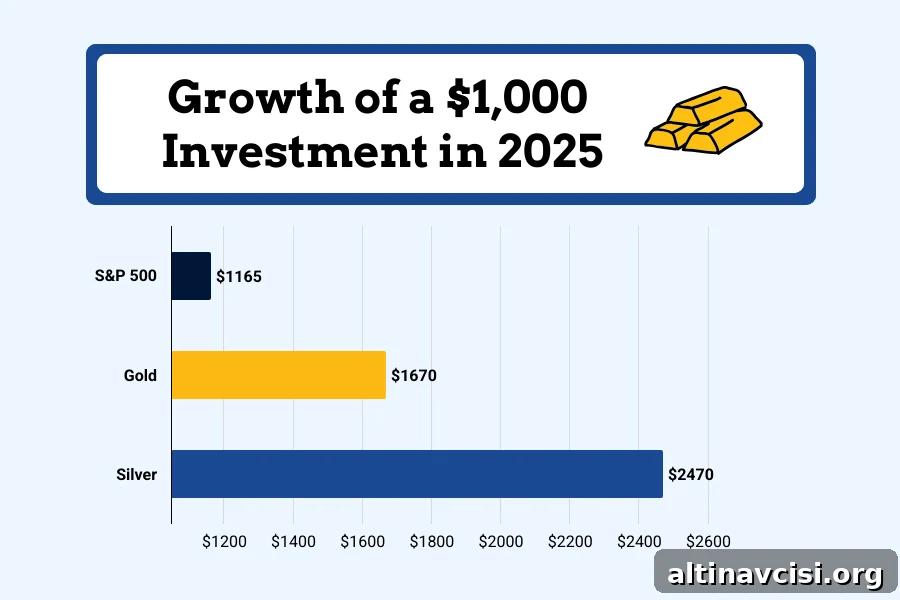
Such outperformance is the result of recognizing relative value and acting with discipline when asset relationships become historically stretched. The ratio signaled that silver was mispriced relative to gold, creating an asymmetric opportunity for investors willing to be patient.
What This Teaches Us About Market Timing
The 2025 gold-to-silver episode highlights several lessons for precious metals investors:
- Statistical extremes matter: When relationships move far outside historical norms, mean reversion becomes more likely. The key challenge is having conviction to act against prevailing sentiment.
- Use the ratio as a valuation tool: It captures relative pricing between two related assets. When one metal becomes notably cheaper than the other by historical standards, opportunity can arise.
- Patience is essential: The compression from 100:1 to 57:1 unfolded over months. Ratio-based strategies require time and persistence.
- No certainty, but a framework: Understanding these patterns doesn’t guarantee results, but it helps identify potential opportunities when market relationships are distorted.
Looking Forward to 2026
At roughly 57:1, the gold-to-silver ratio sits closer to its long-term range than it has in many years. The extreme that presented a rare silver opportunity has largely corrected, but the broader lesson stands: monitoring the ratio remains a valuable part of precious metals strategy. By watching for statistical extremes and understanding the forces behind them — industrial demand, supply dynamics, investor flows and macro conditions — investors can better time allocations between gold and silver.
We will continue to track the ratio and share analysis when notable opportunities emerge. History suggests extremes will recur; the question is when, not if.
For investors who acted on the April 2025 analysis, the returns have been significant. For others, the episode serves as a reminder that in precious metals investing, recognizing relative value can be as important as forecasting absolute price moves.
Stay On Top of Gold & Silver Prices
Get important market alerts sent straight to your inbox.
People Also Ask
What is the gold-to-silver ratio and why is it important?
The gold-to-silver ratio shows how many ounces of silver equal the value of one ounce of gold. It helps investors identify relative value and potential buying opportunities, guide allocation decisions between the two metals, and flag statistical extremes that may precede reversals.
Why is the gold-to-silver ratio falling right now?
The ratio is falling primarily because silver has been outperforming gold, supported by rising industrial demand—especially from solar energy and electronics—plus supply limitations in silver mining. Economic expectations that favor industrial metals over safe-haven gold also contribute.
What factors influence the gold-to-silver ratio?
Factors include industrial demand for silver, investment demand for both metals, mining supply dynamics, macroeconomic conditions, central bank and monetary policy, and currency strength. In uncertainty gold typically outperforms; in growth phases silver often leads.
What does a falling gold-to-silver ratio mean for silver and gold prices?
A falling ratio means silver is outperforming gold—either because silver prices rise faster than gold or because gold is falling more than silver. It often signals stronger industrial demand, improving economic sentiment, or a correction after an elevated ratio.
How can investors use the gold-to-silver ratio to make informed decisions?
Investors can use the ratio as a timing and allocation tool: consider increasing silver exposure when the ratio is historically high (for example above 80:1) and rotating toward gold when it is low (for example below 60:1). Monitoring ratio trends offers insight into broader market sentiment and relative value between the metals.
- The 80/60 Gold-Silver Rule: A Smarter Way to Balance Your Portfolio
- Will Silver Hit Triple Digits in 2026?
- Gold/Silver Ratio Price Charts
- Gold-Silver Ratio: A Hidden Window into Inflation Trends
- The Silver Bird: An Antifragile Asset in a Weaponized Financial World