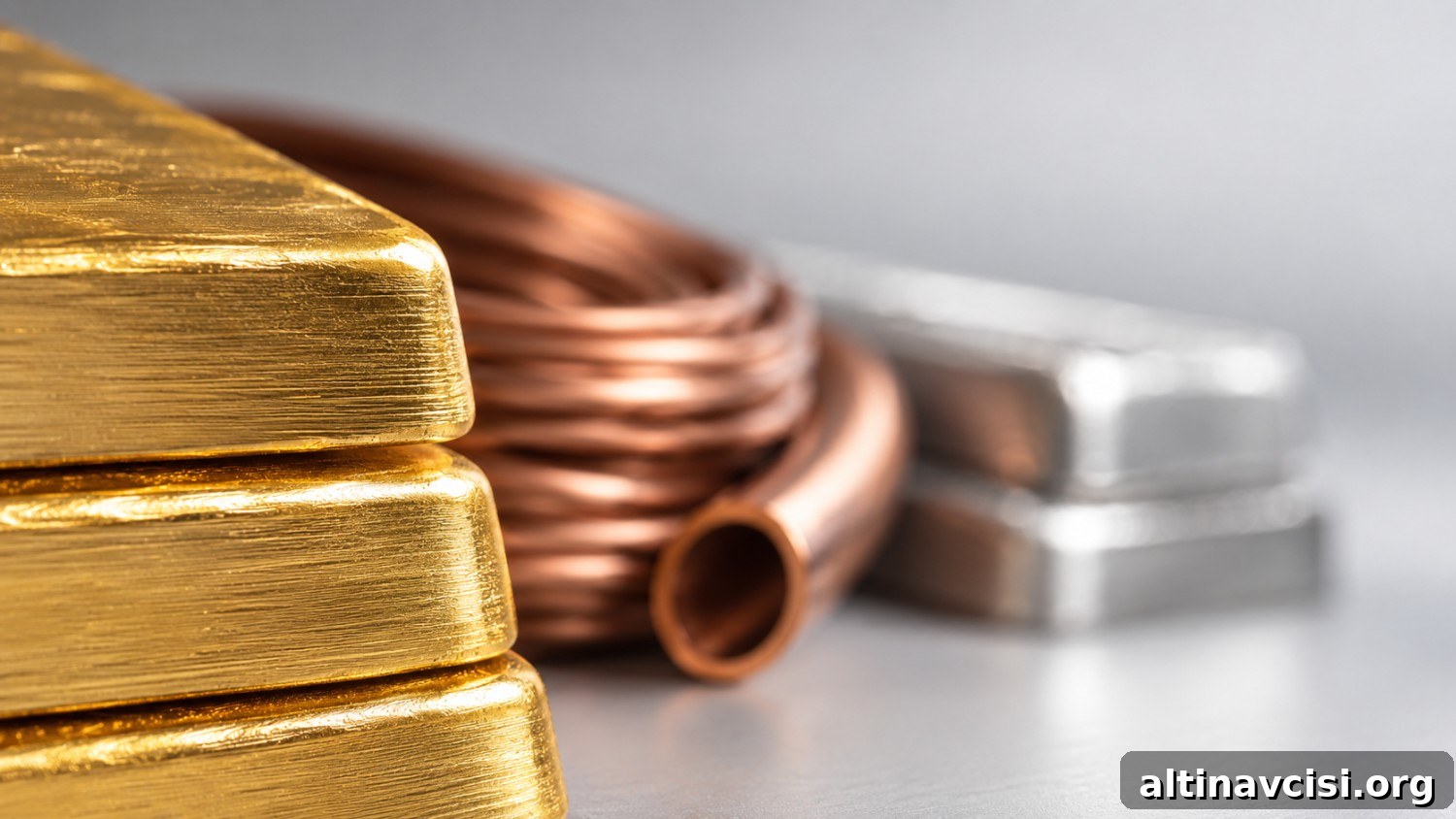
Gold slipped to $4,397.56 today, down about 0.7% on the session as traders increased bets on a September rate hike. Silver eased to $66.05. Those single-session prints look like a pullback, but they miss a broader picture: other market signals shifted today that suggest the hard-assets trade may be broadening rather than breaking. Four other indicators moved alongside the bullion price: copper’s market action, fresh silver forecasts from a major bank, gold miners’ performance versus bullion, and buying activity from a notable corporate treasurer. Below are the five threads worth tracking and the link that ties them together.
Why Did Copper Just Hit a Record High?
Copper reached an all-time high on the London Metal Exchange, trading in the range of roughly $14,600 to $14,700 per ton and marking its second consecutive session of record prices. The metal is up sharply this year. Market reports point to a combination of tight supply outside the United States and anticipatory flows into U.S. warehouses ahead of a prospective tariff on refined imports. At the same time, many existing mines are aging and struggling to keep up with rising demand from data centers, electrification and grid investments. Copper’s rally isn’t gold or silver, but it follows the same underlying logic: when real-world scarcity is repriced, that adjustment often shows up across hard assets, not just in the single metal making headlines that day.

The Edge Every Investor Needs
Smarter precious metals investing starts here. The Nuggets Newsletter delivers focused market insights, Fed updates, global trends, and educational material tailored to serious precious-metals investors.
Does UBS Still Think Silver Is Going Higher?
Yes. UBS raised its medium-term silver outlook this week even though the metal has pulled back to the mid-$60s. The bank’s published forecast projects silver at $70 by December 2026, $75 by spring and mid-2027, and $80 by late 2027. UBS describes the recent dip as tactical, driven by short-term rate-hike expectations that also weigh on gold. Importantly, UBS does not assume a smooth, uninterrupted rise—its projection pauses at $75 for two quarters before the next leg up. That underscores a key point: even bullish institutional forecasts expect short-term volatility and mean reversion along the path higher.
Why Are Gold Miners Outperforming Bullion Right Now?
Conventional thinking says rising bond yields should pressure gold prices. The 30-year Treasury yield trading above 5% places that pressure on bullion. Yet major mining companies are trading with valuation discounts despite solid margins, healthy cash flow and active buybacks. The reason is operating leverage: a miner’s costs per ounce are relatively fixed in the short term, so when gold prices rise the margin expands faster than the metal itself. That makes miners more sensitive to higher gold prices and explains why mining equities can outpace bullion during both up and down sessions. At the same time, central banks continue to repatriate physical gold into their own vaults, reflecting a preference for sovereign control over private custodial arrangements.
Why Is Tether Buying Physical Gold Every Week?
Tether’s CEO reports the company purchases one to two tonnes of physical gold each week, funding those buys from operating profit and targeting roughly 10–15% of its portfolio in gold. Those claims come from the company’s disclosures and are not independently audited, and holders of Tether’s dollar tokens or tokenized gold have a claim on the company rather than direct title to metal held in a segregated trust. Still, the strategic takeaway matters: even a large issuer of digital dollars seeks an asset with no counterparty risk. That preference echoes why many investors and treasurers diversify into tangible, non-sovereign assets.
What’s Actually Moving Gold This Week If Not the Fed?
The Federal Reserve has entered its blackout window ahead of the September meeting, limiting public commentary from FOMC officials until the decision is released. With that communications channel quiet, tensions in the Persian Gulf have become the dominant short-term swing factor. Analysts estimate current disruptions could remove significant barrels of crude from 2026 supply, and forecasts that the Strait of Hormuz could reopen later in the year are shaping oil and inflation expectations now. Because oil-driven inflation risk feeds into real yields, and real yields strongly influence gold’s opportunity cost, developments in the Gulf are moving gold more this week than central-bank rhetoric.
Finally, remember that price action in futures markets can be cushioned by short positions, and that net speculative length relative to open interest is a better gauge of crowding than raw positions alone. Institutional forecasts vary—some banks have lowered year-end targets while others remain more optimistic—so focus on direction and the set of risks shaping it rather than any single price projection.
SOURCES
Selected reporting from Bloomberg, Business Recorder/Reuters, relevant bank research notes and industry commentary published in early September 2026. These sources provided market color on copper, silver forecasts, miner fundamentals, Tether’s disclosures and Gulf supply developments.
Disclaimer: This article is for informational purposes only and does not constitute investment advice. Past performance is not indicative of future results. Consult a qualified financial advisor before making investment decisions.
You May Also Like:
- Gold Is Falling for a Reason Most Investors Have Backwards
- Even Central Banks Don’t Trust Someone Else’s Vault Anymore
- Gold’s Dip Below $4,400 Didn’t Scare Wall Street. Here’s Why.
- China Just Broke Its Own Gold-Buying Record. Then Broke It Again.
- The BLS Revised April Up 64,000, Then Down 31,000. Gold Traded the First Print.
- Gold’s Drop Was the Easy Story. The Bond Market’s Non-Reaction Is the Real One.
- Gold and Silver Drop as August Payrolls Blow Past Forecasts. Four Other Threads Moved Today Too.