Gold and silver market update — April 23, 2026
Key Takeaways
- Gold traded around $4,705 per ounce on April 23, 2026, slipping despite pressure on the dollar, a recent seizure of commercial ships in the Strait of Hormuz, and a Fed operating without a confirmed chair. A specific chain reaction in rates and real yields explains the counterintuitive move.
- The US Treasury blocked nearly $500 million in Iraqi oil proceeds held at the Federal Reserve Bank of New York, underscoring that dollar-based reserve flows can be halted by Washington’s decision even when dealing with partners.
- Central banks now hold roughly 36,000 tonnes of gold — about 17% of all gold ever mined, according to World Gold Council and IMF figures — marking sixteen consecutive months of net purchases. That trend reflects concern over assets that might be inaccessible in a crisis.
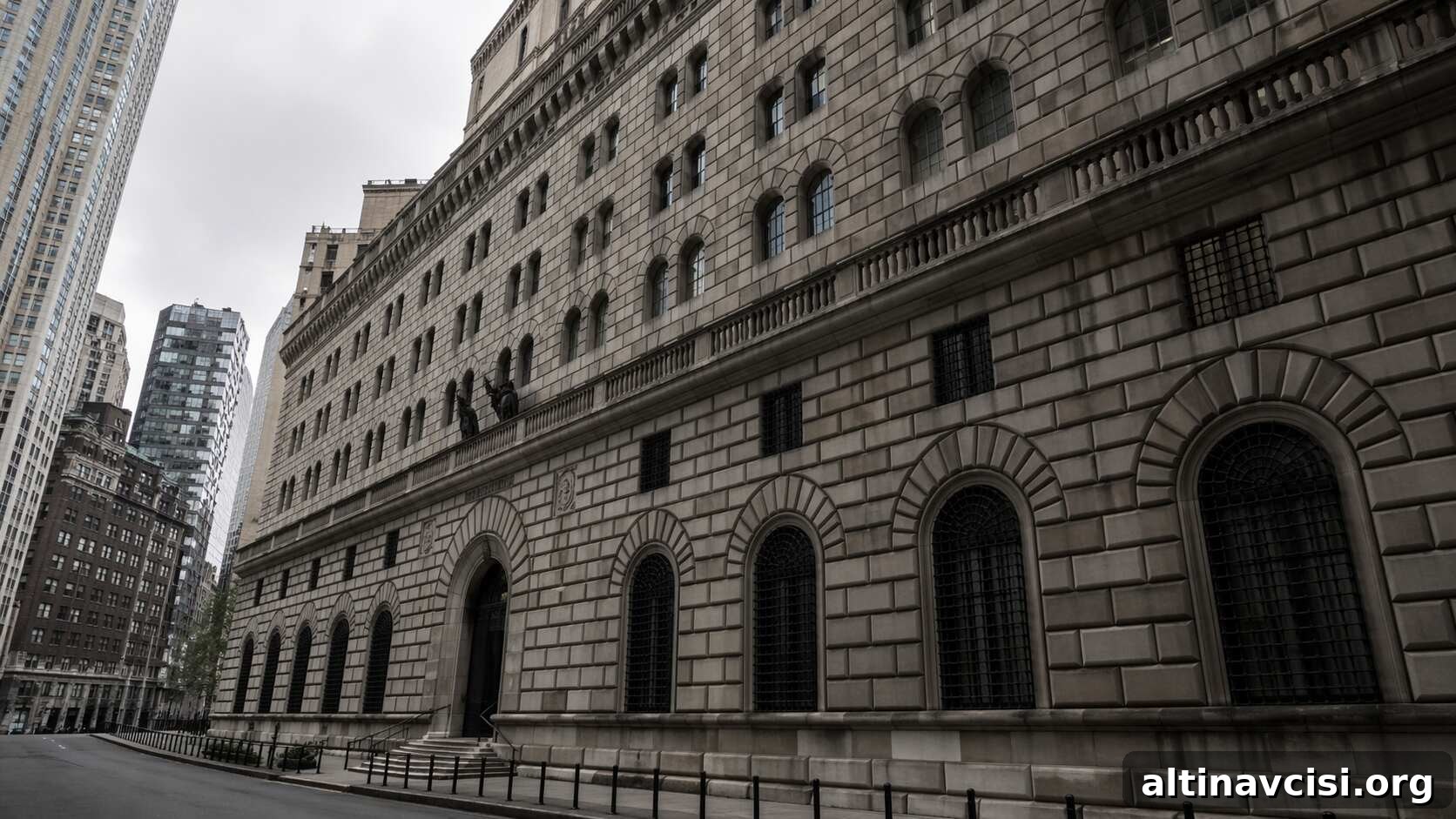
The US government recently prevented the delivery of nearly $500 million in US banknotes bound for the Central Bank of Iraq. Those funds were not aid but Iraq’s own oil revenue, kept at the Federal Reserve Bank of New York under arrangements dating back to the post-2003 period. The action was intended to pressure Baghdad over Iranian-backed militias, and it signals a structural risk in dollar-centric finance: reserve assets denominated and held in dollars can be frozen by the creditor jurisdiction.
On the same day Iran seized two commercial vessels in the Strait of Hormuz, gold prices were lower. Intuitively, a dollar blockage, a regional maritime seizure, and uncertainty at the Fed might be expected to push gold higher. The short-term price movement, however, reflects an interaction of inflation expectations, oil, and real yields rather than the longer-run recalibration of reserve preferences.
Why Did the US Block Iraq’s Dollar Shipments?
The move, first reported April 22, is less a tactical one-off than a demonstration of structural power. The Federal Reserve Bank of New York has held Iraq’s oil revenues for many years, and the US Treasury’s decision to halt an outgoing shipment of physical dollars shows that access to dollar liquidity can be curtailed by policy choices. That reality matters for any country or institution that relies heavily on dollar-denominated reserves.
Central banks have noticed. Global official gold holdings sit near 36,000 tonnes — about 17% of mined gold — and net purchases have continued for over a year. Part of that buying reflects a simple question: which reserve assets remain out of reach of a foreign jurisdiction? For many officials, sovereign-held, vaulted physical gold is the clearest answer.
The Edge Every Investor Needs
Smarter precious metals investing starts here. The Nuggets Newsletter brings essential market insights, Fed updates, global trends, educational videos, and much more.
Why Is the Federal Reserve Still Without a Confirmed Leader?
The Federal Reserve lacked a confirmed chair at the time of this update. That absence is more than procedural: it introduces political risk into the institution that anchors the global dollar system.
President Trump’s nominee, Kevin Warsh, testified before the Senate Banking Committee. His confirmation faced delays, including objections tied to investigations related to the outgoing chair. Polling and prediction markets assigned limited odds to confirmation before the incumbent’s term expired, while still indicating a plausible later confirmation. The timing of a successor matters because the Fed’s policy path and public signals can shift depending on who leads.
At the same time, the FOMC was scheduled to meet on April 28–29. The incoming administration had publicly urged a prompt rate cut, a message that adds to concerns about fiscal influence on monetary policy. When fiscal needs constrain central bank decisions — a condition often called fiscal dominance — policy space narrows and interest-rate decisions become entangled with broader budgetary politics. The next Fed chair therefore faces a policy challenge that is also political in nature.
Why Is Gold Falling If the Dollar Is Under Pressure?
Short-term gold prices respond most directly to real yields — nominal yields adjusted for inflation expectations — rather than inflation alone.
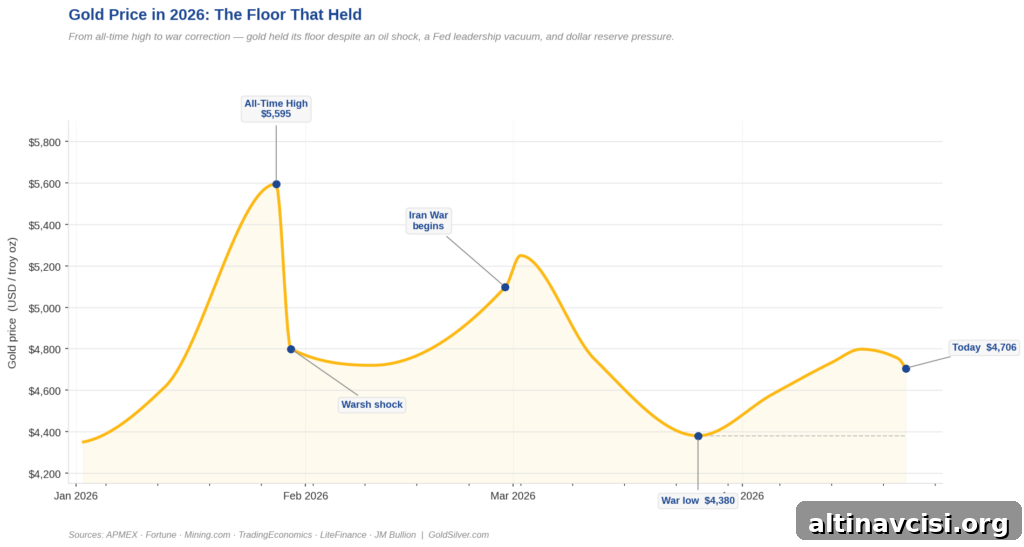
The chain of events is straightforward. Disruptions in the Strait of Hormuz pushed oil prices higher, which raised inflation expectations. Higher inflation expectations, in turn, kept the Federal Reserve on hold at its then-current policy rate range of 3.50–3.75%. With nominal rates steady and inflation expectations up, real yields remained positive. Positive real yields increase the opportunity cost of holding non-yielding assets such as gold, encouraging allocation into interest-bearing instruments and prompting selling in paper gold vehicles like futures and ETFs.
Put simply, the conflict produced inflationary pressure, and that environment can depress paper gold in the near term even as longer-term dynamics support the metal.
Structurally, gold’s support has stayed intact. After reaching an all-time nominal high of $5,595 per ounce on January 28, 2026, gold corrected into the mid-$4,700s — roughly a 16% drawdown. Given the scale of the geopolitical shock and the Fed’s stance, the pullback was relatively contained, suggesting an underlying bid for the metal remains.
What Does This Mean for Gold Investors Today?
The dollar’s reserve status does not vanish overnight. Instead, it erodes through a series of policy choices and actions that cumulatively change how institutions perceive risk. Freezing Iraq’s oil revenue is another example of a decision that can alter confidence in dollar-denominated assets.
For central banks and sovereign holders, the central question is which assets remain beyond the effective reach of foreign authorities. Physical gold stored outside the jurisdiction of potential claimants, and under sovereign control, is increasingly viewed as a defensive reserve asset. That dynamic helps explain sustained central-bank purchases even when the near-term price action is driven by real yields.
For private investors, the week’s price movements reflect temporary interactions between oil, inflation expectations, and policy rates. Over longer horizons, the structural drivers — reserve diversification, geopolitical risk, and trust in dollar liquidity — are likely to be the forces that define gold’s floor.
SOURCES
1. TradingEconomics — Gold Price Historical Data and News
2. World Gold Council — Gold Reserves by Country
3. International Monetary Fund — International Financial Statistics
4. US Energy Information Administration — Strait of Hormuz Oil Transit Data
5. Reuters — US Blocks Iraq Dollar Shipments to Squeeze Iran-Backed Militias
6. Al Jazeera — US Halts Shipment of Iraq’s Oil Dollars to Curb Iran-Linked Groups
7. Polymarket — Kevin Warsh Confirmed as Fed Chair by May 15?
8. CNBC — Kevin Warsh Fed Chair Confirmation Hearing Live Updates
By the GoldSilver Editorial Team — helping investors understand sound money since 2005. This article is for informational purposes only and does not constitute financial, investment, or tax advice. Consult a qualified financial advisor before making investment decisions.
You May Also Like:
- Why Chinese Silver Imports Hit a Record in 2026
- What Drives Gold Prices? 5 Forces Investors Are Watching Now
- The Gold-Silver Ratio Signal: What Silver’s Lead Means
- Gold Drops to $4,681 — Iran Ceasefire Expires Today
- The Real Reason Gold Is Down During an Oil War
- What the Warsh Hearing Means for Gold Prices
- IMF Says Treasuries Aren’t Safe Anymore. Gold Noticed First.
- Gold Price After Ceasefire Violation: The Floor Has Moved