Can Gold Reduce Sequence of Returns Risk in Retirement?


Including gold in a retirement portfolio can sometimes reduce the need to sell other investments after a market decline, provided the metal holds value when cash is required. That potential benefit arises because selling gold instead of depressed assets may leave more units of riskier investments intact for a future recovery. However, gold is not a cure-all: it does not remove sequence-of-returns risk, produce regular income, or guarantee that retirement savings will last.
The central practical question is simple: when a household needs cash, which assets are actually available to provide it, and at what cost?
Why does the order of returns matter in retirement?
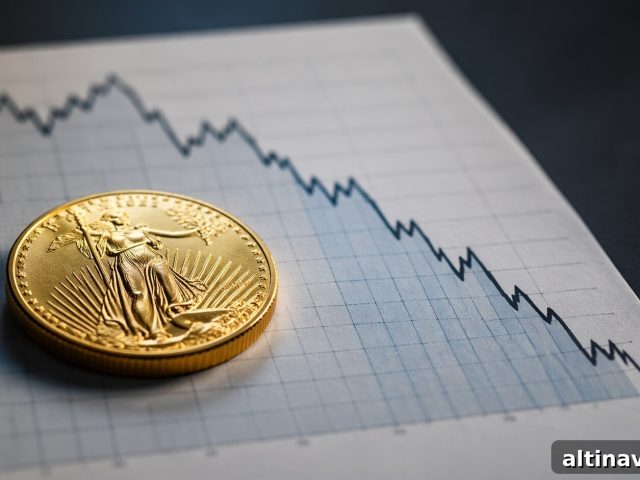
Sequence-of-returns risk refers to how the timing of gains and losses affects a portfolio that is making withdrawals. Early losses are especially harmful because spending removes money that would otherwise participate in any subsequent market recovery. A retiree with bills to pay cannot leave all assets invested indefinitely, so the order in which returns occur can have a large influence on outcomes.
A simple example illustrates the effect: if a holding falls from $100 to $80, raising $4,000 requires selling 50 units at the lower price, compared with 40 units at $100. Those extra units are no longer invested if the price later recovers.
The Knowledge That Changes Everything
Two practical guides — yours at no cost. Learn why gold can play a role in portfolios and how fiat currencies have behaved historically.
How can identical returns produce different retirement outcomes?
Two portfolios that experience the same returns in different order can end up with different balances when withdrawals occur. Consider two hypothetical portfolios that both start at $100,000 and each experience a 20% loss and a 25% gain, but in reversed order. Each portfolio withdraws $5,000 at the end of each year, after that year’s return.
If the loss happens first, the balance falls to $80,000; after a $5,000 withdrawal that leaves $75,000. A 25% gain in the second year raises it to $93,750; subtracting the second $5,000 leaves $88,750.
If the gain happens first, the balance rises to $125,000; after a $5,000 withdrawal it becomes $120,000. A 20% decline then reduces that balance to $96,000; the second $5,000 withdrawal leaves $91,000.
In this simplified illustration — excluding inflation, fees, taxes, and contributions — both portfolios would finish at $100,000 without any withdrawals, since multiplying by 0.80 and then 1.25 (or the reverse) yields the same product. But with withdrawals, the loss-first portfolio ends $2,250 behind because the initial payment removes dollars that would have benefited from the recovery. The single $5,000 withdrawal is a larger percentage of the smaller pre-withdrawal balance after a loss, increasing spending pressure.
Where could gold help with retirement withdrawals?
Gold can serve as an alternative source of liquidity when other holdings are depressed. If stocks or bonds have declined but gold has held its value or risen, selling some gold can meet a withdrawal without selling as many units of the weaker assets, preserving their recovery potential.
That choice does not create additional wealth by itself — it shifts which assets remain invested. The ultimate result depends on subsequent returns, the assets that gold replaced, and the costs associated with owning and selling physical metal. It also depends on intent: gold set aside exclusively for heirs cannot fund spending unless the owner changes that plan. Retirement strategies should distinguish metal earmarked for spending from metal meant to remain untouched.
What does research actually show about gold in retirement?
Research such as the World Gold Council’s analysis (October 9, 2023) has modeled small allocations of gold in defined-contribution pension scenarios. One common simulation builds a 5% gold allocation before retirement and retains it during retirement; Monte Carlo runs in that study suggested the approach could improve some simulated outcomes, including delaying portfolio depletion under the assumptions tested.
Those simulations used model-based return forecasts and historical correlations. They were specific to particular markets, assumptions, and ownership costs, and therefore do not automatically generalize to every retirement situation — especially across countries or for individual household circumstances. For U.S. retirement planning, stronger tests would compare complete portfolio strategies under clearly stated U.S. spending and ownership assumptions.
What protection can gold fail to provide?
Gold carries price risk and can be volatile. It provides no regular income, and there can be extended periods when it underperforms other assets. A plan should not assume gold will always be above its purchase price when a withdrawal is due; it can decline alongside stocks and bonds.
There is also an opportunity cost: if gold replaces an asset that later performs better, that allocation can reduce portfolio growth. Diversification can reduce risk in some scenarios without improving every outcome. Selling metal to meet expenses reduces the remaining holding, so timing, sale size, and costs matter for retirement planning.
How does physical ownership change the calculation?
The quoted market price for gold is not necessarily the cash an owner receives when selling physical metal. Dealer spreads, shipping, storage, insurance, and administrative fees can reduce net proceeds. A joint advisory from regulators explains these typical dealer costs and spreads.
A realistic spending plan should specify how a sale is requested, what charges apply, and when proceeds become available. Storage and account arrangements vary, so a universal timeline for cash access would be misleading. Owners can assess real-world liquidity by requesting a written buyback quote and clear terms: the relevant figure for planning is the cash available after applicable costs, not simply the metal’s quoted market value.
What else belongs in a retirement withdrawal plan?
Evaluate gold’s potential role alongside a detailed cash-flow map: list essential expenses, income that already covers them (pensions, Social Security, annuities), and the remaining amount investments must supply. Distinguish flexible spending from nonadjustable obligations.
Flexibility in withdrawals—reducing or pausing discretionary expenses when markets are weak—can relieve pressure on a portfolio, though it means less stable spending. Dynamic withdrawal strategies trade spending certainty for longevity of assets and should be considered realistically based on household tolerance and needs.
Three practical questions to guide a gold discussion:
- What job does this holding have? Is the metal available for spending, intended as a diversifier, or reserved for heirs?
- How would withdrawals and rebalancing work? Decide how selling gold would affect the remaining asset mix and future rebalancing choices.
- What happens if gold also falls? A robust plan does not depend on a single asset performing favorably when cash is needed.
For broader allocation considerations, review material on how time horizon and income needs influence gold allocation. The withdrawal question is distinct: how will the portfolio meet spending needs across different market conditions? Gold can add flexibility if it behaves differently from other holdings, but its value is greatest when its role, costs, and limits are defined in advance.
Stay On Top of Gold & Silver Prices
Get important market alerts sent straight to your inbox.
People Also Asked
What is sequence-of-returns risk?
Sequence-of-returns risk is the chance that the order of investment returns will harm a portfolio that must make regular withdrawals. Early market losses can leave fewer dollars invested to benefit from later recoveries, increasing the risk of depletion.
Does gold generate retirement income?
Physical gold does not pay interest or dividends. Selling gold can provide cash for spending, but that sale reduces the holding and net proceeds depend on sale price, purchase cost, and fees.
How much gold should a retiree own?
There is no single correct percentage for every retiree. Allocation decisions depend on the entire portfolio, spending needs, ownership costs, liquidity requirements, and the household’s tolerance for loss. A small allocation, such as 5%, is sometimes used in research but is not a universal rule.
Can gold replace cash needed for regular bills?
Gold can be sold to raise cash, but prices and net proceeds vary and may not be immediately available. Scheduled payments call for a reliable access plan; holding gold alone does not guarantee a specific cash amount on a fixed date without clear liquidity arrangements.
SOURCES
1. Vanguard — Vanguard’s Principles for Retirement Income (research and guidance on retirement income planning).
2. World Gold Council — Investment Update: The Case for Gold in DC Asset Allocations (analysis of gold in defined-contribution contexts).
3. World Gold Council — Potential Risks and Challenges (discussion of gold’s risks and limitations).
4. CFTC and FINRA — Customer Advisory: 10 Things to Ask Before Buying Physical Gold, Silver, or Other Metals (practical considerations for buyers).
5. Vanguard — Analysis on dynamic spending and how withdrawal flexibility impacts retirement outcomes.
Disclaimer: This article is for informational purposes only and does not constitute investment advice. Past performance is not indicative of future results. Always consult a qualified financial advisor before making investment decisions.
You May Also Like:
- Gold and Silver Outlook 2027: Forecasts and Risks
- Gold Vault Storage: Inside a Brink’s Vault
- What Backs the US Dollar Today?
- Silver Price Outlook October 2026: Fed Hold Is Locked
- Gold Price Outlook October 2026: Pullback & Fed Decision
- Long-Term Gold Ownership: The Case for Holding Gold
Popular Topics
Picked from the archive
-
01
 Topics
Why Investors Choose the Vienna Philharmonic Gold Coin
-
02
Topics
Stablecoin Issuer Outspent Central Banks on Gold Last Year
-
03
Topics
Why Gold Prices Are Falling Amid the Oil War
-
04
Topics
How to Buy Gold in 2026: Step-by-Step Guide for Beginners
-
05
Topics
Silver Appears Weak, Silver-to-Gold Ratio Signals Accumulation
-
06
Topics
Why Gold Prices Are Falling: What Most Investors Get Wrong
-
07
Topics
Should You Still Hold Gold in Your Portfolio?
-
08
Topics
Gold Bars vs Jewelry: Why Investors Choose Bullion