China Gold Imports via Hong Kong Surge 28% Amid Mixed Demand
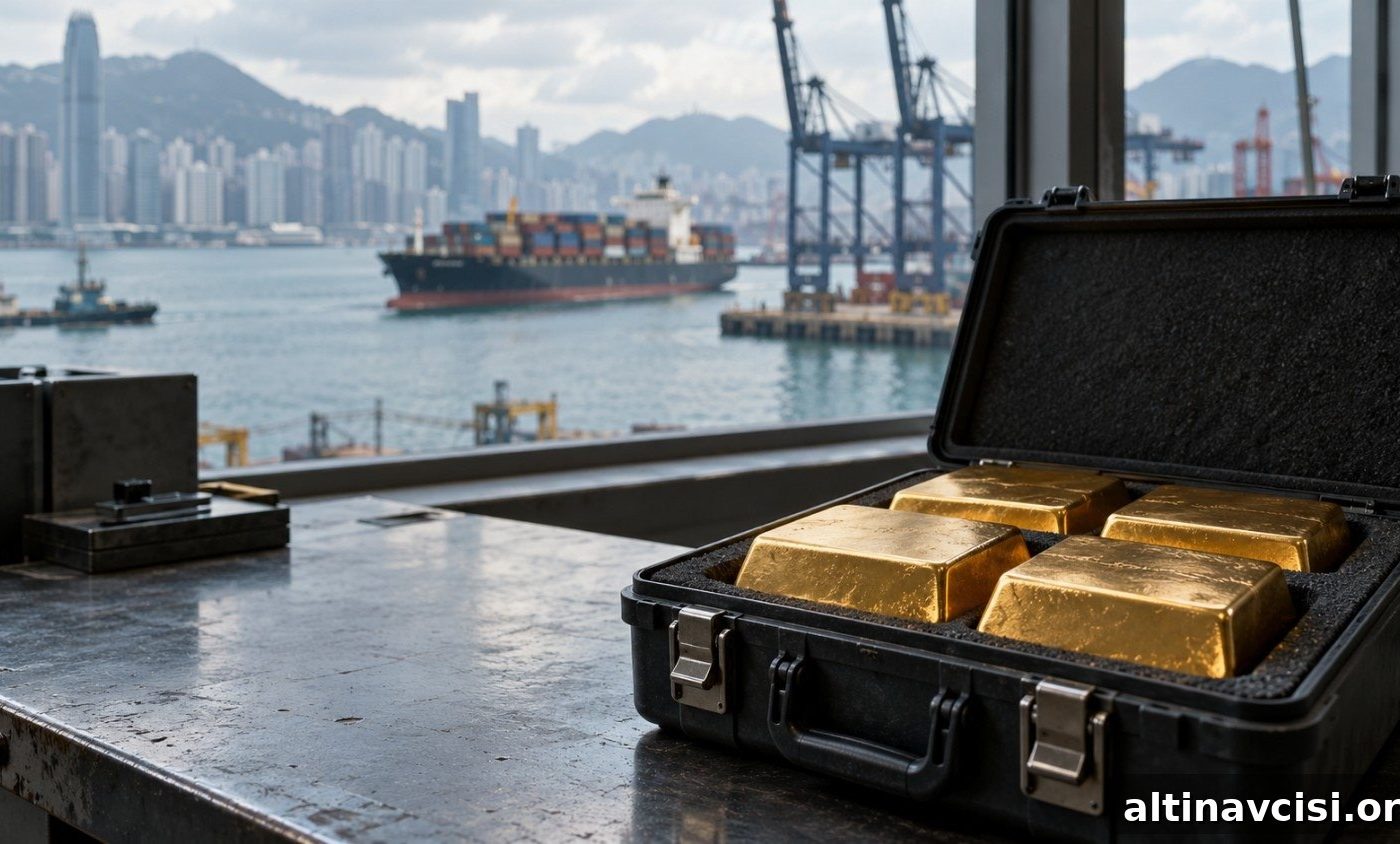
China’s gold imports routed through Hong Kong rose more than 28% from August to September on a net basis, reaching a five-month high for that trade route. At the same time, the World Gold Council (WGC) reported that wholesale withdrawals from the Shanghai Gold Exchange (SGE) increased versus August but remained below the level recorded in September 2025. These two measures look at different stages of the market: gold can move through a trade route and be counted as an import before it is taken out of wholesale storage or sold at retail.
Key takeaways
- Reuters reported that September net imports of gold via Hong Kong were more than 28% higher than in August — a five-month high for that route.
- The World Gold Council counted 92 tonnes withdrawn from the Shanghai Gold Exchange in September, a 48% increase from August but a 22% decline versus September 2025.
- Restocking by dealers can precede retail sales. Neither the Hong Kong import figures nor the SGE withdrawal totals alone prove who ultimately bought the gold or how much went into household or official reserves.
What do China gold imports via Hong Kong measure?
Net imports via Hong Kong measure the volume of gold that passes through that route into mainland China after subtracting flows that transit back through Hong Kong. This figure represents one gateway into China’s larger market, but it is not a complete tally of all gold entering the country. Import data do not capture downstream retail sales, informal transfers, or inventory that remains in dealers’ vaults. In other words, a surge in route inflows can reflect merchants bringing stock into the country — for example, ahead of a major holiday — without immediate or equivalent retail demand.
Media coverage cited restocking ahead of Golden Week and stronger investor interest as possible reasons for the rise in September route inflows. Those are plausible explanations, but the import number alone does not identify which buyers (retail, institutional, or official) received the metal. Companies commonly import bars to rebuild inventories before a holiday period and may not sell everything right away; the bars counted at the border can remain in storage for days or weeks before being withdrawn from exchange inventories or delivered to end buyers.
Previous reporting looked at China’s broader import totals for January through August, which helps frame longer trends but does not confirm a single month’s route flow or reveal final owners of the metal that moved through Hong Kong in September. That broader picture and a single-month import spike are related clues, but they are not direct proof of retail demand or central-bank buying.

The Edge Every Investor Needs
Smarter precious metals investing starts here. The Nuggets Newsletter delivers essential market insights, Fed updates, global trends and educational content to help you stay informed.
Why did wholesale gold demand give a mixed signal?
The World Gold Council’s report for mid-October shows a different step in the market chain: wholesale offtake from the Shanghai Gold Exchange. The Council recorded 92 tonnes withdrawn from the SGE in September. That total was 48% higher than August’s withdrawals but 22% lower than the withdrawals seen in September 2025. The WGC attributed the monthly increase partly to seasonal restocking while noting that jewelry demand remains weaker than in prior years. Because the WGC represents industry interests, its interpretation and context are stated directly in the report.
SGE withdrawals represent gold leaving a wholesale exchange environment; Hong Kong net imports represent bars arriving via one trade route. These are different counts measuring different moments in the supply chain. Both rose compared with August, but the wholesale measure still lagged year-over-year. Placing the 92 tonnes directly beside the percentage change in Hong Kong imports risks conflating two distinct indicators. They are complementary signals, not identical slices of the same dataset.
What does the import rise mean for a long-term gold owner?
For someone who already holds physical gold, the recent import and withdrawal figures add useful context about supply flows but do not change the fundamental characteristics of bullion ownership. A stronger inflow through a trade route suggests increased activity — possibly inventory rebuilding by dealers or renewed investor interest — but it does not establish a price floor or guarantee future purchasing power. The contrasting signals — stronger month-on-month route inflows and weaker year-on-year wholesale offtake — indicate a mixed picture rather than a broad, uniform surge in demand.
Official reserve purchases are a separate topic. Reserve transactions are typically announced or visible through other official channels; route import counts describe where bars moved, not who ultimately took delivery. Over coming months, continued monitoring of Hong Kong route data and subsequent SGE withdrawal patterns can help determine whether September’s rise was a temporary restocking before Golden Week or the start of a sustained trend. Until then, remember that gold can arrive in a market before it is sold to an end buyer.
SOURCES
1. Reuters report cited in business news coverage — summary of Hong Kong net import rise.
2. World Gold Council — China gold market update noting SGE withdrawals and commentary on seasonal restocking and jewelry demand.
3. Prior market coverage summarizing China’s January–August import totals and broader context for 2026 flows.
4. Background explanation on how central-bank gold buying works and why reserve purchases are distinct from route import counts.
Disclaimer: This article is for informational purposes only and does not constitute investment advice. Past performance is not indicative of future results. Always consult a qualified financial advisor before making investment decisions.
You May Also Like:
- World Bank Precious Metals Outlook: 2027 Forecast
- Silver Tests Its 2026 Low Again
- Gold Price Today: Does It Rise or Fall in an AI Stock Selloff?
- Durable Goods Beat: What It Means for Gold Price Today
- Gold Steadies Near $4,000 as Fed Week Begins
- Russia Is Selling Gold: Why That’s Not Bearish
- Gold Silver Ratio Today: Why Silver Is Falling Faster
- Gold Priced in Oil: What an Ounce Buys Now Compared with a Year Ago
- Social Security’s 3.6% Raise Arrives Late by Design
- How Gold’s Correction Impacted Portfolios
Popular Topics
Picked from the archive
-
01
 Topics
Why Investors Choose the Vienna Philharmonic Gold Coin
-
02
Topics
Stablecoin Issuer Outspent Central Banks on Gold Last Year
-
03
Topics
Why Gold Prices Are Falling Amid the Oil War
-
04
Topics
How to Buy Gold in 2026: Step-by-Step Guide for Beginners
-
05
Topics
Silver Appears Weak, Silver-to-Gold Ratio Signals Accumulation
-
06
Topics
Why Gold Prices Are Falling: What Most Investors Get Wrong
-
07
Topics
Should You Still Hold Gold in Your Portfolio?
-
08
Topics
Gold Bars vs Jewelry: Why Investors Choose Bullion