What Really Backs the US Dollar Today?

No modern U.S. dollar note can be exchanged for gold. Since 1971 the dollar’s value has rested on the force of law, the government’s ability to tax and borrow, and the continued willingness of governments and markets around the world to hold dollars. The United States formally ended dollar–gold convertibility in August 1971; ever since, Federal Reserve notes have derived their practical value from legal status, fiscal capacity, and global demand.
That short answer often prompts further questions: what level of protection did the gold standard actually provide, what remains of it, and how fragile is the current system? This article addresses those questions directly and presents the key numbers that help explain how the dollar is supported today.
What Did the Dollar Used to Be Backed By?
Under the Bretton Woods arrangement from 1944 until 1971, the dollar was linked to gold at $35 per ounce. That arrangement meant foreign governments could present dollar reserves to the U.S. and receive gold at the fixed rate. Domestically, Americans had already lost the right to redeem currency for gold in 1933, so Bretton Woods preserved a commitment primarily to foreign official holders, not to private citizens.
The system worked only while the United States held enough gold to satisfy foreign claims. By the late 1960s those claims far outpaced U.S. gold reserves and the fixed exchange could not be sustained. That imbalance set the stage for the policy shift in 1971.
The Knowledge That Changes Everything
Two concise guides — free. Learn why gold remains important and how fiat money systems work in practice.
What Changed on August 15, 1971?
On August 15, 1971, President Nixon announced that the United States would suspend the dollar’s convertibility into gold. The policy—often called the Nixon Shock—was presented as a temporary measure but was never reversed. Two years later Congress set an internal statutory value for Treasury accounting at $42.2222 per ounce of gold, a figure that has remained in law even as the market price climbed far higher.
That frozen statutory price illustrates how the old gold-linked system and the modern fiat system coexist in different parts of the government balance sheet.
So What Backs the Dollar Now?
If you look at a U.S. banknote, it still bears the phrase “This note is legal tender for all debts, public and private.” Today that legal status is mirrored by federal statute (31 U.S. Code § 5103), which confirms that U.S. currency is legal tender for taxes, dues, and private debts. That legal foundation is one pillar of the dollar’s value.
A second pillar is fiscal power: the federal government’s ability to tax and borrow. With a population over 340 million and an economy that produces more than $31 trillion a year, the United States can demand and accept payment in dollars. Economists summarize this capacity as the government’s “full faith and credit.”
The third pillar is global demand. Even without a commodity backing, the dollar remains the principal currency for international trade, commodity contracts, cross-border loans, and foreign exchange reserves. That practical usefulness sustains demand for dollar assets, especially U.S. Treasury securities, which are liquid and widely accepted.
Does the Treasury Still Hold Any Gold?
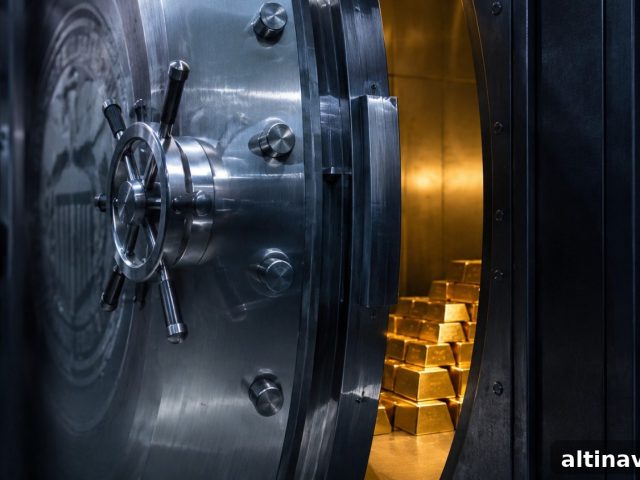
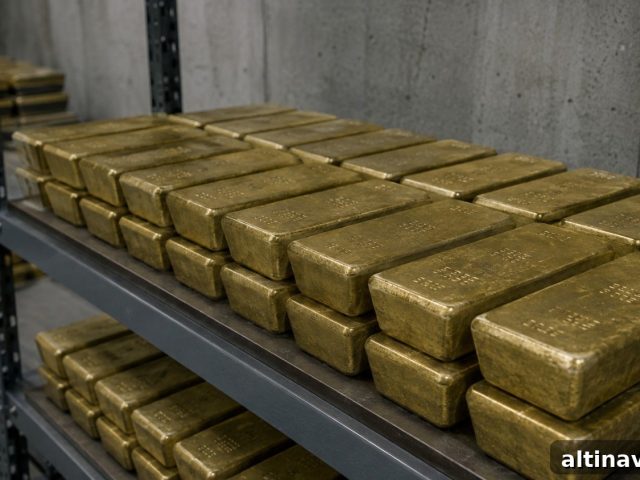
Yes. The U.S. Treasury holds 8,133.5 tonnes of gold—about 261.5 million troy ounces—making it the largest official holder of gold worldwide. By law, the Treasury values that metal on its books at the 1973 statutory price of $42.2222 per ounce. At that fixed accounting price the Treasury’s gold totals roughly $11 billion. At contemporary market prices, the same metal would be worth more than $1 trillion. The Federal Reserve does not directly own gold; instead it holds Treasury-issued gold certificates that are recorded at the same statutory price.
Why Does the World Still Use Dollars If Nothing Backs Them?
Practical utility determines which currencies dominate. The dollar is entrenched because it is the standard unit for many international contracts, commodity invoices, and global bank lending. Central banks hold dollar-denominated assets because U.S. Treasuries sit in deep, liquid markets that facilitate secure reserve management and predictable pricing.
The International Monetary Fund reports that the dollar accounted for 56.70% of globally allocated foreign exchange reserves in the second quarter of 2026, out of approximately $13.22 trillion in total reserves. No other currency approaches that share; the euro remains the next largest but at a much smaller proportion.
Is the Dollar’s Reserve Status Guaranteed to Last?
No. The dollar’s reserve share has declined from roughly 71% around 1999–2000 to 56.70% in 2026, a fall of about 14 percentage points over a quarter-century. Central banks have diversified into other currencies, gold, and smaller alternatives. That decline is meaningful but gradual; the dollar still commands nearly three times the reserve share of its nearest rival, and reserve shifts typically unfold over many years rather than overnight.
IMF analysis indicates some quarterly variation reflects currency valuation effects as well as active reallocation, so the trend is structural and incremental rather than catastrophic.
What Would It Take to Change What Backs the Dollar?
Reintroducing a commodity-backed dollar would require congressional action. The statutory framework that governs currency and the Treasury’s accounting rules are set in law, not by unilateral executive action. In practice, changes to what supports the dollar will continue to occur slowly through reserve-management decisions by sovereigns and through fiscal policy choices that affect U.S. borrowing costs and confidence.
What Does This Mean for an Investor Holding Gold or Silver?
The fixed $42.2222 accounting price shows how official records and market reality can diverge for decades. That gulf does not, by itself, determine whether precious metals are a suitable investment. Instead it highlights that gold’s role shifted from underpinning the currency to becoming a Treasury asset valued at a statutory price that was never updated.
Investors should weigh the distinction between legal-tender claims on government revenue and the real-world purchasing power of holding dollars versus physical gold or silver. This is a practical judgment about diversification, liquidity needs, and long-term risk, rather than a binary claim that fiat money is immediately unstable.
Stay On Top of Gold & Silver Prices
Get important market alerts sent straight to your inbox.
People Also Ask
No. The United States ended dollar–gold convertibility on August 15, 1971; the dollar is no longer redeemable for gold at a fixed rate.
Its legal-tender status, the federal government’s taxing and borrowing power, and persistent global demand for dollar-denominated assets such as U.S. Treasuries.
Yes. The Treasury holds 8,133.5 tonnes of gold, valued on official books at the 1973 statutory price of $42.2222 per ounce rather than at current market levels.
About 56.70% of allocated foreign exchange reserves as of Q2 2026, down from roughly 71% around 1999–2000.
SOURCES
1. Federal Reserve History — Gold Convertibility Ends
2. Cornell Law School, Legal Information Institute — 31 U.S. Code § 5103, Legal Tender
3. Cornell Law School, Legal Information Institute — 31 U.S. Code § 5116, Buying and Selling Gold and Silver
4. Cornell Law School, Legal Information Institute — 31 U.S. Code § 5117, Transferring Gold and Gold Certificates
5. U.S. Department of the Treasury, Fiscal Data — Status Report of U.S. Treasury-Owned Gold
6. Federal Reserve Bank of New York — Fedpoint: Gold Certificates
7. Federal Reserve Bank of St. Louis — What Gives Money Its Value?
8. International Monetary Fund — Currency Composition of Official Foreign Exchange Reserves (COFER) Data Brief, September 30, 2026
Disclaimer: This article is for informational purposes only and does not constitute investment advice. Past performance is not indicative of future results. Consult a qualified financial professional before making investment decisions.
You May Also Like:
- Silver Price Outlook October 2026: Fed Hold Is Locked
- Gold Price Outlook October 2026: Pullback & Fed Decision
- Long-Term Gold Ownership: The Case for Holding Gold
- How Higher Silver Prices Can Create a Cash-Flow Squeeze for Recyclers
- Why Are Central Banks Buying So Much Gold in 2026?
- Proof Gold Coins: Same Gold, So Why the Bigger Price?
- Silver Fell Harder Than Gold in September. The Solar Thrifting Story Isn’t Why.
- K-Shaped Economy: Why Asset Owners Win and Wage Earners Don’t
Popular Topics
Picked from the archive
-
01
 Topics
BLS Revises April Jobs: +64,000 Then -31,000; Gold Reacts
-
02
Topics
Gold-Silver Ratio Hits 61.1: Silver Poised to Rally
-
03
Topics
U.S. Sanctions Target Iran’s Gold Sector, Prices Slide
-
04
Topics
Hong Kong Completes First Gold Settlement; Banks Also Run London
-
05
Topics
Why Gold and Silver Climbed Despite Multiple Bearish Catalysts
-
06
Topics
Gold Market Split: Short-Term Sellers vs Long-Term Buyers
-
07
Topics
3 Fed Officials Voted to Hike Rates: What It Means for Gold
-
08
Topics
Why Gold Is Still a Safe Haven, Says Switzerland’s Top Refiner