Why Silver Is Falling Faster Than Gold and What It Means

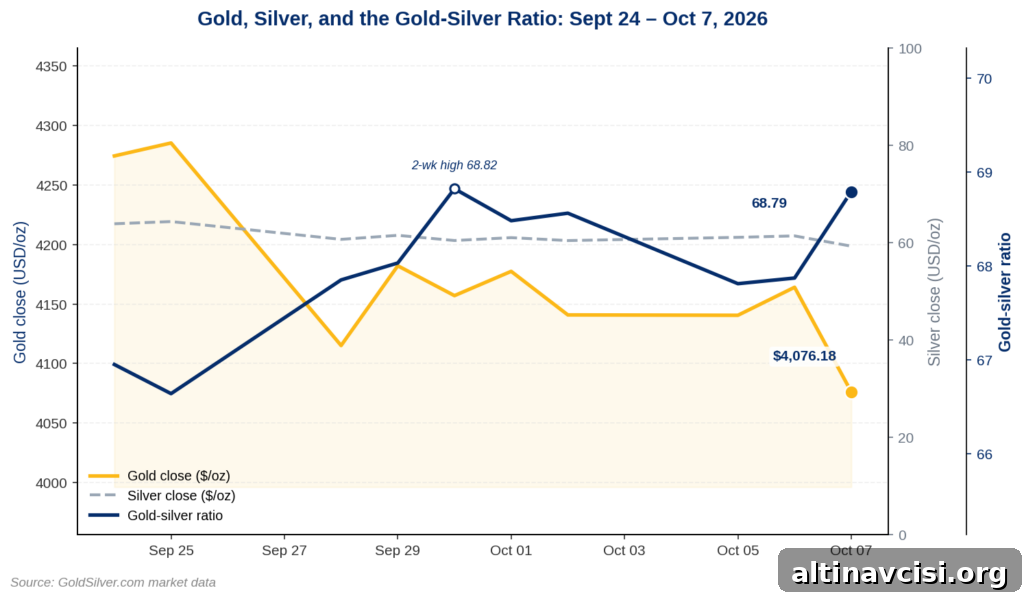
Gold fell 2.15% today, trading around $4,076.18. Silver dropped 2.52%, trading near $59.25. At first glance the difference seems small, but in percentage terms silver moved roughly 17% faster than gold in the same session.
The simple, broad explanation is higher yields. U.S. Treasury yields are climbing again ahead of the Federal Open Market Committee (FOMC) Minutes release. The 10‑year yield is approaching its highest level since 2002, and the 30‑year has pushed above 5.70%. A firmer U.S. dollar and rising borrowing costs increase the opportunity cost of holding non‑yielding assets like gold and silver, putting pressure on both markets.
But while rising yields explain why both metals fell, they do not fully explain why silver declined more sharply. To understand that, you need to look at silver’s unique demand profile rather than the bond market alone.

The Edge Every Investor Needs
Smarter precious metals investing starts here. The Nuggets Newsletter brings essential market updates, Fed commentary, global trends, educational videos, and more.
What Happened to Gold and Silver Prices Today?
Both metals opened lower and slid through the morning session. Gold’s decline follows the familiar pattern of rising real yields weighing on non‑yielding assets. That dynamic has dominated precious metals recently. Silver’s fall was steeper, however, reflecting additional market forces beyond the macro move in interest rates.
The difference between the two metals is visible in the gold‑silver ratio. That ratio shows how many ounces of silver are needed to buy a single ounce of gold. Today it sits near 68.79, just under the two‑week high of 68.82 recorded on September 30 and well above the late‑September low of 66.64. A rising ratio means silver is losing value relative to gold, ounce for ounce.
Why Is Silver Falling Harder Than Gold Today?
Silver has a dual role that gold does not: it is both a monetary asset and an industrial metal. According to the Silver Institute’s 2026 World Silver Survey, roughly 58% of global silver demand is industrial. Silver is used extensively in photovoltaics, electronics, medical applications, and electrical infrastructure. Gold, by contrast, has minimal large‑scale industrial demand and is driven mainly by investment and jewelry demand.
That dual identity creates extra sensitivity. When real yields rise, silver suffers the same monetary pressure as gold. On top of that, investors and traders interpret higher borrowing costs as a potential brake on capital‑intensive industrial projects — for example, large solar deployments or industrial upgrades that use silver. Those concerns can reduce near‑term demand expectations for silver while leaving gold’s investment‑demand story comparatively less affected. The result is a higher beta for silver in volatile rate environments.
What Does a Rising Gold‑Silver Ratio Mean for Investors?
A rising gold‑silver ratio directly signals that silver is cheaper relative to gold. It does not necessarily mean silver’s long‑term fundamentals have deteriorated overnight. Historical context matters: the ratio has moved through wide ranges over time. Today’s level is elevated relative to recent weeks but still below classic extremes that have historically preceded extended periods where silver outperforms gold.
This particular widening largely reflects a real‑yield shock playing out across two metals with different demand mixes, rather than new supply or demand data for silver itself. Upcoming Fed communication — notably the FOMC Minutes — could move both markets again depending on how policymakers described their outlook for interest rates.
What Should Investors Watch Next?
Beyond today’s session, two items matter most. First, watch whether the 10‑year Treasury yield confirms a break above its 2002‑era high once the Minutes are released. Second, monitor whether the gold‑silver ratio holds above the 68 level or retreats toward the 67 area that dominated early October.
For individual investors, a widening ratio during a real‑yield shock often acts as a rebalance signal rather than a trigger to sell. If you already own both metals, use moves like today’s to check whether your allocation still matches your risk profile and investment plan. Tactical adjustments are reasonable, but they should be made with your long‑term objectives in mind.
The broader structural case for holding gold and silver remains separate from short‑term volatility. High government debt levels and elevated Treasury yields make refinancing more expensive and keep macro tail risks on the radar. Day‑to‑day divergences are tactical; the multi‑year rationale for owning scarce, non‑manufacturable money is a strategic consideration that endures regardless of short swings.
SOURCES
1. FXStreet — Coverage of gold under pressure from a stronger US dollar and rising Treasury yields ahead of FOMC minutes.
2. FXStreet — Analysis of silver price behavior and near‑term drivers.
3. GoldSilver.com — Live pricing and gold‑silver ratio data.
4. Silver Institute — World Silver Survey 2026, demand breakdown and market context.
Disclaimer: This article is for informational purposes only and does not constitute investment advice. Past performance is not indicative of future results. Consult a qualified financial advisor before making investment decisions.
You May Also Like:
- Gold Fell 26% From Its Peak. Five Wall Street Voices Just Made the Case for Why That’s the Wrong Read.
- Gold Fell to a Two-Month Low Today. Then It Rebounded Before Lunch.
- Five Moves Are Quietly Rebuilding Gold’s Entire Market Structure
- Gold Is Rising Today. A 24-Year-High Bond Yield Says It Shouldn’t Be.
- Gold’s Share of Central Bank Reserves Nearly Doubled. A Top Banker Just Explained Why.
- Treasury Yields Are Tightening: What It Means for Gold
- Who’s Actually Right About Gold Right Now? Five Signals, Five Answers
- Gold and Silver Are Rising Today. So Is the Dollar. That’s Rare.
- When Should a Central Bank Sell Its Gold? One Just Did. Most Won’t.
Popular Topics
Picked from the archive
-
01
 Topics
Why Investors Choose the Vienna Philharmonic Gold Coin
-
02
Topics
Stablecoin Issuer Outspent Central Banks on Gold Last Year
-
03
Topics
Why Gold Prices Are Falling Amid the Oil War
-
04
Topics
How to Buy Gold in 2026: Step-by-Step Guide for Beginners
-
05
Topics
Silver Appears Weak, Silver-to-Gold Ratio Signals Accumulation
-
06
Topics
Why Gold Prices Are Falling: What Most Investors Get Wrong
-
07
Topics
Should You Still Hold Gold in Your Portfolio?
-
08
Topics
Gold Bars vs Jewelry: Why Investors Choose Bullion