Gold Falls to Two-Month Low as Yields Rise, Not Iran
A report that President Trump offered Iran a deal — and his quick denial — unsettled markets, and precious metals reacted before the two sides clarified the situation. Gold fell sharply, and silver moved lower as traders repriced risk, yields, and the outlook for inflation and monetary policy.
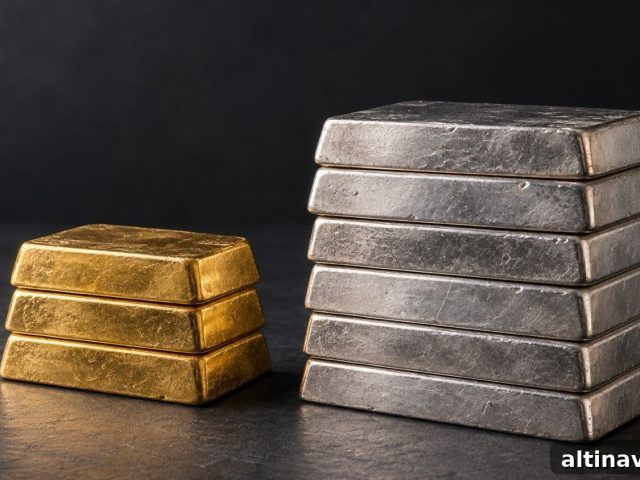
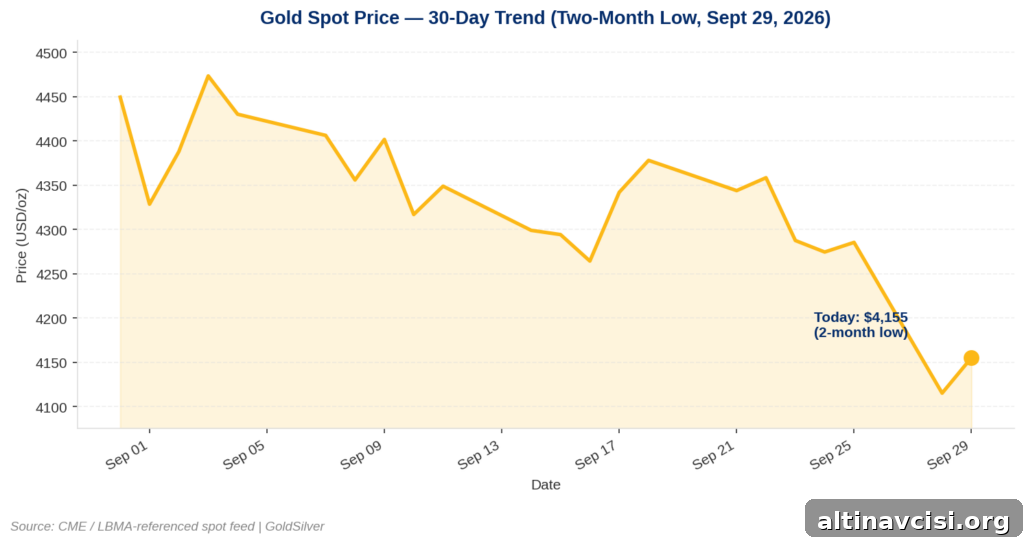
As of Tuesday, gold traded near $4,155 an ounce, marking its weakest level in almost two months after Monday’s session erased roughly 4% of the price. Silver hovered around $60.92, and the gold-silver ratio widened to about 68, up from the low 60s two weeks earlier.
Key takeaways:
- Gold has slipped to near $4,155 an ounce, the weakest since early August, after reports that Trump was willing to offer Iran sanctions relief in exchange for nuclear concessions — a claim he later denied publicly.
- Long-term Treasury yields surged to levels not seen since 2007. Real yields, represented by the DFII10 benchmark, have jumped nearly 90 basis points over three weeks — a major headwind for non-yielding gold.
- Markets now price roughly a 70% chance of an October rate hike, up from mid-60s earlier in the week, reflecting the growing expectation of further Fed tightening.
- Commitments-of-traders data show gold futures remain heavily net long. Managed money holds a large excess of long contracts, leaving the market vulnerable to unwind if selling accelerates.
- Key events to watch this week: Wednesday’s PCE inflation report, Friday’s jobs data, and the Qatari-mediated Iran talks in New York.
Why Did a Denied Report Still Move Gold and Silver?
Major outlets reported that President Trump had offered Iran sanctions relief in exchange for concrete nuclear steps. Hours later he denied the report. Despite the public contradiction, mediators from Qatar and Pakistan continued talks with Iran in New York, and U.S. officials described the discussions as constructive. That ambiguity — the presence of a potential de-escalation rather than a confirmed agreement — was enough to shift traders’ expectations.
Gold and silver have been trading on a set of linked assumptions: that tensions in and around the Strait of Hormuz would keep oil prices and inflation elevated, supporting expectations of further Fed hikes. When headlines suggested an opening toward de-escalation, even briefly, markets reacted because a reduction in geopolitical risk could lower oil and inflation expectations and, by extension, reduce the impetus for additional rate increases. Markets do not wait for formal confirmation; they price possibilities.
Why Are Treasury Yields Pushing Gold to a Two-Month Low?
A quieter but more powerful force behind gold’s weakness is the bond market. The 10-year Treasury yield climbed above 5.2% this week, its highest level since 2007, and the Fed’s real-yield benchmark (DFII10) has risen sharply — nearly 90 basis points in three weeks. Rising real yields increase the opportunity cost of holding gold, which pays no interest.
Every basis point added to real yields makes non-yielding assets like gold relatively more expensive to hold versus Treasuries. The CME FedWatch tool currently prices a roughly 70% chance of a Fed rate hike in October, up from around 57% a week earlier. Policymakers and markets are increasingly factoring stronger growth expectations, higher government borrowing concerns, and further monetary tightening into longer-term yields.
On top of higher yields, the market is crowded with bullish positioning. Data show managed money accounts holding a very large net long position in gold futures. That concentration means there is more position-length to be squeezed on negative headlines, amplifying price moves to the downside when sentiment shifts.
What Does This Mean for the Long-Term Case for Gold and Silver?
Short-term price swings do not erase the structural drivers that have supported precious metals for years: a federal debt burden above $40 trillion, annual net interest costs in the hundreds of billions to over a trillion dollars, and the limits of sustained high-rate policy. Gold’s long-term case is tied to real yields and monetary conditions, not just headline rate moves.
Real yields are the primary gauge for gold’s opportunity cost. While they have risen recently and pressured prices, they are unlikely to remain persistently high enough to neutralize the long-term macro forces that tend to push investors toward gold. Historically, when rates remain high relative to growth and debt service becomes a political and economic constraint, policymakers have resorted to financial repression — keeping rates below inflation over time — a condition that typically benefits gold. The immediate mechanism driving this week’s decline is real yields and positioning; the broader forces supporting gold and silver over the medium and long term remain intact.
What Should Investors Watch This Week?
Key data points could change the market’s rate-hike calculus: Wednesday’s Personal Consumption Expenditures (PCE) inflation report and Friday’s jobs report are the major economic releases to monitor. Either could shift the current roughly 70% priced-in odds for an October hike in either direction.
At the same time, geopolitics remains a headline risk. Follow the Qatari-mediated talks in New York for any sign of progress or a breakdown. A genuine breakthrough on Iran that reduces oil and inflation risk would likely remove a tailwind for higher rates and could reverse some of the recent pressure on bullion faster than economic data alone.
Stay On Top of Gold & Silver Prices
Get important market alerts and concise analysis delivered to your inbox.

SOURCES
1. Axios, Sept. 28, 2026 — Report on Trump and Iran sanctions relief
2. CNN Politics, Sept. 28, 2026 — Report on potential concessions and subsequent denial
3. Reuters summary via regional outlets, Sept. 28, 2026 — Denial of reported offer
4. Investing.com, Sept. 28, 2026 — Coverage of bullion, yields, and Fed hike expectations
5. FRED (Federal Reserve Bank of St. Louis) — 10-year Treasury and real-yield series (data through Sept. 24, 2026)
6. CFTC Commitments of Traders reports — Positioning in COMEX gold and silver futures (week of Sept. 22, 2026)
Disclaimer: This article is for informational purposes only and does not constitute investment advice. Past performance is not indicative of future results. Always consult a qualified financial advisor before making investment decisions.
You May Also Like:
- Gold’s 7-Week Low: What the Chart Says Happens Next
- Gold Sank 4% Today. Five Other Signals Point to a Steadier Market Underneath.
- Gold Fields’ $27 Billion Bid Got Rejected. The Reason Is a Risk Bullion Doesn’t Carry.
- Gold Falls 3% as Hormuz Standoff Lifts Fed Hike Odds to 66%
- Sentiment Rose to 48.1. Gold Sold Off Anyway. The Number That Mattered Was 4.6%.
- Five Institutions Just Changed How You Can Own Gold and Silver
- Gold and Silver Rebound as the Dollar and Treasury Yields Take a Pause
- India’s Gold Imports Fell 58%. Silver Imports Rose 127%.
- Municipal Bonds Just Broke a 15-Year Record. Gold Doesn’t Have This Problem.
Popular Topics
Picked from the archive
-
01
 Topics
Weaker Dollar, Falling Gold: A Bullish Signal
-
02
Topics
Gold Drops 22% Like 2022: Why the Floor Is Different
-
03
Topics
Municipal Bonds Reach 15-Year Record: Why Gold Is Unaffected
-
04
Topics
Gold, Silver Steady as Bessent Seeks Hormuz Deal; JOLTS Falls
-
05
Topics
Gold Prices Pull Back Ahead of Fed Meeting
-
06
Topics
Will Policy Reversal Move Gold? Conflict Pressure Index Insight
-
07
Topics
Silver Price Outlook Sep 2026: Hike Priced In, Positioning Lags
-
08
Topics
Rising Gas Prices? How to Protect Your Savings