Which Fed Rate Hike Number Matters? Most People Cite the Wrong One

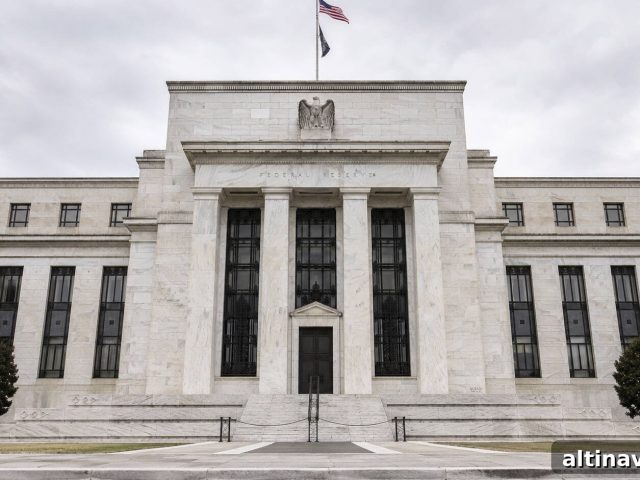
The Federal Reserve has told markets it expects to raise rates this year: the June projection penciled in a single quarter-point increase by the end of 2026. At the same time, market-based odds, as shown in tools that track futures pricing, have put the chance of a September move at roughly one-in-three. Both views are correct — but they answer different questions. Only one of them reflects the factors that determine the value of the gold and silver in your portfolio or safe.
What Are the Fed Rate Hike Odds Right Now?
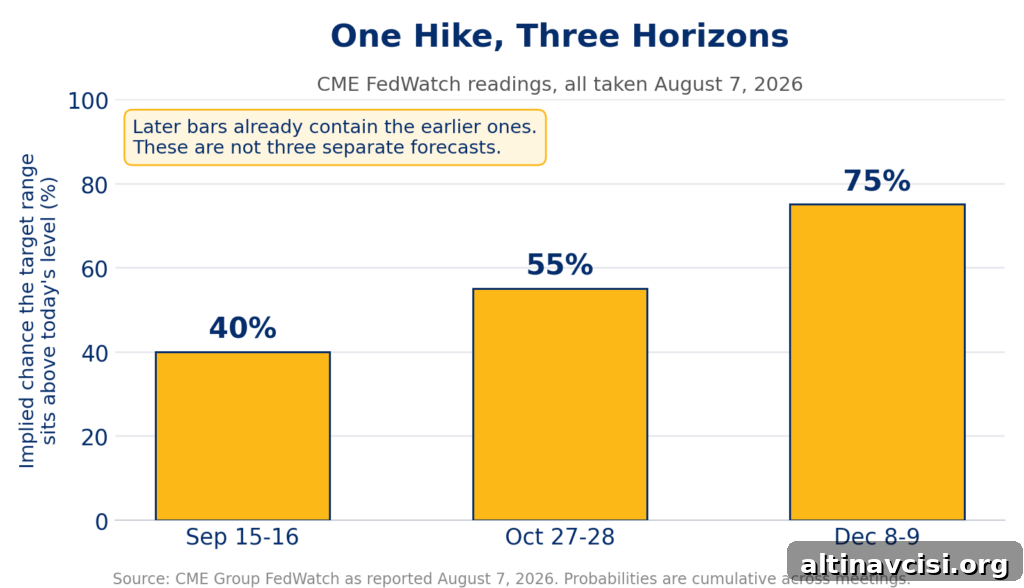
Through the second half of August, CME Group’s FedWatch showed the odds of a rate hike at the September 15–16 meeting in the low-to-mid 30 percent range. The same tool placed the probability of at least one hike by December at roughly double that level. That difference is not a contradiction; it reflects how the tool reports probabilities. The figure for a later meeting is cumulative, meaning it includes any hike already priced for earlier meetings.
For example, after a weak July jobs report on August 7, FedWatch implied roughly a 60 percent probability that the Fed would hold at the September meeting, leaving implied odds of about 40 percent for a September hike. On that date, the tool showed about a 55 percent chance of a hike by October and nearly 75 percent by December. By August 18, the odds attached specifically to September had softened to about 30 percent.
Precious metals prices partly reflect that path. As of mid‑August, gold was trading in the mid‑$4,600s, roughly 17 percent below its late‑January peak, while silver was near $69 and had gained around 18 percent for the month.

The Edge Every Investor Needs
Smarter precious metals investing starts here. The Nuggets Newsletter delivers market insights, Fed updates, global trends and educational content to help you stay informed.
Subscribe to receive timely market alerts and analysis on gold, silver and Fed policy.
Why Do Fed Rate Hike Odds Differ From One Meeting to the Next?
The FedWatch probabilities are presented as a tree of outcomes rather than independent bets on each meeting. The chance that the target rate sits above today’s level by a given date is cumulative and therefore absorbs any hikes already priced for earlier meetings. You cannot simply add the numbers together, and you should not treat them as competing forecasts.
Put another way: there are only three remaining FOMC meetings in 2026 — September 15–16, October 27–28, and December 8–9. A 75 percent probability of a hike by year‑end spreads the same expected move across those three meetings. A 30 percent reading for September concentrates the same expectation into the first meeting. That distribution can change quickly: the September probability doubled in late July within a week even though nothing about the underlying economic structure shifted dramatically.
What Does a Rate Hike Actually Do to Gold?
Gold does not pay interest. Its opportunity cost is the real yield on alternatives such as Treasury bills and other short-term instruments. The Fed’s policy target sets the short end of that yield curve. A single FOMC meeting can move the policy rate by 25 basis points, but investors holding gold over months are pricing the full expected path of policy — not just one afternoon’s decision.
The superficial read suggests that falling September odds should relieve pressure on gold. In practice, however, year‑end pricing matters more because it captures the market’s expectation for the entire path of policy. Beyond monetary policy, fiscal factors weigh heavily: the Treasury’s growing debt stock raises the government’s interest bill with every increase in rates, which in turn affects policy calculations and how markets price future moves. That interplay helps explain why markets repeatedly reprice the likelihood of future hikes without those hikes actually materializing.
The July FOMC meeting illustrated this tension. The committee voted 9–3 to hold rates steady, yet three members — Beth Hammack of Cleveland, Neel Kashkari of Minneapolis, and Lorie Logan of Dallas — dissented in favor of a hike. That was the largest count of hike dissents since September 2016, underscoring the committee’s internal debate over the pace of tightening.
Where Could This Reading Be Wrong?
Some forecasters think markets remain too hawkish. For instance, a major investment bank argued in mid‑August that the Fed is likely to hold the policy range at 3.50–3.75 percent through the rest of 2026 and that any cuts are unlikely until 2027. If that scenario proves correct, the market’s year‑end pricing would unwind and probabilities on futures would shift lower. Other research groups expect each upcoming meeting to trade within a range of probabilities rather than concentrating odds in a single date, which keeps the market’s expectations distributed across several meetings.
For precious metals holders, that uncertainty can be useful: an unwind of hawkish pricing would generally remove upward pressure on real yields and, all else equal, be supportive for gold and silver prices.
What Should Metals Holders Watch This Week?
Key data and speeches will move expectations. July’s Personal Consumption Expenditures (PCE) report is due Wednesday, August 26, at 8:30 a.m. Eastern from the Bureau of Economic Analysis. Consensus anticipates a 0.2 percent monthly increase for core PCE; a hotter 0.3 percent print would lift hike odds across the September, October and December horizons at once.
Also watch remarks at Jackson Hole later in the week. With the FOMC statement providing little forward guidance under current practice, market-implied futures are the clearest forward signal of policy expectations. Reading those prices correctly is essential for anyone managing exposure to gold and silver.
SOURCES
1. Federal Reserve Board — FOMC calendar and meeting dates, October 2026.
2. U.S. Bureau of Economic Analysis — Personal Consumption Expenditures Price Index release schedule.
3. CNBC reporting on Fed hike odds and the July 2026 decision.
4. J.P. Morgan Asset Management — commentary on the July 2026 FOMC statement.
5. Financial news coverage summarizing market reactions and analyst notes in August 2026.
6. Live gold and silver price charts and historical data.
Disclaimer: This article is for informational purposes only and does not constitute investment advice. Past performance is not indicative of future results. Consult a qualified financial advisor before making investment decisions.
You May Also Like:
- Gold and Silver Pulled Back Today. The Treasury’s Plumbing Explains Why.
- A Stablecoin Issuer Bought More Gold Last Year Than Any Central Bank.
- Two Investors Ran the Debt Math Separately. Both Landed on 15% Gold.
- Gold Nears $4,700, Silver Holds Above $69. Why Is Everyone Waiting on One Friday Speech?
- Gold Hits 3‑Month High as Oil Falls Ahead of Sanctions Announcement.
- Gold’s Speculative Crowd Hit a 60‑Week High. Almost Nobody Bought.
- Gold Hit a Three‑Month High. Silver Hit a Two‑Month High. One Story Connects Them.
Popular Topics
Picked from the archive
-
01
 Topics
Gold Slumps 14% in March as Inflation Lingers
-
02
Topics
Silver vs Gold 2026-2031: 5-Year Investment Outlook
-
03
Topics
Gold and Silver Premiums: Why They Never Trade at Spot Price
-
04
Topics
April Jobs Beat 115K: Why Gold Held While Dollar Fell
-
05
Topics
Why OCBC Cut Its Gold Forecast by $740
-
06
Topics
Gold-Silver Ratio Signal: Why Silver’s Lead Matters
-
07
Topics
Gold Down 26%, Silver Down 51%: What Should Bullion Stackers Do?
-
08
Topics
How the Warsh Hearing Could Move Gold Prices