Gold, Silver Steady as Bessent Seeks Hormuz Deal; JOLTS Falls

Five distinct developments help explain why gold is higher today. Each one is another data point in a single, ongoing question: will the Federal Reserve raise interest rates in September, or will it hold? That debate continues to shift, and gold and silver are moving with it.
When Hike Odds Fall, Gold Rises
Both series indexed to 100 on July 28. Gold and the probability of a September rate hike have moved in opposite directions since the Fed’s July 29 decision to hold.
Gold spot price
Sep hike probability
Indexed: Jul 28, 2026 = 100
Source: goldsilver.com price charts; CME FedWatch Tool — data through August 4, 2026
Is the Hormuz Deal Actually Happening, or Is Another Vessel on Fire?
Treasury Secretary Scott Bessent told CNBC’s Squawk Box this morning that a Strait of Hormuz agreement could arrive “today or tomorrow,” describing terms that would guarantee freedom of movement for commercial vessels. After that comment, oil prices fell and gold and silver rose.
Hours later, the UK Maritime Trade Operations (UKMTO) reported a cargo vessel had been struck by an unknown projectile in the strait. Iran’s Foreign Ministry spokesperson denied direct talks with Washington, saying negotiations were being routed through Oman.
The market is therefore processing three simultaneous signals: a U.S. official says a deal is near, a vessel is hit, and Iran denies direct negotiations. That contradiction is what traders are pricing. Lower oil from a potential de-escalation eases near-term inflation pressures and reduces the odds of a Fed rate hike in September — a dynamic that supports both gold and silver. At the same time, markets are not pricing in a finished agreement; uncertainty remains.
The Edge Every Investor Needs
Smarter precious-metals investing starts here. The Nuggets Newsletter delivers market insights, Fed updates, global trends, educational videos, and timely analysis.
What Does the JOLTS Report Landing This Morning Mean for Gold?
The Bureau of Labor Statistics released the June Job Openings and Labor Turnover Survey (JOLTS) at 10:00am ET. Prior to the release, markets expected roughly 7.44 million openings, down from May’s 7.6 million.
JOLTS matters because it affects the market’s view of September rate-hike odds. This is the first major labor data since the Fed’s July 29 decision, which featured a 9–3 hold and three regional presidents preferring an immediate hike. September odds were near 65% per the CME FedWatch Tool heading into the release. A weaker-than-expected JOLTS print would likely lower those odds and give gold room to push higher; a stronger print would rebuild the case for a September hike and could weigh on bullion ahead of Friday’s payrolls report.
Watch how gold reacts to JOLTS for a real-time sense of where the market is tilting on the Fed’s path.
Why Did NY Fed President John Williams Put Investors on Notice?
On Monday, New York Fed President John Williams said policy “remains well positioned” to return inflation to 2%, and added a line markets are focused on: “If inflation is not on track to 2%, the Fed will intervene to restore price stability.”
Although Williams is not a 2026 FOMC voter, his statement echoes the language used by the three July 29 dissenters. The consistent message across multiple Fed officials is that the threshold for further action may be lower than markets assume.
That influences gold because much of this year’s drawdown from January’s record high (driven by a shift in real yields as the Fed moved away from easing) depends on that rate-action mechanism. Williams’ comments suggest that mechanism remains available rather than permanently shelved. Friday’s jobs report will be critical in determining whether it reactivates.
Why Is Silver Rising Faster Than Gold Today?
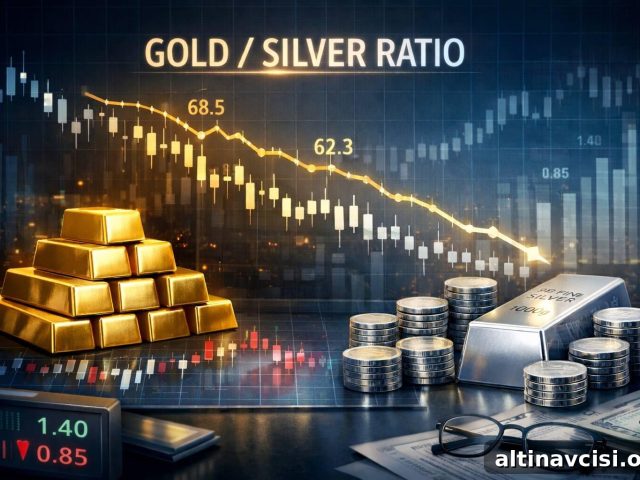
Gold is up modestly while silver has advanced more sharply. The gold–silver ratio moved from about 70.9 earlier in the week to roughly 68.6 this morning.
Two key factors explain silver’s outperformance. First, lower oil prices reduce inflation pressure and easing expectations for Fed hikes. When the rate path softens, silver benefits twice over: it retains a safe-haven bid and it gains from improved industrial demand prospects. Silver historically sees a larger response to economic and inflation dynamics because a significant portion of demand is industrial.
Second, the current ratio still sits above its long-term average, indicating structural undervaluation relative to gold. That gap doesn’t close quickly, but moves toward the historical average have often preceded periods of notable silver gains during the later stages of gold bull markets.
How Does a Weaker Dollar Support Gold Right Now?
The U.S. Dollar Index is trading near 100, its weakest level in about seven weeks after several sessions of decline. Coordinated currency operations and the July 29 Fed hold have reduced the interest-rate differential that had supported the dollar.
A softer dollar helps gold directly because bullion is priced in U.S. dollars. When the dollar weakens, gold becomes less expensive for non-dollar buyers, widening demand. That tailwind is operating alongside the Iran-related oil move and the JOLTS release. None of these developments are fully resolved, but together they explain why gold is holding above $4,080 rather than retreating: multiple forces are pushing in the same direction and collectively are keeping a floor under both metals.
Stay On Top of Gold & Silver Prices
Get important market alerts sent straight to your inbox.
SOURCES
1. Scott Bessent, U.S. Treasury Secretary — interview on CNBC Squawk Box, August 4, 2026 (CNBC coverage).
2. UK Maritime Trade Operations (UKMTO) — cargo vessel reported struck in the Strait of Hormuz, August 4, 2026 (reported via major news live updates).
3. Bureau of Labor Statistics — Job Openings and Labor Turnover Survey (JOLTS), June 2026. Released August 4, 2026, 10:00am ET.
4. CME Group FedWatch Tool — September 2026 rate-hike probability (approximately 65% as of August 4, 2026).
5. New York Fed President John Williams — public remarks on monetary policy, early August 2026.
6. Federal Reserve — FOMC statement, July 29, 2026: rates held at 3.50%–3.75% with three dissenting votes.
7. Silver Institute — World Silver Survey 2026: industrial demand represents a major share of silver’s total demand.
8. GoldSilver — live gold and silver spot prices, data referenced August 4, 2026.
Disclaimer: This article is for informational purposes only and does not constitute investment advice. Past performance is not indicative of future results. Always consult a qualified financial advisor before making investment decisions.
You May Also Like:
- Why Gold Is Holding Near $4,067 Ahead of a Jobs Week That Could Trigger a Rate Hike
- Manufacturing Hit a Four-Year High Today. Gold Didn’t Move. Here’s Why That’s the Story.
- Gold Is Caught Between a Structural Bull Case and a Policy Ceiling. Something Has to Give by Thursday.
- The Same Force That Crushed Gold All Year Just Flipped
- Gold ETFs Lost 45 Tonnes Last Quarter. Central Banks Bought 289. Here’s What That Split Means.
- Gold Had Every Reason to Rally Today. It Didn’t. Five Reasons Why.
- Central Banks Bought 289 Tonnes of Gold Last Quarter. Prices Were Falling the Whole Time.
Popular Topics
Picked from the archive
-
01
 Topics
Gold Remonetization: 6 Forces Reviving Gold as Money
-
02
Topics
CPI 3.3% and GDP Stalling: Is 2026 Stagflation Coming?
-
03
Topics
Why Is Gold Falling While War Rages?
-
04
Topics
Can Silver Outpace Gold in a Bull Market?
-
05
Topics
Gold Radar: 5 Hidden Signals Your Price Chart Misses
-
06
Topics
Gold Pullback Driven by Treasury Buyback, Not ETFs
-
07
Topics
Hong Kong Completes First Gold Settlement; Banks Also Run London
-
08
Topics
How a Falling Gold/Silver Ratio Impacts Investor Portfolios