Self-Directed IRA for Precious Metals Investors: Complete Guide
Key Takeaways
- A self-directed IRA (SDIRA) is the only IRS-approved retirement vehicle that lets you hold allocated physical gold and silver within a tax-advantaged account.
- Qualifying bullion must meet IRS purity standards: gold 99.5%, silver 99.9%, and platinum and palladium 99.95%. The American Gold Eagle is a statutory exception.
- Physical metals must be held by an IRS-approved custodian and stored at a qualified depository. Storing IRA metals at home is not permitted and is treated as a distribution.
- 2026 contribution limits: $7,500 per year for those under 50, and $8,600 per year for those 50 and older (including catch-up contributions).
- Traditional SDIRAs defer taxes until distribution; Roth SDIRAs grow tax-free when qualified withdrawals are taken.
- Required Minimum Distributions (RMDs) begin at age 73 for most Traditional IRA holders under current law and may require partial liquidation or in-kind distributions of metals.
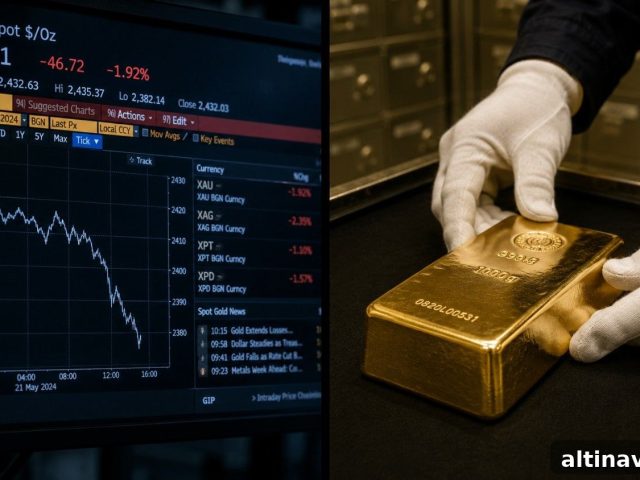
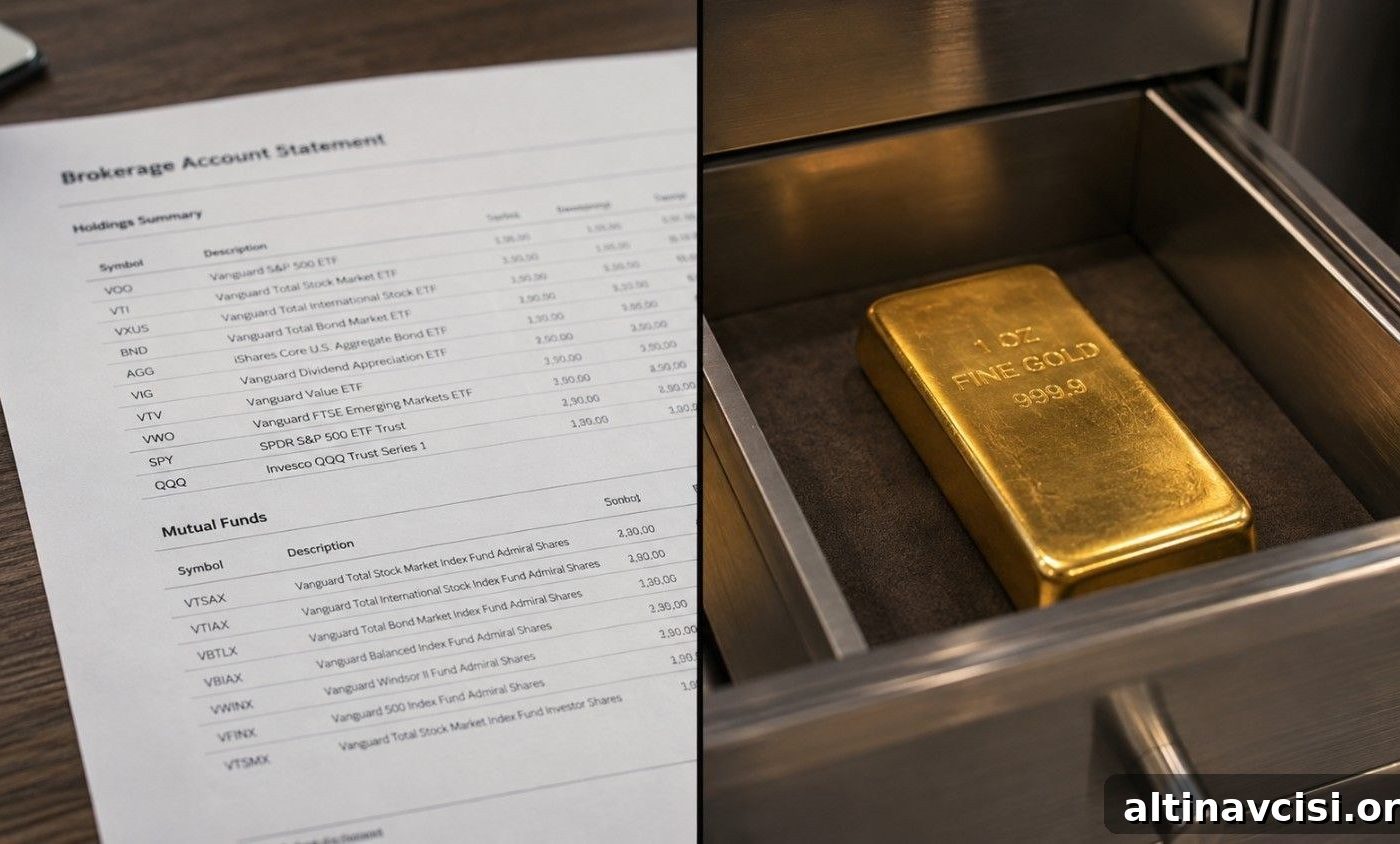
Most 401(k) and brokerage IRAs are built around paper assets — stocks, bonds, mutual funds. A self-directed IRA lets you step outside that ecosystem and hold tangible precious metals inside the same tax-advantaged structure. With an SDIRA you can own allocated gold and silver held in your account, while still enjoying retirement account tax treatment.
This guide walks through how self-directed IRAs work, which metals meet IRS rules, how to establish an account, and the compliance traps that can convert your IRA into a taxable distribution.
What Is a Self-Directed IRA?
A self-directed IRA (SDIRA) is an Individual Retirement Account that allows a broader range of investments than standard brokerage IRAs. While Traditional and Roth tax rules still apply, an SDIRA permits alternative assets such as real estate, private equity, and — importantly for precious metals investors — physical gold, silver, platinum, and palladium, provided IRS rules are followed.
The custodian for an SDIRA holds assets on your behalf and ensures the account meets IRS requirements; you are responsible for directing what the account buys. In short: same tax advantages, different asset choices.
The Knowledge That Changes Everything

Two concise guides—free. Learn why gold matters for preserving purchasing power and how fiat currencies tend to lose value over time.
Why Do Precious Metals Investors Use a Self-Directed IRA?
In short: an SDIRA is the only legally recognized method to hold allocated physical gold and silver inside a tax-advantaged retirement account. Standard IRAs can hold paper instruments like ETFs, futures, or mining stocks, but physical bullion requires the SDIRA structure and an approved custodian.
Physical gold and silver remove counterparty risk found in financial instruments. A bullion ETF depends on the fund issuer, custody arrangements, and fund mechanics. For investors seeking an asset that exists outside the banking system, physical precious metals within an SDIRA provide that exposure while retaining retirement account tax benefits.
What Metals Qualify for a Self-Directed IRA?
The IRS requires minimum purity levels for metals in an SDIRA. These standards are mandatory:
- Gold: minimum 99.5% purity
- Silver: minimum 99.9% purity
- Platinum: minimum 99.95% purity
- Palladium: minimum 99.95% purity
Common qualifying examples are the Canadian Gold Maple Leaf and the American Silver Eagle (which meet the specified fine metal standards). Products that trade for numismatic value rather than metal content generally do not qualify.
What About American Gold Eagles?
American Gold Eagles are a statutory exception. Although they are 22-karat (approximately 91.67% pure), Congress specifically authorized them to be held in IRAs. This exception is set out in the Internal Revenue Code and is not a loophole.
What Coins and Products Are Prohibited?
The IRS excludes collectible and numismatic coins from IRAs. If a coin’s value is driven by rarity, condition, or collectibility rather than melt value, it will likely be disallowed. When in doubt, confirm whether the item’s market price tracks its metal content.
How Do You Set Up a Self-Directed IRA for Gold and Silver?
Opening an SDIRA for precious metals typically follows four steps:
1. Choose a qualified SDIRA custodian. Not all custodians handle physical metals. Select one experienced with alternative assets and compare fees and services.
2. Fund the account. You can roll over funds from a 401(k) or another IRA, transfer an existing IRA, or make new contributions up to the annual IRS limits.
3. Instruct the custodian to purchase approved metals. You direct which qualifying coins or bars to acquire; the custodian executes the purchase through an authorized dealer.
4. Store the metals in an approved depository. The custodian ensures the metals are allocated to your account and stored at an IRS-approved depository. You never take personal possession if you wish to keep tax-deferred status.
What Are the IRA Contribution Limits for 2026?
In 2026 the IRA contribution limits that apply to SDIRAs are the same as for all IRAs:
- Under age 50: $7,500 per year
- Age 50 and older: $8,600 per year (including the increased $1,100 catch-up)
These limits are combined across all your IRAs. Rollovers or direct transfers from other retirement accounts generally do not count as new contributions and therefore do not consume that annual limit.
What Are the Tax Benefits of a Precious Metals IRA?
Tax treatment depends on whether the account is Traditional or Roth:
Traditional SDIRA: Contributions may be deductible, and metals appreciate tax-deferred. Taxes are paid as ordinary income on distributions.
Roth SDIRA: Contributions are after-tax, but qualifying distributions are tax-free. For long-term holders who expect significant appreciation, a Roth structure can offer tax-free growth on physical bullion.
In both account types, appreciating metals avoid capital gains taxation that would apply if you held them personally outside an IRA, providing meaningful long-term compounding advantages.
Is Home Storage for a Gold IRA Legal?
No. IRS rules require IRA metals to be in the custody of an approved trustee or custodian and stored at a qualified depository. If you take personal possession of IRA metals, the IRS treats that action as a distribution, which is taxable and may trigger penalties for early withdrawal. Structures marketed as “checkbook IRAs” or IRA-owned LLCs do not change this custody requirement and can still lead to prohibited-transaction exposure.
What Are Required Minimum Distributions for a Precious Metals IRA?
Traditional IRAs require RMDs beginning at age 73 for many account holders under current law. RMDs are calculated based on the account’s fair market value. Because metals are indivisible, you must either sell enough metal to generate the cash required for the RMD or take an in-kind distribution of metal, which is taxed at its fair market value on the distribution date. Roth IRAs do not require RMDs during the original owner’s lifetime.
Given these mechanics, RMD planning is an important part of managing precious metals in a retirement account.
What Transactions Are Prohibited in a Self-Directed IRA?
The IRS forbids certain self-dealing and personal benefit transactions. With an SDIRA you may not:
- Buy metals from your IRA for personal use
- Sell your personal metals to your IRA
- Use IRA-held metals as collateral for a personal loan
- Store IRA metals at your home or business
A prohibited transaction can disqualify the entire IRA, treating it as a taxable distribution as of January 1 of that year. That outcome can be financially severe, so strict compliance is essential.
How Does a Self-Directed IRA Fit Into a Long-Term Portfolio Strategy?
An SDIRA is typically used to hold a portion of retirement savings in a non-correlated, counterparty-free asset. Physical gold and silver can reduce exposure to financial-system risk and provide diversification that may behave differently than stocks and bonds. For long-term investors, holding bullion inside an IRA combines the diversification benefits of physical metal with tax-efficient growth.
When considering allocation, treat precious metals as a strategic complement to, not a replacement for, diversified equity and fixed-income holdings. Plan for liquidity needs, RMDs, and the logistics of storage and custodian services before deciding how much to allocate.
Stay On Top of Gold & Silver Prices
Get important market alerts sent straight to your inbox.
People Also Ask
A self-directed IRA is a retirement account that allows you to hold alternative investments beyond stocks and bonds, including qualifying physical gold, silver, platinum, and palladium, as long as IRS purity and custody rules are met.
Yes, but only through a self-directed IRA. The bullion must meet IRS purity standards and be stored by an approved custodian at a qualified depository. You cannot hold physical gold in a standard brokerage IRA.
The IRS approves gold (minimum 99.5% purity), silver (99.9%), and platinum and palladium (99.95% each). The American Gold Eagle is permitted by statute despite lower purity.
Select an IRS-approved SDIRA custodian, fund the account via rollover, transfer, or new contribution, instruct the custodian to purchase approved metals, and ensure storage at a qualified depository.
Gold must meet the IRS purity standard (with the American Eagle exception), be purchased through approved channels, held by a qualified custodian, and stored at an approved depository. Home storage is not allowed and is treated as a distribution.
No. Home storage of IRA metals is treated as a taxable distribution and can trigger penalties under tax rules and court rulings addressing custody requirements.
The 2026 contribution limits are $7,500 per year for those under 50 and $8,600 per year for those 50 and older, combined across all IRAs.
SOURCES
1. IRS Publication 590-A — Contributions to Individual Retirement Arrangements (IRAs)
2. Internal Revenue Code — Sections on IRA precious metals rules and prohibited transactions
3. IRS guidance on 2026 retirement plan and IRA contribution limits
4. IRS Publication 590-B — Distributions from Individual Retirement Arrangements (IRAs)
5. SECURE 2.0 Act of 2022 — changes to RMD rules
6. United States Tax Court — McNulty v. Commissioner (case addressing home storage and distributions)
7. United States Mint — specifications for American Eagle coins
8. US Treasury Fiscal Data — national debt figures
9. Incrementum AG — In Gold We Trust report (industry analysis)
10. GoldSilver.com — live spot price charts and historical pricing
Disclaimer: This article is informational only and does not constitute financial or investment advice. Consult a qualified financial professional before making investment decisions.
You May Also Like:
- Kiyosaki Gold Prediction: Buy the Dip or Wait?
- Gold Risk-Reward Calculator: Is Your Portfolio Actually Safe?
- Best Physical Precious Metals to Buy During a Correction
- Gold Is Down 26%. Silver Is Down 51%. What Should Stackers Do?
- Gold Allocation Calculator: How Much Should Your Portfolio Hold?
- What Is the Gold Volatility Index (GVZ)?
- Gold & Silver Market Correction: Is the 2026 Bull Market Over?
Popular Topics
Picked from the archive
-
01
 Topics
Silver Drops 1.4% as Gold Holds; Ratio Reaches 70:1
-
02
Topics
BEA Removed Silver From GDP: What It Means
-
03
Topics
Gold and Silver Prices Jump Amid Strait of Hormuz Tensions
-
04
Topics
Gold Price Falls Before US Market Opens
-
05
Topics
Which Countries Hold the Most Gold Reserves?
-
06
Topics
Gold Price Falls Today: Why $4,500 Holds as Support
-
07
Topics
Markets Eye Friday CPI as Credit Card Debt Reaches Record High
-
08
Topics
Gold Drops as China Buys Most in 17 Months