Why Trump’s Hormuz Toll Raised Inflation and Pushed Gold Down

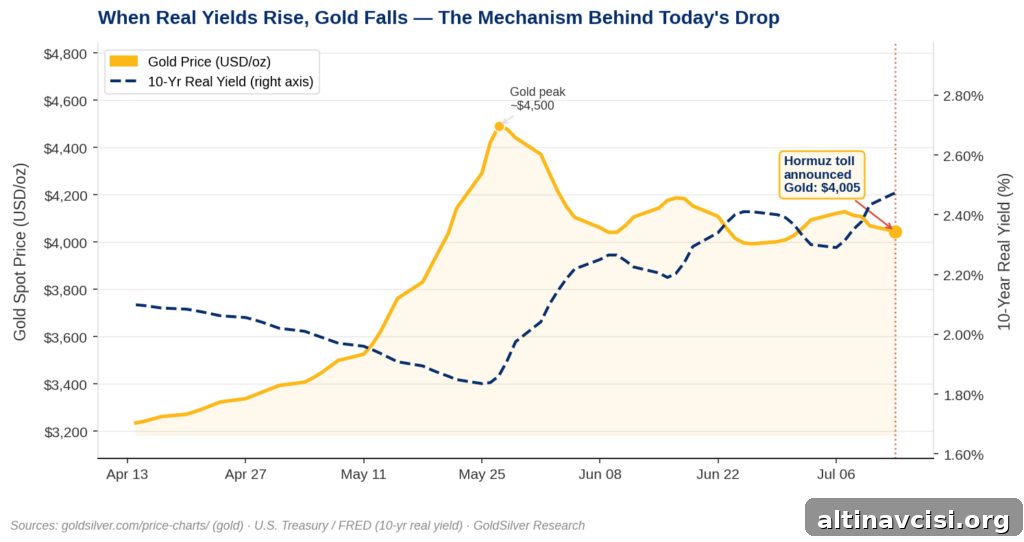
This morning, President Trump posted on Truth Social that the United States would act as the “GUARDIAN OF THE HORMUZ STRAIT,” charging every cargo ship that transits the waterway a 20% levy. Gold had already fallen earlier in the session on reports of airstrikes in Iran, and it dropped another $40 in twenty minutes after the announcement. By early afternoon, the metal traded as low as $4,005. [Source: Bloomberg, July 13, 2026]
At first glance the move looks counterintuitive: war, a shipping toll and higher oil prices should push investors toward gold as a safe-haven. The true explanation is a four-step chain of economic reaction — and understanding that chain explains why markets sometimes move in unexpected directions.
Why Did Gold Fall When Oil Prices Surged?
When Trump announced the Hormuz toll, Brent crude jumped to about $79.75 a barrel — roughly 13.6% above pre-war levels. [Source: Investing.com, July 13, 2026] That movement matters far beyond energy markets. About one-fifth of seaborne oil and roughly 20% of global liquefied natural gas transits the Strait of Hormuz. [Source: IEA] Turning the strait into a de facto toll road adds an ongoing cost on top of war-risk insurance and any rerouting expenses.
Higher energy costs of that kind tend to become embedded across global supply chains. Shipping companies price the new costs in; manufacturers pass them on; retailers and consumers ultimately feel them at the pump and on grocery receipts. Embedded energy cost means higher, more persistent inflation.
Persistent inflation pushes the Federal Reserve to weigh raising interest rates again. When markets increase the probability of Fed tightening, bond yields climb. Gold, which produces no interest, becomes less attractive compared with interest-bearing assets such as a Treasury yielding 4.58% on the 10-year. [Source: Investing.com, July 13, 2026] As yields rise, investors rotate out of non-yielding assets like gold and into bonds, putting downward pressure on bullion prices.
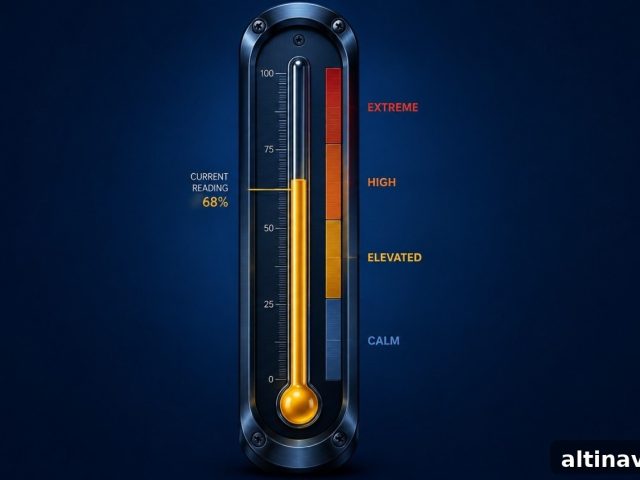
Before the session opened, the bond market had already priced in nearly a 60% chance of a September Fed rate hike. [Source: CME FedWatch Tool via FXEmpire, July 12, 2026] The oil-driven shock pushed those odds higher: by Monday afternoon the market was pricing a nearly 70% chance of a September hike. [Source: TradingEconomics, July 13, 2026] Nicky Shiels, Head of Research and Metals Strategy at MKS PAMP, observed that the oil move refocused markets on the upcoming CPI release. [Source: Investing.com, July 13, 2026]
June’s Consumer Price Index is due tomorrow at 8:30 AM Eastern, followed ninety minutes later by testimony from Fed Chair Kevin Warsh before the House Financial Services Committee. Those two events will clarify whether the market should treat a September hike as near-certain or merely possible — and gold will react accordingly.
The Edge Every Investor Needs
Smarter precious metals investing starts here. The Nuggets Newsletter delivers concise market analysis, Fed updates, global trend reporting, and educational content to help you make informed decisions.
What Does Trump’s Hormuz Toll Mean for Gold Prices Long Term?
Here the short-term trading story and the long-term investment thesis point in different directions.
In the short term, the inflationary impulse triggered by higher oil and shipping costs can lead to higher bond yields and pressure on gold. Over a three-to-five-year horizon, however, that same inflationary pressure strengthens the case for owning gold. Every dollar added to the structural cost of global shipping reduces the purchasing power of currency-denominated savings. A persistent 20% toll across a critical seaway is not a one-off surcharge — it is a new cost embedded in global trade that will be priced into goods and services over time.
This is not a forecast of gold’s price next month. It is an explanation of a long-term mechanism central to the monetary-debasement argument: when geopolitical actions and fiscal choices impose lasting costs on the real economy that central banks cannot fully offset with interest-rate policy, the purchasing power of savings erodes. Gold’s role is to exist outside the fiat system as a store of value.
Is the Structural Case for Gold Still Intact?
Yes — and the central bank buying data underscores that point.
In June 2026, the People’s Bank of China added 14.93 tonnes of gold to its reserves, its largest single-month purchase since 2023 and the twentieth consecutive month of net buying. [Source: China State Administration of Foreign Exchange, July 7, 2026] That accumulation came while gold experienced its worst quarterly decline since the 2013 taper tantrum, which highlights that central banks operate with a multi-decade allocation horizon rather than reacting to headlines.
Gold remains roughly 28% below its January 28, 2026 record high of $5,589.38. [Source: goldsilver.com/price-charts/] The forces that drove that peak — sustained monetary expansion, elevated fiscal deficits and shifts away from dollar dominance in parts of the world — have not disappeared. If anything, the addition of a structural Hormuz toll accelerates those pressures.
Pay attention to tomorrow’s CPI report. If June inflation stays above 4.0%, markets will likely increase the odds of a September Fed hike toward the mid-60s, keeping near-term pressure on gold. If CPI prints below 3.8%, the sequence can reverse: lower hike probability, easing real yields and a potential rebound for bullion. Fed Chair Warsh’s tone in his congressional testimony will be a leading indicator for how bond traders position themselves — and gold typically follows bond-market signals.
The short-term reaction to higher oil and yields is straightforward. The long-term structural case for gold remains compelling and may strengthen if elevated energy and shipping costs persist.
Stay On Top of Gold & Silver Prices
Get important market alerts sent straight to your inbox.
Disclaimer: This article is for informational purposes only and does not constitute financial or investment advice. Always consult a qualified financial adviser before making investment decisions.
You May Also Like:
- Gold Fell 1.4% on an Iran Strike. One Number Tomorrow Morning Could Change Everything.
- Trump Declared the Ceasefire Over. Gold Barely Moved.
- HSBC Cut Its Gold Forecast by $304. Then Said Gold Will Hit $4,750 by Year-End.
- The Fed Named AI Its Top Inflation Risk. Gold Noticed.
- Five Days From Now, Two Numbers Will Decide Gold’s Second Half
- Bank of America Cut Its Gold Forecast. The Reason Is More Bullish Than It Looks.
Popular Topics
Picked from the archive
-
01
 Topics
Selling Gold? How the 28% Collectibles Tax Rule Works
-
02
Topics
Gold Volatility Index (GVZ): What It Means for Investors
-
03
Topics
Silver Price Forecast 2026-2027: Bull vs Bear Outlook
-
04
Topics
Gold Hits $4,000: Wake-Up Call for Markets and Policymakers
-
05
Topics
Gold Safe-Haven Demand Returns After 9-Day Selloff
-
06
Topics
Gold, Silver Rally as Federal Reserve Independence Is Questioned
-
07
Topics
PCE Hits 3.8%, GDP 1.6%: What Drove Gold Higher
-
08
Topics
Why Gold Prices Are Holding at $5,000 Today