Two Numbers in Five Days Will Decide Gold Price Outlook
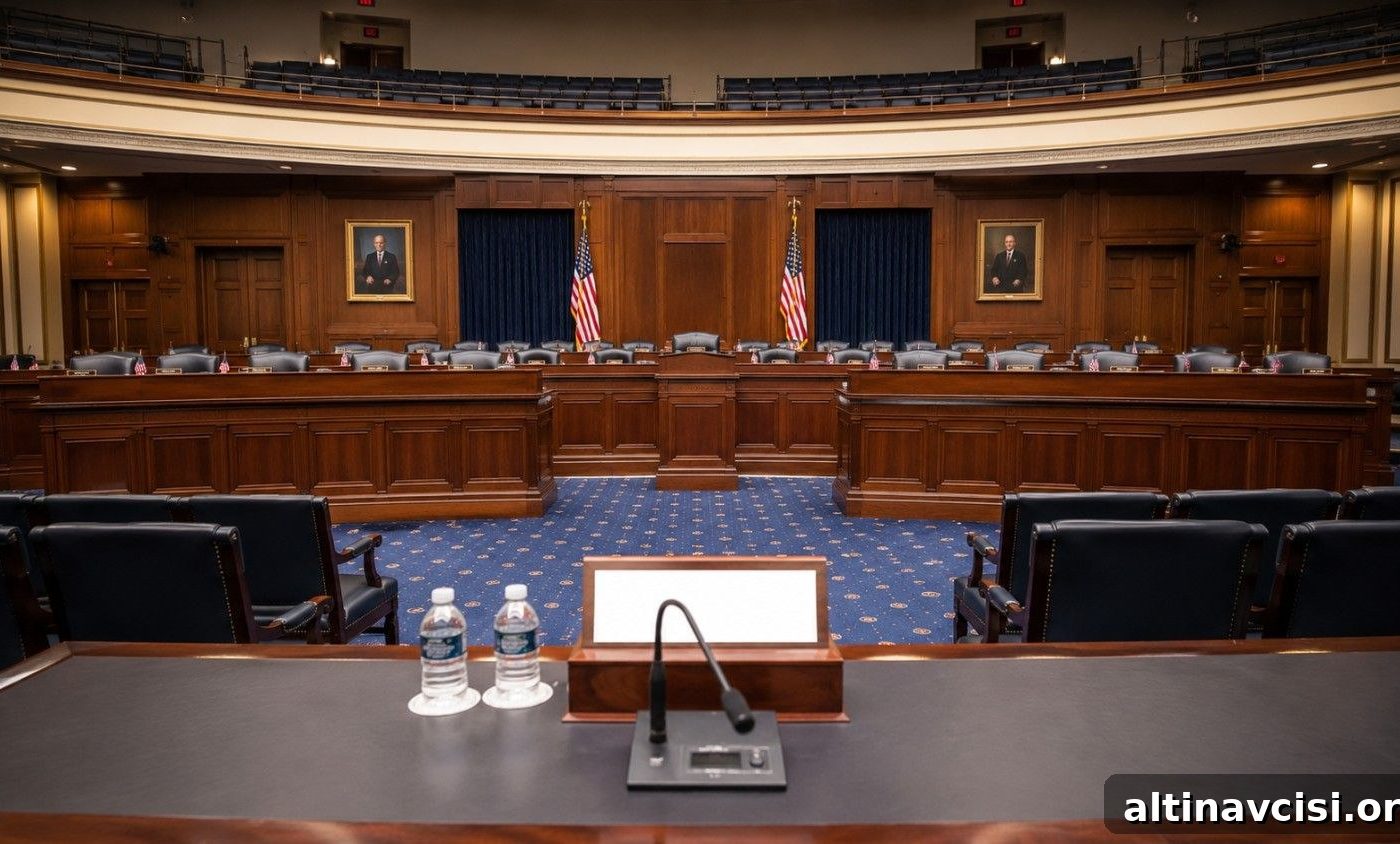
Monday morning brings two data points that will likely shape the gold market’s path for the rest of 2026. First, the June Consumer Price Index (CPI) is scheduled at 8:30 AM ET on July 14 from the Bureau of Labor Statistics. Ninety minutes later, Federal Reserve Chair Kevin Warsh will testify before the House Financial Services Committee — his first monetary policy testimony to Congress. Together, the CPI release and Warsh’s testimony create the most consequential 90-minute window for precious metals since the June FOMC meeting.
Gold is trading at $4,134 today, up 1.42% as the dollar softened after last Wednesday’s selloff. Silver sits at $60.58, up 3.73%. Both metals are rebounding from a one-two punch of hawkish FOMC minutes and renewed geopolitical tensions that weighed on markets on July 8. That recovery is real but fragile; the coming days will test whether it holds.
Why Does the CPI Report Move Gold So Much?
Gold rarely moves because of inflation headlines alone. Instead, it reacts to what those headlines imply for Federal Reserve policy — and, crucially, for real yields. The market follows a straightforward chain of cause and effect: a hotter-than-expected CPI raises the odds of Fed hikes, pushing nominal Treasury yields higher. When nominal yields rise faster than inflation expectations, real yields increase. Higher real yields raise the opportunity cost of holding non-yielding gold, which weighs on the metal’s price. The opposite sequence supports gold when inflation prints softer than expected.
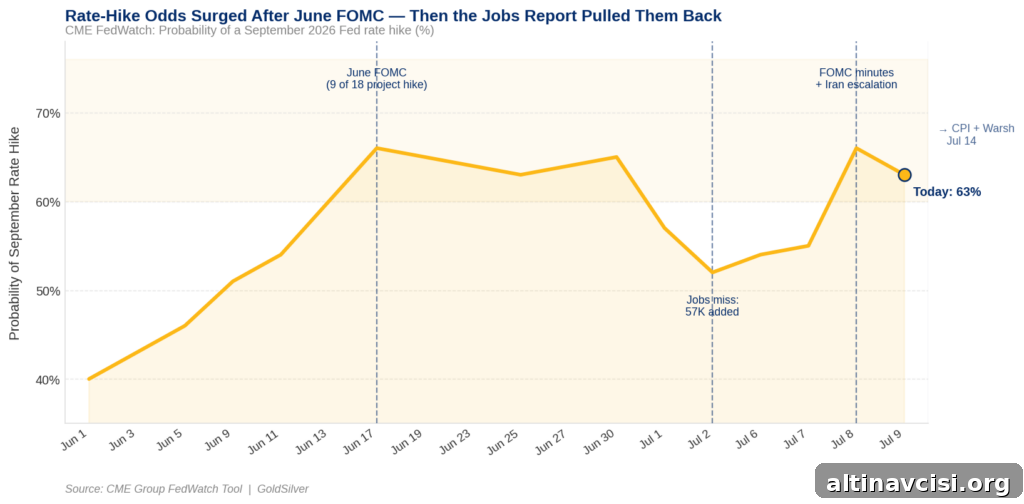
May’s CPI reading of 4.2% year-over-year was the figure that shifted the Fed’s dot plot more hawkish in June. After that print, nine of the Fed’s eighteen voting members projected at least one rate hike before year-end. That split lifted September hike odds from roughly 40% in early June to above 66% by mid-month. Wednesday’s FOMC minutes reaffirmed that division and pushed those odds back into the mid‑60s after a brief pullback following the jobs report. The 10-year Treasury yield is holding near 4.58%, reflecting the market’s view that the Fed could still act again this year.
The Edge Every Investor Needs
Smarter precious-metals investing starts here. The Nuggets newsletter delivers clear market analysis, timely Fed updates, global trends, and educational resources to help investors navigate volatility.
What Are the Three Scenarios for Gold on July 14?
The June CPI print should produce one of three outcomes for gold. Each scenario operates through the real-yield mechanism; only the direction and market reaction change.
Hot (above 4.0%): If CPI comes in hotter than expected, September hike odds would move back toward 65–70%. Real yields would rise and gold would face renewed downward pressure, likely testing levels below $4,100. Warsh would appear before Congress with a strong inflation print behind him and little reason to adopt a dovish tone.
In-line (3.8–4.0%): A print in line with expectations would likely leave market pricing largely unchanged. Gold would probably hold near current levels in the $4,100–$4,200 range as traders wait to hear Warsh’s tone.
Cool (below 3.7%): A softer CPI would compress hike odds, pushing real yields lower and giving gold upside momentum toward $4,300–$4,400 before Warsh speaks. In that environment, longer-term targets such as J.P. Morgan’s Q4 forecast of $4,500 would become more plausible.
Why Does the Warsh Testimony Matter Separately From CPI?
Warsh’s testimony carries additional weight because he did something unusual for a Fed chair: he withheld his personal rate projection from the dot plot. That means markets lack a direct insight into his individual policy view. His July 14 testimony is the best opportunity for investors to hear his personal threshold for inflation and what would trigger either a pause or another hike at upcoming meetings.
Markets will focus on two signals in particular. First, will Warsh treat the June jobs report — which missed expectations by roughly 57,000 positions compared with a consensus near 115,000 — as meaningful evidence of labor-market softening, or will he call it noise within an otherwise tight market? Second, will he hint at the conditions that would prompt a hold versus a hike? He also testifies before the Senate Banking Committee on July 15, giving markets a second session that could reinforce or qualify the messages of his House testimony.
Major banks have already adjusted near-term gold forecasts in response to a hawkish Fed and a stronger dollar. HSBC trimmed its 2026 average gold-price forecast to $4,560 from $4,864, citing the Fed’s tougher stance. Bank of America also lowered its 2026 average to $4,360, while maintaining that $5,000 remains attainable once the tightening cycle concludes. Both institutions are shifting expectations for the near-term path without abandoning the longer-term bullish case.
What Does This Setup Reveal About the Structural Case for Gold?
The July 14 calendar highlights a broader truth: monetary policy is the dominant short-term driver of gold prices, but that policy is constrained by fiscal realities the Fed cannot fix. The central bank can raise rates to slow inflation, but higher rates increase interest costs on a national debt that already generates more than a trillion dollars in annual interest payments. Each hike can add to that fiscal burden.
At the same time, longer-term reserve managers continue to buy. The People’s Bank of China added 14.93 tonnes in June, extending its buying streak to twenty consecutive months — and it did so during the worst quarterly decline for gold since the 2013 taper tantrum. Large reserve managers make multi-decade decisions about assets that preserve purchasing power under fiscal stress, rather than reacting to weekly CPI prints.
That divergence defines the market in 2026: short-term rate traders press gold lower on rising hike odds while long-term reserve buyers accumulate every dip. Eventually those forces will converge. The key question is which time horizon the market will price first.
What Should Gold Investors Watch This Week?
Note three dates that matter for gold traders and investors. First, the June CPI is released on Tuesday, July 14, at 8:30 AM ET — the print that will either validate or deflate the September-hike narrative. Second, Warsh testifies before the House at 10:00 AM ET on July 14 — his first live policy signal since June. Third, he appears before the Senate Banking Committee on July 15, where follow-up questioning could clarify or alter the tone he sets the day before.
Stay On Top of Gold & Silver Prices
Sign up for concise market alerts and timely analysis delivered to your inbox.
Disclaimer: This article is for informational purposes only and does not constitute financial or investment advice. Always consult a qualified financial adviser before making investment decisions.
You May Also Like:
- Bank of America Cut Its Gold Forecast. The Reason Is More Bullish Than It Looks.
- The Fed Is Split 9 to 8. Gold and Silver Are Paying the Price — Until July 14.
- Gold Is Sitting on $4,000. The World Gold Council Has a Model for What Happens Next.
- Trump Called the Deal Dead. Oil Jumped 6%. Gold Fell. Here Is Why Both Moves Make Perfect Sense.
- China Just Bought Its Most Gold Since 2023. It Did It During the Quarter Gold Fell 16%.
- Iran Struck the Mediator’s Tanker. Gold Fell. The Funeral Ends Thursday.
Popular Topics
Picked from the archive
-
01
 Topics
Why Gold Tumbled After the Hormuz Tanker Strike
-
02
Topics
GDP Report Delays and Weak Retail Sales Signal Economic Risk
-
03
Topics
Physical vs Digital Gold: Which Is the Safer Investment?
-
04
Topics
Gold Price Near $5,000 as Fed Battles Sticky Inflation
-
05
Topics
Wall Street’s $6,000 Gold Call Relies on Hidden Data
-
06
Topics
PCE Inflation Hits 4.1%: Why Gold Prices Rose
-
07
Topics
UBS Cuts Gold Price Target by $400: What They Kept Matters
-
08
Topics
Gold and Silver Hit Record Highs Amid Shutdown Deadlock