Why Gold Prices Drop When Inflation Surges
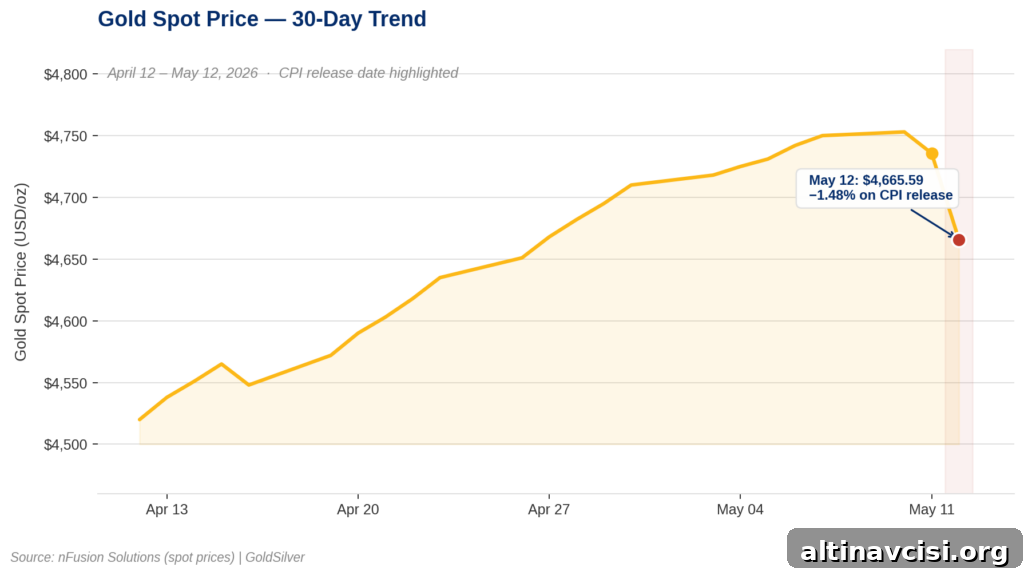
Gold and silver market update — May 12, 2026
Key Takeaways
- The U.S. Bureau of Labor Statistics reported April 2026 CPI at 3.8% year‑over‑year — the highest annual reading since May 2023 — with gasoline up 28.4% year‑over‑year amid Middle East tensions.
- Gold dropped about 1.5% on May 12, 2026. The decline followed a rapid market repricing that raised the odds of future Fed rate hikes, strengthening the U.S. dollar (DXY) and pressuring dollar‑priced gold.
- The BLS Real Earnings release shows real wages turned negative, meaning the purchasing power of cash savings is being eroded by inflation at roughly 3.8% annually.
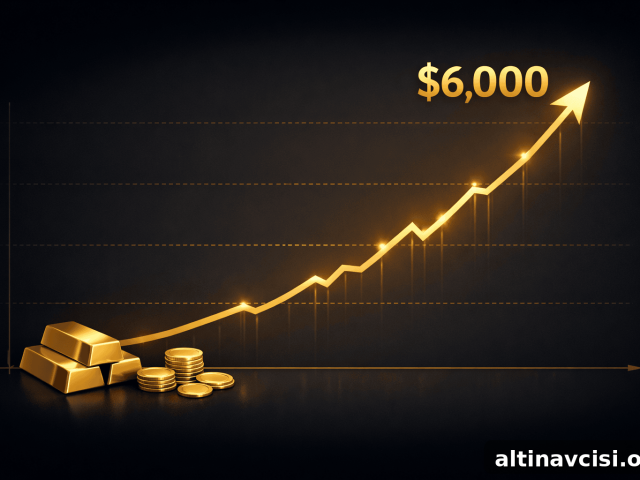
On May 12, 2026, gold fell roughly 1.5% to $4,665. The same morning the Bureau of Labor Statistics published April CPI at 3.8% year‑over‑year — the strongest annual inflation reading since May 2023. That higher‑than‑expected print forced an immediate reassessment of Federal Reserve policy by market participants. Rather than boosting gold directly, hotter inflation prompted traders to price in a greater chance of future rate hikes. Higher expected interest rates supported a firmer U.S. dollar, and gold — priced in dollars — moved lower as a result.
Why Does Hot Inflation Push Gold Down?
When inflation comes in hotter than expected, markets immediately update expectations for Federal Reserve policy. Before the April CPI print, markets broadly expected no rate cuts in 2026. After the 3.8% reading, CME FedWatch measures showed traders assigning material probability to rate hikes later in 2026 and into 2027. That rapid repricing lifts nominal Treasury yields and the dollar, making dollar assets more attractive relative to non‑yielding gold.
The short sequence is clear: hotter CPI → traders expect a more hawkish Fed → nominal yields and the dollar rise → gold weakens. This is largely a positioning move in futures and cash markets rather than a judgment about gold’s long‑term role as a store of value.
Put differently, a single inflation release can prompt short‑term selling even while the broader case for owning gold in an inflationary environment strengthens.
The Edge Every Investor Needs
Smarter precious metals investing starts here. The Nuggets Newsletter delivers market insights, Federal Reserve updates, global trends, and educational content to help you navigate gold and silver markets.
Is This the Beginning of an Inflation Problem?
April’s 3.8% CPI is the second straight monthly acceleration reported by the Bureau of Labor Statistics: March was 3.3%, and February was 2.4% — a period that predates the current Middle East disruption. In two months inflation climbed about 1.4 percentage points, led by a sharp rise in gasoline costs, which increased 28.4% year‑over‑year and was the largest contributor to the April jump.
Shelter costs also rose 0.6% month‑over‑month. Some of that movement may reflect timing and data‑collection adjustments in rent measures following last autumn’s government shutdown, so that component should be interpreted with caution. Even accounting for that, the trend is clearly upward.
Major financial research groups cited in market reports expect inflation to remain elevated for an extended period. JPMorgan Global Research projected inflation staying above 3% into early 2027, and Bank of America Research shifted its timing for the first expected rate cut into the second half of 2027. Those views help explain why markets moved quickly to price a more hawkish path for the Fed.
The policy dilemma is apparent: inflation is running well above the Fed’s 2% target, yet economic growth shows signs of stress. That constrains the Fed’s room for maneuver. While it waits, households face shrinking purchasing power — the BLS Real Earnings release shows real wages turning negative, meaning savings lose value as inflation outpaces wage gains.
Isn’t Gold Supposed to Be an Inflation Hedge?
Over long periods, gold has historically preserved purchasing power and served as an inflation hedge. In the short term, however, gold’s price is sensitive to real yields — nominal Treasury yields adjusted for inflation expectations. When an inflation surprise raises the likelihood of Fed tightening, nominal yields can rise faster than inflation expectations, pushing real yields higher. Higher real yields make fixed‑income assets relatively more attractive and can trigger gold selling, even while the long‑run case for owning gold remains intact.
This distinction between short‑term market mechanics and long‑term fundamentals explains why a hot CPI print can coincide with a downward move in gold prices.
The Second Corner
The immediate selloff on May 12 was largely a positioning event: traders who were long gold ahead of the CPI release were forced to trim positions as markets shifted toward a more hawkish Fed expectation. That produced near‑term noise in price action.
The underlying signal, however, remains: inflation is accelerating, real wages are negative, and gasoline costs are substantially higher year‑over‑year. Geopolitical uncertainty is prolonging upward pressure on energy prices. These forces combine to erode real purchasing power — a condition that typically supports demand for real assets over time.
Gold fell not because the inflation narrative weakened, but because short‑term rate positioning moved against it. Confusing these two timeframes can lead long‑term holders to react at precisely the moment markets are undergoing a temporary reset.
What to Watch
Key upcoming data include the PCE deflator, the Federal Reserve’s preferred inflation gauge, due later this month. A PCE print above 3% would reinforce expectations that the Fed will delay cuts and could raise near‑term odds of additional tightening. For price levels, monitor near‑term support for gold around $4,600 and watch the U.S. dollar index (DXY) for early signals about dollar strength and the dollar‑gold relationship. Also track energy prices and shelter components, which remain important drivers of headline inflation.
Stay On Top of Gold & Silver Prices
Get important market alerts sent straight to your inbox.
SOURCES
1. Bureau of Labor Statistics — Consumer Price Index, April 2026
2. Bureau of Labor Statistics — Real Earnings, April 2026
3. Bureau of Labor Statistics — CPI Historical Releases (March & February 2026)
4. CME Group — FedWatch Tool (as of May 12, 2026)
5. nFusion Solutions — Precious Metals Spot Price Feed
6. JPMorgan Global Research — Inflation Outlook, May 2026 (proprietary)
7. Bank of America Research — U.S. Rate Forecast, May 2026 (proprietary)
Disclaimer: This article is for informational purposes only and does not constitute financial or investment advice. Consult a qualified financial adviser before making investment decisions.
You May Also Like:
- CPI Hits 3.8%. Gold Falls. The Mechanism Nobody Explains
- Why the Gold Silver Ratio Is Falling — and What It Means
- What’s Moving Gold Prices This Week: CPI, Seoul & Beijing
- Silver Jumps 6% Before Trump‑Xi Summit. Here’s Why
- April Jobs Beat 115K. Gold Held. The Dollar Didn’t. Here’s Why
- Jobs Beat, Ceasefire, Deficit: What It Means for Gold
- Gold Price Outlook: Oil Futures Disagree With Stock Markets
- Why Silver Hit $82 Today: Iran, Oil, and the Fed
Popular Topics
Picked from the archive
-
01
 Topics
Why Gold Hit $5,100: What’s Driving the Rally Next
-
02
Topics
Market Update: Gold Steady, Shoppers Cautious, Nvidia Scrutinized
-
03
Topics
Gold and Silver Prices Swing as Ceasefire Falters
-
04
Topics
Gold Prices Jump as Fed Rate-Cut Odds Climb to 74 Percent
-
05
Topics
How Real Interest Rates Drive Gold Prices: Investor Guide
-
06
Topics
When the Fed’s $2 Trillion Liquidity Buffer Reaches Zero
-
07
Topics
5-Year Silver Price Forecast: Data-Driven Scenarios
-
08
Topics
Gold and Silver Hold Ground as Bitcoin Falls Below USD 95K