France Completes Gold Repatriation, Germany Set to Follow

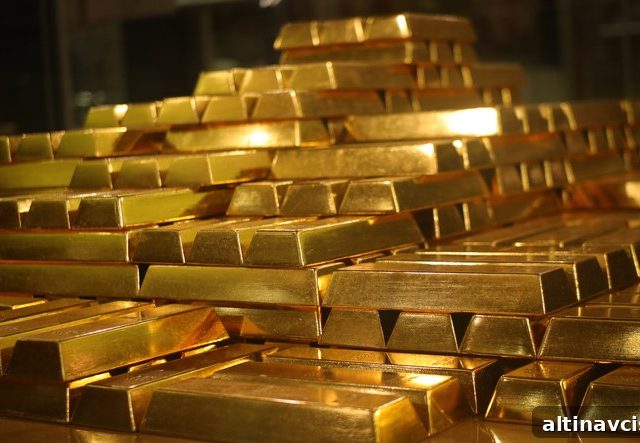
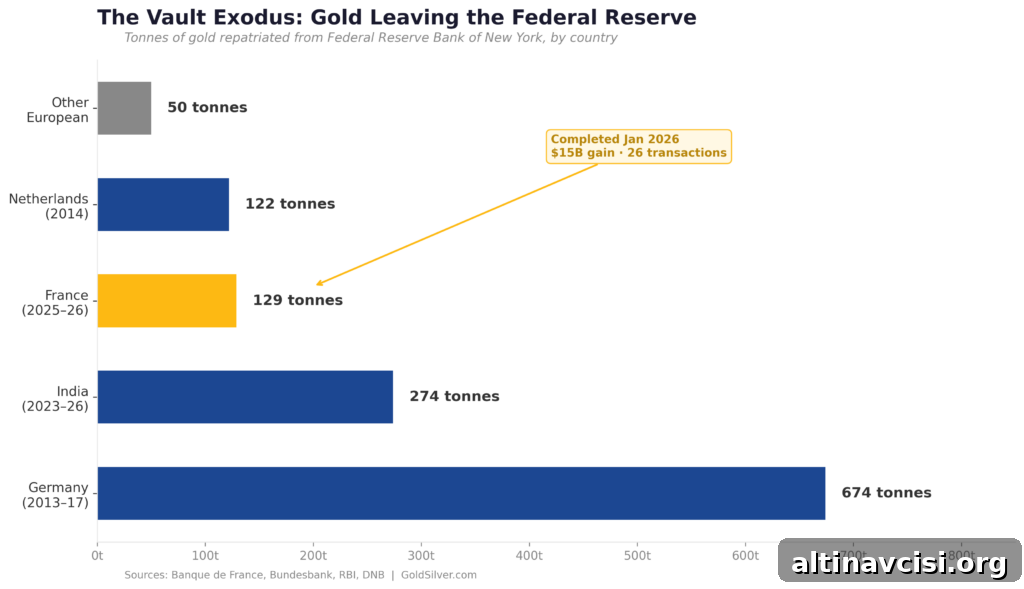
France has completed a planned repatriation of its gold reserves, bringing every ounce previously held at the Federal Reserve Bank of New York back to France. Over a seven-month program running from July 2025 through January 2026, Banque de France sold older, non-standard bars stored in New York and replaced them with higher-grade bullion held within Europe. The full stock of 2,437 tonnes of French gold reserves now resides on French soil in the central bank’s vaults in Paris. The central bank reported roughly €13 billion (around $15 billion) in capital gains from the swaps. At the time of publication, gold traded near $4,820 per ounce.
Why Did France Move Its Gold Out of the US Federal Reserve?
Officially, the move was practical and quality-driven: many bars kept in New York did not meet the London Bullion Market Association (LBMA) “Good Delivery” standard that now serves as the industry benchmark for bar quality and traceability. Refining or re-assaying those older bars and shipping them back to Paris would have incurred significant cost. Selling the non-compliant bars in New York at strong market prices and replacing them with LBMA-compliant European bars proved an economically attractive alternative.
Beyond that pragmatic accounting is a broader strategic message. Since 2022, when Western powers froze roughly $300 billion of Russian central bank reserves held in Western institutions, many central banks have reassessed the risks of keeping large, high-value reserves abroad. Repatriation programs by other sovereigns—Germany’s transfer of 674 tonnes from New York and Paris between 2013 and 2017, the Netherlands’ retrieval of 122 tonnes in 2014, and India’s ongoing repatriation of about 274 tonnes since March 2023—fit a larger pattern: nations are prioritizing sovereign control and physical access to their bullion.
Is Germany’s “Our Gold Is Safe in New York” Position Sustainable?
Publicly, institutions with overseas holdings emphasize the reliability of their partners. The Deutsche Bundesbank has described the Federal Reserve Bank of New York as a “trustworthy, reliable partner,” and as of April 2026 it has not announced plans to remove more gold from US vaults. France’s central bank governor stated that the repatriation was not politically motivated.
However, policy is often signaled through action rather than press statements. The debate in Germany has shifted: calls for repatriation, once marginal, have become mainstream. Advocates argue that physical access to sovereign reserves can no longer be taken for granted. Today, a significant share of several European nations’ reserves remains abroad—Germany holds roughly 1,236 tonnes in New York (about 37% of its total), and Italy stores about 43% of its gold in US vaults. Combined, the sovereign gold held in American vaults represents hundreds of billions of dollars in value. That concentration is drawing renewed scrutiny.
Why Are Central Banks Still Buying Gold at Record Prices?
Repatriation is only one trend. Central banks are also accumulating gold in meaningful quantities despite high prices. The World Gold Council’s April 2026 market update shows persistent demand from major official buyers. The People’s Bank of China recorded a 17th consecutive monthly purchase in March 2026, adding about 5 tonnes and bringing China’s official holdings to 2,313 tonnes. Wholesale withdrawals from the Shanghai Gold Exchange rose sharply that month, signaling robust physical demand.
Other countries that had paused purchases for years—Malaysia and South Korea among them—have resumed adding bullion. The common driver is not price alone but strategic diversification: central banks are moving assets into forms that are harder to freeze or restrict, and into holdings they can access directly.
What Are the Dollar and the IMF Signaling for Gold?
Market signals also favor precious metals. The US Dollar Index fell for several sessions through mid-April 2026, erasing gains seen earlier in the year. On April 14, the International Monetary Fund’s World Economic Outlook revised global growth down to 3.1% while raising its inflation forecast to 4.4%. This combination—slower growth with higher inflation, or stagflation—tends to be unfavorable for stocks and bonds but supportive for gold as a store of value.
At the time of reporting, gold hovered near one-month highs around $4,820 per ounce and silver traded close to $80 per ounce, pushing the gold-silver ratio down to about 61.1. When silver outperforms gold, it can indicate that a metals rally is broadening beyond a short-lived fear trade. Technical support for gold appears near $4,750; for investors and analysts, movements in the ratio and precious metals prices are important to track as potential signals of further momentum.
What Did France Just Prove About Gold Ownership?
France’s operation was methodical rather than panicked. By executing 26 transactions over seven months, the central bank upgraded its reserve holdings and realized sizable gains. The broader lesson is strategic: when major monetary actors prioritize physical control and accessibility, it reinforces the idea that ownership matters only if the asset is reachable.
That is a pragmatic, not alarmist, conclusion. France’s approach—quiet, orderly, and profitable—illustrates how a sovereign can manage the dual objectives of safeguarding reserves and optimizing asset quality.
What Should You Watch in the Coming Weeks?
Key developments to monitor include Germany’s political debate over repatriation, scheduled budget discussions that could bring the issue into the public eye, and central bank meetings that influence real yields. The Federal Reserve’s policy decisions—particularly if inflation forecasts remain elevated while rates stay on hold—are the clearest immediate tailwind for gold. Market participants should also watch silver and the gold-silver ratio: ratio compression below 62 has historically preceded stronger legs of precious metals rallies.
Stay On Top of Gold & Silver Prices
Receive timely market alerts and updates straight to your inbox.

SOURCES
Banque de France — 2025 Annual Results
London Bullion Market Association — Good Delivery Rules
Deutsche Bundesbank — Bundesbank Completes Gold Transfer Ahead of Schedule
Deutsche Bundesbank — Gold Reserves
De Nederlandsche Bank — Adjustment of Gold Stock
Reserve Bank of India — Report on Foreign Exchange Reserves
US Department of the Treasury — Russia-Related Sanctions
World Gold Council — China Gold Market Update (April 2026)
International Monetary Fund — World Economic Outlook (April 2026)
ICE Futures U.S. — US Dollar Index
By the GoldSilver Editorial Team — helping investors understand sound money since 2005. This article is for informational purposes only and does not constitute financial, investment, or tax advice. Always consult a qualified financial advisor before making investment decisions.
You May Also Like
- Gold/Silver Ratio Hits 61.1 — Silver’s Turn to Run
- Silver Holds Near $80 as Iran Ceasefire Revives Rate-Cut Bets
- The Fed Goes Silent in 3 Days – What Does That Mean For Gold?
- Gold Is Down 10% From Its War-Peak — and Still Up 46% in a Year
- Gold Outranks the Dollar at Central Banks — What It Means for Your Savings
- Hormuz Blockade Sent Gold Down 2%. Here’s Why That’s Bullish
- Gold Jumps 2% as Trump Plans Iran War Address Tonight
- $88 Billion a Month: Why U.S. Debt Is Driving Gold Prices
Popular Topics
Picked from the archive
-
01
 Topics
Citi Predicts Gold May Hit $3,500 After Weak Jobs Report
-
02
Topics
Gold Falls to $3,343 as Dollar Strengthens, Trade Optimism Grows
-
03
Topics
Gold & Silver Prices Today: Iran, Oil Fallout, $1.3B Bet
-
04
Topics
Top Economist Warns of U.S. Recession as Fed Options Shrink
-
05
Topics
How the Current Gold Rally Compares to Past Bull Markets
-
06
Topics
Bessent Urges 1.5% Rate Cut, Boosting Gold Prices
-
07
Topics
Gold Royalties Surge as Miners Struggle with Rising Costs
-
08
Topics
Is Gold Still a Safe Haven in War? Investor Insights