Why Silver Swings More Than Gold: What Drives Its Volatility

Silver moves quickly. In 2025 it climbed more than 150% while gold rose roughly 66%. In past cycles silver has also crashed just as dramatically. That pattern isn’t random — it follows directly from the structure of the silver market.
The most important factor behind those swings is market size.
How Big is the Gold Market Compared to the Silver Market?
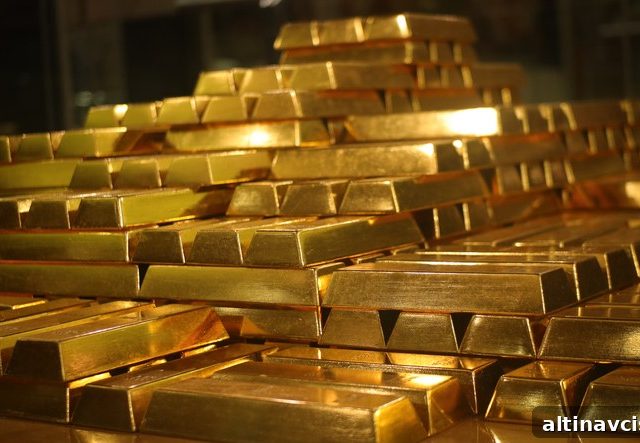
Gold’s total above-ground stock is estimated at roughly 216,000 tonnes. At prices near $4,166 per troy ounce, the world’s above-ground gold is valued at about $29 trillion.
Silver’s total above-ground market capitalization is much smaller, around $3.9 trillion.
That gap is enormous: gold’s market is nearly eight times larger than silver’s. Market size matters more than many investors realize because liquidity, depth, and the ability to absorb large trades scale with the size of the market.
~$3.9 Trillion
at ~$4,166/oz (2025)
consumed by industry
What Does Daily Trading Volume Reveal About Each Market?
Market capitalization is one way to compare the two metals. Daily liquidity is another — and it reveals an even clearer contrast.
In 2024, gold’s global trading volume averaged about $227 billion per day, a figure comparable to the daily trading of some major currencies. Silver’s liquidity, by contrast, is only a fraction of that size.
Across key segments, gold’s average daily ETF trading was roughly $2.3 billion versus $0.7 billion for silver. Futures volumes averaged about $55 billion for gold versus $11 billion for silver, and OTC trading averaged around $97 billion for gold versus $13 billion for silver. Combined, gold trades roughly six times more volume per day than silver.
~$155B avg daily (5-yr)
~$25B avg daily (5-yr)
Scaled to gold bar above
OTC (Over-the-Counter)
Futures
ETFs
Futures $55B
ETFs $2.3B
Futures $11B
ETFs $0.7B
Why Does a Smaller Market Produce Bigger Price Swings?
Imagine dropping a large stone into a deep lake versus a shallow pond. In a deep, liquid market, a large order barely ripples prices. In a shallow market the same order causes large waves. Gold trades in a deeper, more liquid market with tighter spreads and lower volatility. Silver’s market is smaller and less able to absorb sudden flows, so shifts in investor sentiment create outsized price moves.
This is the central mechanism behind silver’s volatility: not emotion but arithmetic. When capital moves into or out of silver, the relative lack of depth amplifies the impact on price.
Does Silver’s Industrial Demand Make It More Volatile?
Yes. Silver has a dual role: it functions as a monetary metal alongside gold, but it is also a widely used industrial input. Solar panels, electric vehicles, semiconductors, and medical devices all require silver. That exposure to industrial demand, combined with smaller market depth and wider trading spreads, makes silver more cyclical and sensitive to shifts in the global economy and commodity index flows.
When the global economy slows, industrial demand for silver can fall quickly and pull prices down. Gold’s industrial use is minimal by comparison, which helps explain why gold often holds value during recessions while silver can move with both commodity cycles and monetary sentiment.

How Has Silver’s Volatility Compared to Gold Historically?
Across multiple cycles, silver has consistently shown higher volatility and stronger cyclical swings than gold. It behaves like a high-beta version of the same set of drivers that move gold: when gold rises, silver usually rises more; when gold falls, silver typically falls harder.
Silver can increase portfolio diversification over full market cycles by offering greater upside during periods of economic expansion, reflation, or rising industrial demand. But it does not reliably provide the same defensive properties as gold.
That pattern was evident in 2025: gold rose about 66%, while silver surged beyond 150%.
What Does Silver’s Volatility Mean for Investors?
Volatility itself is neither good nor bad — it depends on an investor’s goals. For those seeking stability and capital preservation, gold’s deeper liquidity and lower volatility make it the more reliable anchor. Because silver is more volatile, many investors allocate a smaller position to it than to gold.
Silver can play a complementary tactical role as a higher-beta exposure. It may amplify gains during bull markets and provide leverage in reflationary periods, but it is not a like-for-like substitute for gold’s strategic role. A common approach is to use gold as the portfolio foundation and silver as a satellite allocation to capture additional upside without taking excessive risk.
Understanding the reasons behind silver’s behavior won’t remove the swings, but it helps investors anticipate and position around them more effectively.
Stay On Top of Gold & Silver Prices
Get important market alerts delivered to your inbox.
People Also Ask
Why is silver more volatile than gold?
Silver trades in a much smaller, less liquid market than gold — roughly six times less daily volume. That means significant buying or selling pressure moves silver’s price further and faster than it would in gold’s deeper market.
How big is the silver market compared to the gold market?
Gold’s above-ground stock is valued at roughly $29 trillion while silver’s sits around $3.9 trillion — making gold’s market nearly eight times larger. That difference in size is a primary reason the two metals behave so differently for investors.
What is the daily trading volume of gold vs. silver?
Gold averaged about $227 billion in daily trading volume in 2024 across OTC markets, futures, and ETFs. Silver’s comparable daily volume across those segments is roughly $25 billion — a much smaller share of global liquidity.
Does silver’s industrial use make it more volatile?
Yes. Silver is a critical industrial input in technologies like solar panels and electronics. As a result, its price is pulled by both monetary sentiment and fluctuations in industrial demand, which do not always move together.
Is silver a good investment if it’s more volatile than gold?
Silver’s volatility can be an advantage or a risk depending on your objective. It tends to outperform gold in bull markets and underperform in downturns. Many investors hold a smaller silver position alongside gold to capture upside without overexposing their portfolios to swings.
Sources
World Gold Council — Gold Trading Volumes (2024)
World Gold Council — Gold Safe Haven vs. Silver Wildcard (March 2026)
Visual Capitalist — Visualizing the World’s Total Supply of Gold (2025)
CompaniesMarketCap — Market Cap of Silver (2025)
BlackRock — Gold & Silver: Prices, Volatility, What’s Next (2025)
Silver Institute — World Silver Survey 2025
Industry commentary on trading volumes and liquidity (2024–2026)
This article is for informational purposes only and does not constitute financial or investment advice. Consult a qualified financial advisor before making investment decisions.
You May Also Like:
- Is Now a Good Time to Swap Silver for Gold?
- Should I Buy Gold Now? What Most Investors Get Wrong
- Silver Price Floor: Why the Market Has Reset to $70
- 87% Dollar Devaluation Since 1971: Why Central Banks Keep Buying Gold
- How to Roll Over Your 401(k) Into a Gold IRA
- Why the World Needs More Silver Than It Can Mine
Popular Topics
Picked from the archive
-
01
 Topics
Gold Price Drops Below $5K After Jobs Revisions Roil Markets
-
02
Topics
Will Gold Reach $4,000? Fed Decision and Food Inflation Surge
-
03
Topics
Japan Election Promises and Tariff Fears Rattle Bond Market
-
04
Topics
Gold Prices Slip After Rally as Fed Rate Cut Looms
-
05
Topics
Gold IRA vs Physical Gold: Which Is Right for Your Portfolio?
-
06
Topics
Silver Climbs to $39 as Weak Dollar Sparks Rally
-
07
Topics
Official US Data Show Government Is Insolvent
-
08
Topics
Gold and Silver Prices Today: Fed Moves, Stagflation Outlook