Optimize Portfolio with the 80/60 Gold-Silver Rule
The gold-to-silver ratio has guided precious-metals investors for centuries. While the concept can seem technical, applying it as a practical strategy is straightforward. The 80/60 gold-silver rule offers a clear, data-driven way to decide when to favor silver or gold, helping investors act on value rather than emotion.
Understanding the Gold-to-Silver Ratio
At its simplest, the gold-to-silver ratio tells you how many ounces of silver are equivalent in value to one ounce of gold. Because gold and silver trade independently, the ratio moves with market forces, macroeconomic data, industrial demand, and investor sentiment. Tracking that relationship helps you compare relative value between the two metals, rather than focusing on their absolute prices alone.
For example, if gold is priced at $4,000 per ounce and silver at $50 per ounce, the ratio is 80:1 — meaning it takes 80 ounces of silver to equal one ounce of gold. That ratio shifts continuously, and those movements create signals for disciplined investors who watch for opportunities when one metal appears cheap relative to the other.
The 80/60 Rule Explained
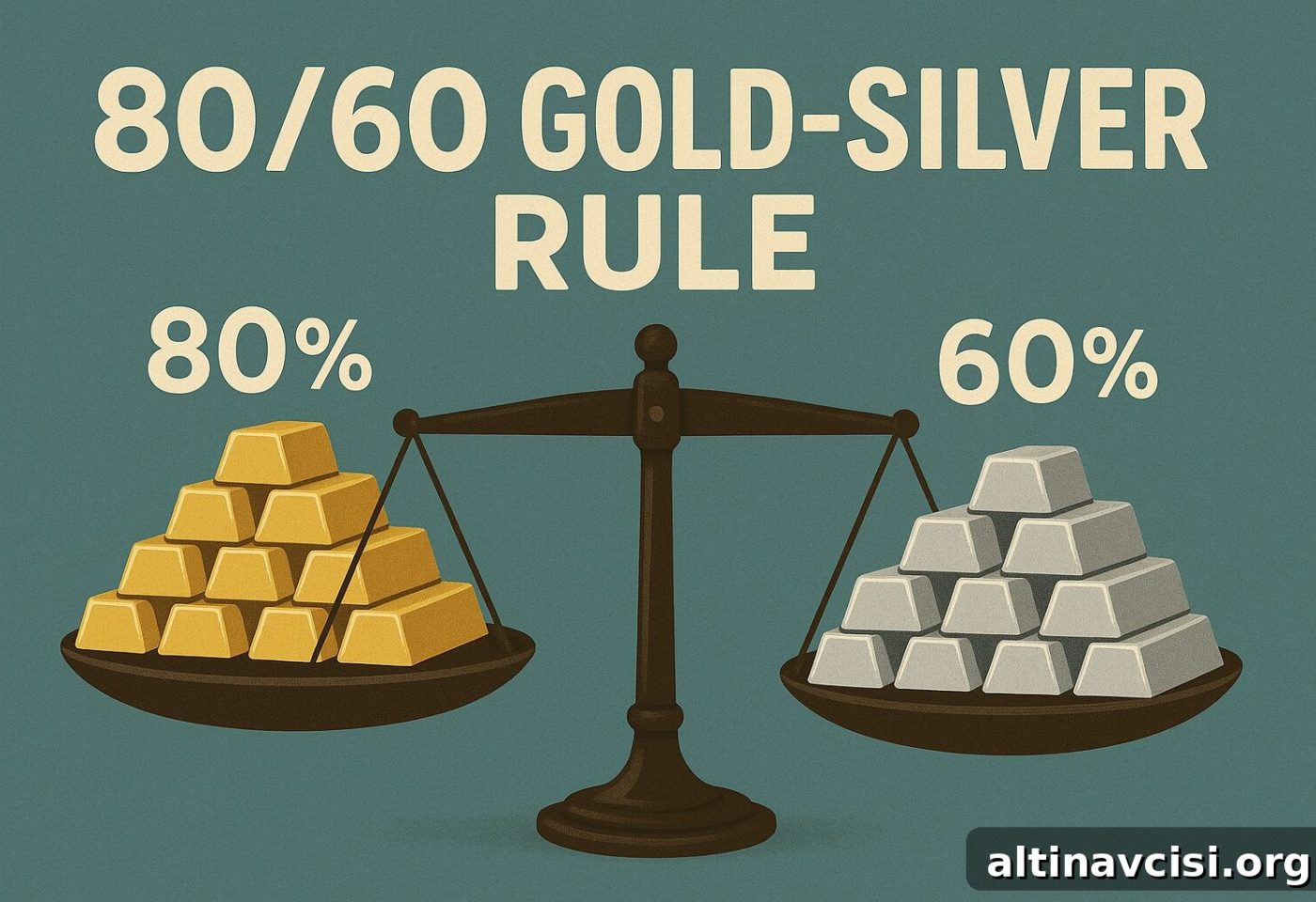
The 80/60 gold-silver rule is a tactical guideline to help you allocate between gold and silver:
- When the ratio is 80:1 or higher → silver tends to be relatively inexpensive compared with gold. This can be a signal to increase silver exposure or to exchange some gold holdings for silver.
- When the ratio is 60:1 or lower → gold appears relatively inexpensive. That may be a time to favor gold or to rebalance some silver into gold.
These thresholds draw on long-term historical behavior. The ratio has a tendency to revert toward its long-term average — often cited in the mid-60s to low-70s — so the 80 and 60 levels mark practical extremes where mean reversion may create favorable risk/reward opportunities.
Why These Numbers Matter
The 80 and 60 marks are not arbitrary. They represent statistical extremes at which one metal has typically been over- or under-valued relative to the other. When the market deviates significantly from its long-term average, investors who follow disciplined signals can position themselves to benefit when the relationship normalizes.
A recent example: during the 2020 pandemic, the ratio widened dramatically as silver lagged behind gold, then narrowed as silver rallied strongly against gold. Those swings illustrate how quickly opportunities can arise when the ratio moves far from its historical center.
The Ratio at Work
When the gold-to-silver ratio reached extreme levels above 100:1 earlier this year, it signaled that silver was deeply undervalued relative to gold. At that time silver traded near $30 per ounce. Investors who increased their silver positions at that extreme were rewarded as silver climbed to roughly $48 per ounce over the following months, producing substantial gains for those who acted on the signal.
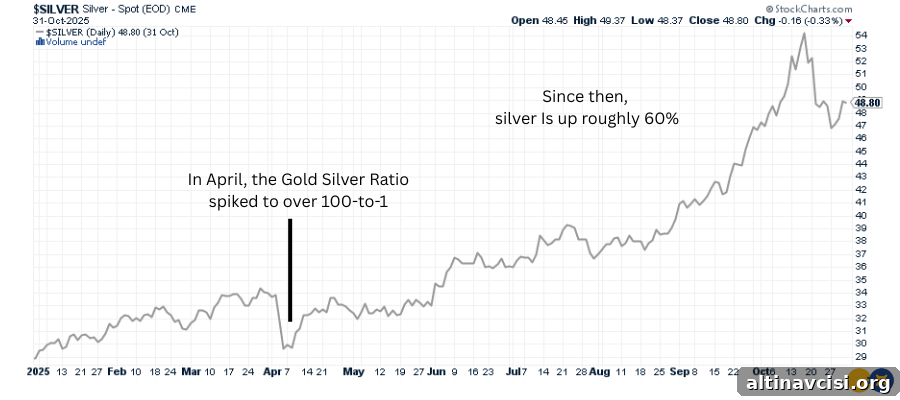
This move highlights the core idea behind the 80/60 rule: when the ratio stretches to extremes, it often points to an imbalance that the market may correct. Investors who base decisions on the ratio can capture those corrections instead of following short-term sentiment.
How to Apply the Strategy
1. Monitor the ratio regularly. Track the gold-to-silver ratio from reliable sources and make it part of your routine portfolio review. Many investors check it monthly or quarterly.
2. Identify clear entry points. Use the 80:1 and 60:1 thresholds as signals: above 80 favors silver accumulation; below 60 favors gold accumulation. Consider physical metal purchases such as coins or bars, or ETFs and other vehicles depending on your objectives and constraints.
3. Move gradually. Avoid large, abrupt reallocations. Dollar-cost averaging helps spread timing risk and smooth volatility as you adjust holdings in response to ratio signals.
Historical Validation
Over decades the gold-to-silver ratio has swung widely — at times exceeding 100:1 and at others falling below 40:1. These persistent swings have given the ratio a long track record as a relative-value gauge. Periods when the ratio climbed into the 80s or higher have often preceded stronger silver performance as the relationship reverted toward its historical average.
- In recent years, stretches above 85:1 were followed by periods where silver outperformed gold as the ratio normalized.
- Conversely, when the ratio has tightened below 60:1, gold has often been the better relative value for a time.
These historical patterns are why many investors continue to use the 80/60 framework as part of a broader, disciplined approach to metals investing.
Benefits of the 80/60 Gold-Silver Rule
Objective decision-making: Clear ratio thresholds reduce emotional trading and provide a repeatable rule for rebalancing between metals.
Potential for improved returns: Buying the relatively undervalued metal and rebalancing toward the mean can enhance long-term performance inside a diversified metals allocation.
Built-in diversification: The rule encourages shifting exposure based on value rather than fixed percentages, which can improve risk management across a metals portfolio.
Limitations to Keep in Mind
- It is not a timing guarantee. The ratio indicates relative value, not exact price timing; extremes can persist for extended periods.
- Requires active monitoring. The approach is more hands-on than a simple buy-and-hold strategy and demands attention to changing conditions.
- Costs matter. Dealer spreads, shipping, storage, and transaction fees can reduce net returns and should be factored into any implementation.
The Bottom Line: A Tool, Not a Rule
The 80/60 gold-silver rule is a practical, time-tested tool to guide precious-metals allocations using objective market data. It is not infallible, but it helps investors make disciplined decisions within a diversified plan. Whether you are new to metals or experienced, understanding the gold-to-silver ratio and applying it thoughtfully can reveal opportunities, manage risk, and support long-term wealth building.
Investing in Physical Metals Made Easy
People Also Ask
What is the 80/60 gold-silver rule?
The 80/60 gold-silver rule is a simple, repeatable strategy: when the ratio exceeds 80:1, silver is commonly viewed as undervalued relative to gold; when the ratio is 60:1 or below, gold may offer better relative value. The rule helps investors decide which metal to favor based on relative pricing.
How does the gold-to-silver ratio affect investment decisions?
By showing how many ounces of silver equal one ounce of gold in value, the ratio highlights when one metal is historically cheap or expensive relative to the other. Investors use it to identify purchase opportunities and to rebalance holdings with an eye toward mean reversion.
Why did the gold-silver ratio matter when it was over 100 to 1?
A ratio above 100:1 indicates a marked undervaluation of silver versus gold. When the ratio reached those levels earlier this year, silver traded near $30 per ounce and later rallied toward roughly $48 per ounce, demonstrating how powerful ratio-based signals can be when markets correct imbalances.
Is the 80/60 gold-silver rule still relevant today?
Yes. While market dynamics evolve, the principle of mean reversion between gold and silver still applies. Using 80/60 thresholds offers a disciplined, data-driven way to adjust precious-metals allocation as conditions change.
How often should I check the gold-to-silver ratio?
Most investors review the ratio monthly or quarterly as part of routine portfolio monitoring. Including it in regular reviews can help you spot shifts in relative value without overtrading.
Get Gold & Silver Insights Direct to Your Inbox
Join thousands of smart investors who receive expert analysis, market updates, and exclusive deals every week.
Popular Topics
Picked from the archive
-
01
 Topics
Gold Tops $4,000 as Shutdown Hits Jobs, Inflation and Airlines
-
02
Topics
U.S. Dollar Climbs After US-EU Tariff Deal Lowers Trade Tensions
-
03
Topics
5 Factors That Drive Gold Spot Prices
-
04
Topics
Goldman Sachs: Oil Could Reach $110 Amid Iran Shipping Threat
-
05
Topics
CBO: Trump Tax Law Increases U.S. Deficit by 3.4 Trillion
-
06
Topics
Fed Split on July Rate Cut if Tariffs Have Mild Impact
-
07
Topics
Silver Breaks Above $92 as Citi Sees $100 by March
-
08
Topics
Silver Price Nears $50: Will It Break Its All-Time High?