Tariffs Hit Crypto, Gold Holds 4,100, Silver Squeeze Deepens

Daily News Nuggets | Today’s top stories for gold and silver investors
October 14th, 2025
Silver Squeeze Sends Prices Up Over 76% YTD
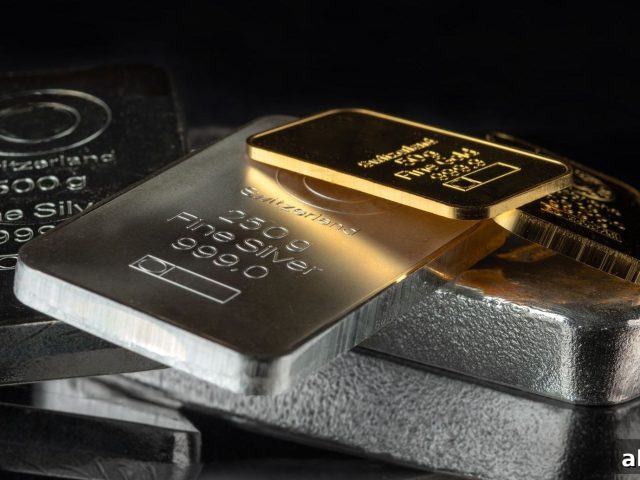
Silver has erupted to multi-decade highs, trading above $51 per ounce as an extreme short squeeze grips London’s physical market. Leasing rates and borrowing costs have spiked to extraordinary levels, driving some market participants to transport silver bars by air freight—an approach typically reserved for gold. Tight physical supply, trade uncertainty and heavy inflows into silver-backed funds have all combined to intensify the rally.
The current move is not just speculative positioning; strains in the metal’s microstructure are translating into real, measurable costs for market participants. Short covering, limited deliverable inventories and elevated financing rates have created a feedback loop that is amplifying price moves. For investors, this means heightened volatility but also the possibility of meaningful price discovery in a market that has been structurally constrained.
Market observers point to several drivers behind the squeeze: constrained wholesale inventories, rising demand from exchange-traded products, and logistical bottlenecks that make physical delivery more difficult and expensive. Those conditions have compressed the usual buffers that smooth price action, so sharp rallies and abrupt reversals are more likely until supply and borrowing conditions normalize.
Gold Hits New High on Rate Cut Hopes & Trade Risk
Gold has pushed past $4,100 per ounce as traders increasingly price in Federal Reserve rate cuts. Markets currently assign a high probability to a 25-basis-point reduction this month and expect further easing by December. With elevated geopolitical and trade risks—particularly renewed tensions between the U.S. and China—capital is reallocating toward tangible hedges, and non-yielding bullion benefits in a lower-rate environment.
Major banks have revised their forecasts higher amid the rally. Bank of America and Société Générale now see gold reaching $5,000 in 2026, while Standard Chartered has raised its 2026 average forecast to $4,488 per ounce. As Suki Cooper, global head of commodities research at Standard Chartered, noted, the rally appears to have room to run, though a near-term correction could be constructive for sustaining a longer-term uptrend.
For investors, the key implication is that gold is being priced both as an insurance asset against policy and trade shocks and as a beneficiary of a lower interest-rate outlook. That dual demand—safe-haven flows plus rate-driven positioning—helps explain the persistent buying pressure across physical, ETF and futures markets.
Treasury Yields and Powell’s Signals Grab Center Stage
Treasury yields are taking center stage ahead of Federal Reserve Chair Jerome Powell’s public remarks. The 10-year Treasury yield has eased somewhat as markets price in imminent rate cuts, but bond markets remain sensitive to any shift in the Fed’s language. Powell’s tone—whether hawkish, dovish or balanced—could quickly reshape yield expectations and risk appetite across asset classes.
Traders will be listening for clues about inflation dynamics, labor market slack and the Fed’s tolerance for potential policy missteps as it moves toward easing. A more hawkish posture could spark volatility and push yields higher, weighing on precious metals. Conversely, dovish signals would likely reinforce a carry rally into gold and silver as lower real rates improve the appeal of non-yielding bullion.
Dollar Rally Lacks Conviction Amid Underlying Weakness
The U.S. dollar has staged a roughly 3% rebound this week, supported by positioning adjustments and weakness in several rival currencies. However, many strategists question whether this bounce has lasting momentum. The dollar remains down significantly from earlier in the year; the first half of 2025 saw the currency suffer its sharpest decline since the 1970s, and broader fiscal pressures continue to cloud the outlook.
Headwinds include rising fiscal deficits and the cost of recent legislative packages, which have raised concerns about longer-term fiscal sustainability. At the same time, the Fed’s tilt toward easing reduces the dollar’s yield advantage, prompting global capital to rotate into European and emerging market assets. If the dollar’s rebound falters, that reversal would add further support to precious metals and international assets priced in dollars.
Gold Holds Firm as Tariffs Rattle Markets, Bitcoin Sinks
President Trump’s latest escalation in trade measures directed at China shook risk assets, but the market reaction was uneven. New tariffs aimed at sizable volumes of Chinese imports jolted sentiment and sent Bitcoin sharply lower, with digital assets falling nearly 10% within 24 hours. By contrast, gold barely budged and instead climbed to fresh records above $4,100 per ounce.
The divergence highlights gold’s enduring role as a portfolio stabilizer. While speculative assets like cryptocurrencies can be highly sensitive to policy uncertainty and rapid shifts in risk tolerance, physical bullion tends to attract capital when geopolitical risks and monetary-policy ambiguity increase. Central bank purchases, robust ETF inflows and the prospect of lower U.S. rates have all helped sustain demand for physical gold during recent shocks.
The takeaway for investors is clear: in periods where trade tensions intersect with monetary policy uncertainty, tangible stores of value—particularly gold and to a lesser extent silver—remain preferred refuges for capital seeking preservation and downside protection.
Popular Topics
Picked from the archive
-
01
 Topics
Dollar Steadies After Jobs Data Shock Sends 90% Odds of Fed Cut
-
02
Topics
Consumer Confidence Hits 4-Month High as Inflation Eases
-
03
Topics
Gold Price Falls Below $3,340 Ahead of Fed Comments
-
04
Topics
Global Oil Prices Steady as Travel Demand Rises, Sanctions Loom
-
05
Topics
Silver Prices Eye Record Highs as Fed Signals Rate Cuts
-
06
Topics
AI Bubble Fears Surge as Gold Price Falls Below 4,000 USD
-
07
Topics
Tariff-Driven Inflation Clouds Fed’s September Rate Decision
-
08
Topics
10-Year Treasury Yield Rises After Tariff News, Services Data