Gold Price Drops 0.7% as Markets Weigh Trade Truce

Gold Falls as Trade Optimism and Fed Anticipation Weigh on Safe-Haven Demand
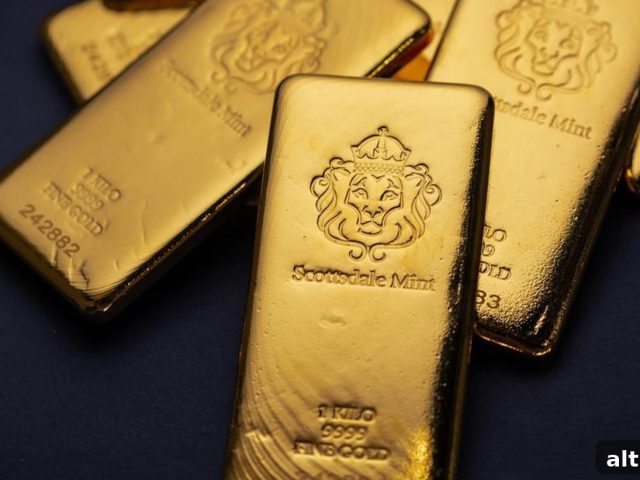
Gold prices declined for a second consecutive day as growing optimism around trade relations between the United States, Japan and potentially the European Union eased investor demand for safe-haven assets. Spot gold slipped 0.7% to $3,362.48 per ounce, while U.S. gold futures fell about 0.9%. The pullback in bullion reflects a shift in risk appetite as markets react to improving diplomatic and economic signals as well as attention toward upcoming U.S. central bank events.
Why Gold Is Pulling Back
The recent drop in the gold price is tied primarily to two forces. First, positive developments in trade negotiations and discussions involving the U.S., Japan and possibly the EU have encouraged investors to move toward riskier assets. When trade tensions ease or forward momentum is perceived, demand for traditional safe havens such as gold often diminishes.
Second, market participants are closely watching high-profile domestic events, notably the meeting between President Trump and Federal Reserve officials and the Federal Open Market Committee (FOMC) policy meeting scheduled for July 29–30. Expectations that the Fed will keep interest rates unchanged at that meeting—combined with the market’s pricing of potential rate cuts later in the year—are shaping investor positioning in gold and other interest-rate-sensitive assets.
Interest Rates, the Fed, and Gold
Gold’s price sensitivity to interest-rate expectations is a key driver of short-term moves. When policy rates are held steady or expected to be lower in the future, the opportunity cost of holding non-yielding assets like gold falls, which can support higher bullion prices. Conversely, shifts in expectations—whether toward unchanged policy or toward a different timing for cuts—can prompt rapid reallocation across portfolios and feed into price volatility.
With the July 29–30 FOMC meeting approaching, investors are parsing every signal that could indicate the Fed’s likely path for monetary policy. Comments from central bankers, economic data releases, and high-profile meetings with government officials can all influence expectations for rates and, by extension, the direction of the gold price.
Market Implications and Investor Focus
The recent gold decline underscores how sensitive markets are to shifts in global risk sentiment. As traders and investors react to trade optimism and Fed-related developments, flows into equities, currencies, bonds and commodities can change quickly. For gold specifically, watchers will likely monitor:
- Updates on trade negotiations between the U.S., Japan and the EU and any formal announcements that change market perceptions of geopolitical risk.
- Statements and actions related to the Fed meeting on July 29–30, including any guidance on the timing of future rate cuts.
- Economic indicators that could influence the Fed’s outlook, such as inflation readings, employment data, and growth metrics.
- Movements in real yields and the U.S. dollar, which frequently correlate with shifts in the gold price.
Outlook for Gold
In the near term, gold may remain sensitive to developments in trade diplomacy and the messaging around U.S. monetary policy. Continued progress in trade talks could sustain risk-on sentiment and keep downward pressure on safe-haven demand, potentially limiting upside for bullion. At the same time, any unexpected hawkish signals or renewed global risk could reverse course, restoring interest in gold as a hedge.
Investors seeking exposure to gold should consider their horizon and risk tolerance. Short-term traders may react to headlines and central bank cues, while longer-term holders typically weigh the metal’s role as an inflation hedge and portfolio diversifier. Given ongoing uncertainty around geopolitics and monetary policy timing, volatility in the gold market is likely until clearer signals emerge from trade negotiations and the central bank’s communications.
Overall, the recent pullback in gold reflects a complex interplay between improving trade prospects and cautious monitoring of Federal Reserve policy, both of which are expected to remain important drivers of gold prices in the weeks ahead.
Popular Topics
Picked from the archive
-
01
 Topics
Why Ground Beef Prices Are Soaring as Cattle Supply Shrinks
-
02
Topics
Gold Falls to One-Week Low as Trade Talks Enter Final Days
-
03
Topics
Brazil Inflation Off Target for Sixth Straight Month
-
04
Topics
Oil Price Tops $65 as US-China Trade Talks Lift Markets
-
05
Topics
June CPI Jumps 2.7 Percent as Tariffs Push Up Consumer Prices
-
06
Topics
Why Wealthy Investors Allocate 11% of Portfolios to Gold
-
07
Topics
Senate Tax Bill Adds 3.3 Trillion to Deficit, Raising Alarm
-
08
Topics
Powell’s Rate-Cut Dilemma: Trump vs Fed Credibility