Treasury Secretary Questions Federal Reserve’s Spending and Role
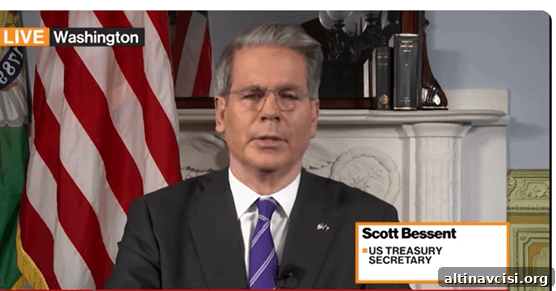
Scott Bessent Urges Full Review of Federal Reserve’s Non-Core Functions to Guard Against Mission Creep
Scott Bessent has called for the Federal Reserve to conduct a comprehensive review of its non-core activities to prevent “mission creep” from undermining the institution’s independence in setting monetary policy. Speaking critically of current practices, Bessent raised particular concern over the timing and scale of a large renovation project the Fed has undertaken while it is operating at a financial loss, saying the decision heightens questions about accountability and transparency.
Why a Review of Non-Core Functions Matters
Bessent’s central argument is that when a central bank expands or maintains functions that are outside its primary mandate—such as monetary policy and financial stability—it can invite mission creep. Mission creep occurs when an organization gradually assumes responsibilities beyond those originally intended, which can dilute focus and compromise core objectives. For a central bank, the primary risks from mission creep include diminished clarity about monetary policy priorities, increased political scrutiny, and potential erosion of public trust.
A full review, he suggests, would identify which activities directly support the Fed’s core responsibilities and which do not. By separating essential operations from discretionary or peripheral ones, the Fed could reduce the risk that its policymaking becomes entangled with supplementary projects that attract criticism or political pressure. Clear boundaries help safeguard the Federal Reserve’s independence, an attribute that markets, investors, and the public often rely on when assessing economic and financial stability.
Concerns Over Large Renovation During Losses
In addition to calling for a review of functions, Bessent questioned the decision to proceed with a major renovation project at a time when the central bank is reporting financial losses. He framed this choice as emblematic of deeper governance issues—suggesting that expensive capital projects should be weighed against fiscal realities and the institution’s mission-driven priorities.
When a public institution undertakes high-cost projects while facing budgetary shortfalls, it naturally attracts scrutiny. For the Fed, such scrutiny can translate into calls for greater oversight from lawmakers and the public, which in turn may put pressure on its operational independence. Bessent’s remarks highlight the reputational risks that can arise when internal expenditures appear misaligned with external financial conditions.
Calls for Greater Accountability and Transparency
Underlying Bessent’s critique is a broader appeal for improved accountability and transparency within the Federal Reserve. A formal review of non-core functions, in his view, should be accompanied by clearer reporting, more rigorous cost-benefit analysis of discretionary programs, and stronger governance mechanisms. Transparency about decision-making and spending can help justify necessary expenditures while limiting opportunities for mission drift.
Specific measures that would align with this approach include publishing the results of any internal review, defining measurable criteria for what constitutes a core function, and instituting regular external or independent assessments. Such steps could enhance public confidence in the Fed’s stewardship and make it easier for stakeholders to evaluate whether the institution is prioritizing its statutory responsibilities.
Implications for Monetary Policy Independence
The overarching implication of Bessent’s position is that preserving the Federal Reserve’s independence requires vigilance not only in monetary policy decisions but also in how the institution manages its broader portfolio of activities. When non-core projects or high-profile expenditures draw attention, they can invite political debate over the Fed’s mandate—potentially weakening its ability to act decisively on inflation, employment, and financial stability.
Bessent’s recommendation for a full review is therefore a call to protect the integrity of monetary policy through disciplined governance. Ensuring the Fed remains focused on its core mission and accountable in its use of resources would, in his view, better position the institution to maintain credibility with markets and the public.
Conclusion
Scott Bessent’s comments emphasize the need for the Federal Reserve to reassess non-core activities and to increase transparency around large expenditures, particularly in times of financial strain. By conducting a thorough review and strengthening accountability measures, the Fed could reduce mission creep, defend its policy independence, and reinforce public trust in its role as the nation’s central bank.
Popular Topics
Picked from the archive
-
01
 Topics
Gold Rises Amid Fed Uncertainty; Palladium and Platinum Surge
-
02
Topics
OPEC+ Supply Hike and Tariff Fears Push Oil Prices Down
-
03
Topics
Global Oil Prices Steady as Travel Demand Rises, Sanctions Loom
-
04
Topics
Gold Price Poised for Record Highs as Dollar Confidence Crumbles
-
05
Topics
Asia Drives 70% of Global Gold Demand, Reshaping Markets
-
06
Topics
U.S.-Japan Trade Deal Lifts Investor Confidence, Gold Pulls Back
-
07
Topics
Waller: Fed Has Path to Rate Cuts Despite Trump Tariffs
-
08
Topics
Markets Shaken by Trump $3.8T Tax Bill and Debt Risks