Large Gold Bullion: What to Know Before You Buy

Written by: The MacroButler
Savvy investors know there are fundamentally two types of assets: contracts and properties. Contracts—cash and bonds—are promises to pay. Properties—stocks and gold—are direct ownership of real things. Understanding this distinction is central to building a resilient portfolio.
Economist Harry Browne popularized a simple, robust approach called the Permanent Portfolio. It allocates 25% each to stocks, bonds, gold, and cash. The goal is straightforward: combine four uncorrelated assets so the portfolio can withstand inflation, deflation, booms, busts, and geopolitical shocks.
Cash and short-term Treasuries act like a financial mattress—liquid, defensive, and ready to be redeployed during downturns. Bonds are contractual loans to governments and corporations that pay interest; they perform well when rates fall but can suffer in periods of default risk or persistent inflation.
On the other side are the tangible assets. Gold provides a hedge against political risk, monetary debasement, and systemic crises—no counterparty promises, just ownership of a scarce metal. Stocks represent ownership in businesses and tend to reward growth environments, though they can be volatile during economic contractions.
In plain terms: contracts ask you to trust a promise; properties give you something you own.
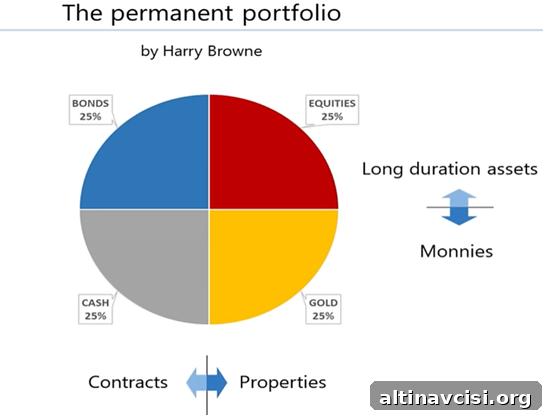
By blending contractual assets with physical properties, the Permanent Portfolio reduces reliance on any single economic outcome. The result is a financial toolkit designed to balance risk and resilience across very different asset behaviors.
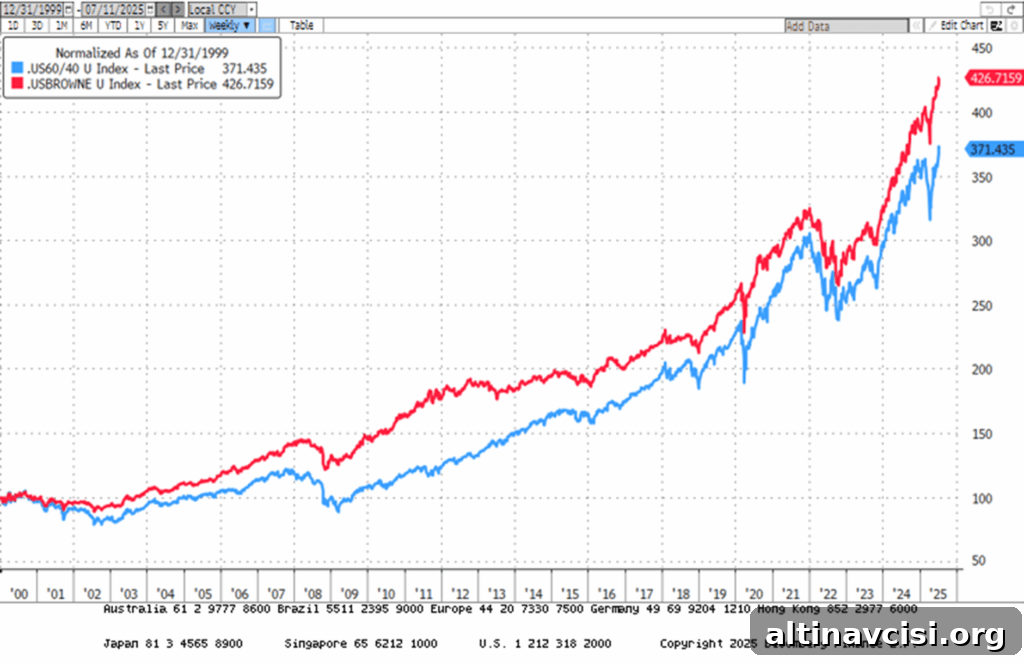
Contrast this with the traditional 60/40 portfolio—60% stocks, 40% bonds—favored by many advisors for decades. It performed well during the long period of falling interest rates and steady growth, acting as a reliable blend of return and stability. Today, however, higher inflation and rising rates have challenged the assumptions behind that allocation, prompting investors to reassess whether 60/40 still suits the current macro environment.
Performance of $100 invested in the US 60/40 Portfolio (blue line) and US Browne Portfolio (red line) since December 31st, 1999.
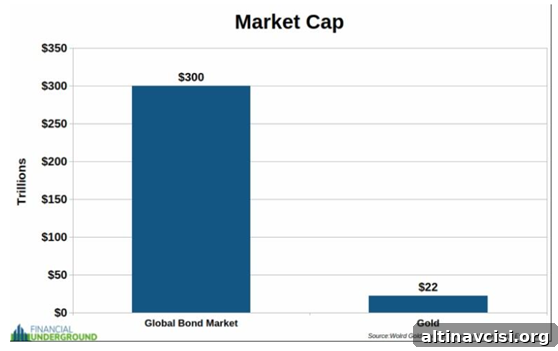
A persistent misconception is that U.S. Treasuries are completely “risk-free.” While Treasuries carry low credit risk relative to many assets, they are still exposed to inflation, interest-rate shifts, and political choices that affect fiscal policy. Since the dollar was decoupled from gold in 1971, government debt markets have expanded dramatically—creating large exposures for investors who treat sovereign bonds as an unqualified safe haven.
By comparison, the total value of all gold ever mined is much smaller than the global bond market. That gap illustrates why some investors and central banks have turned back to gold as a store of value and insurance against systemic risk.
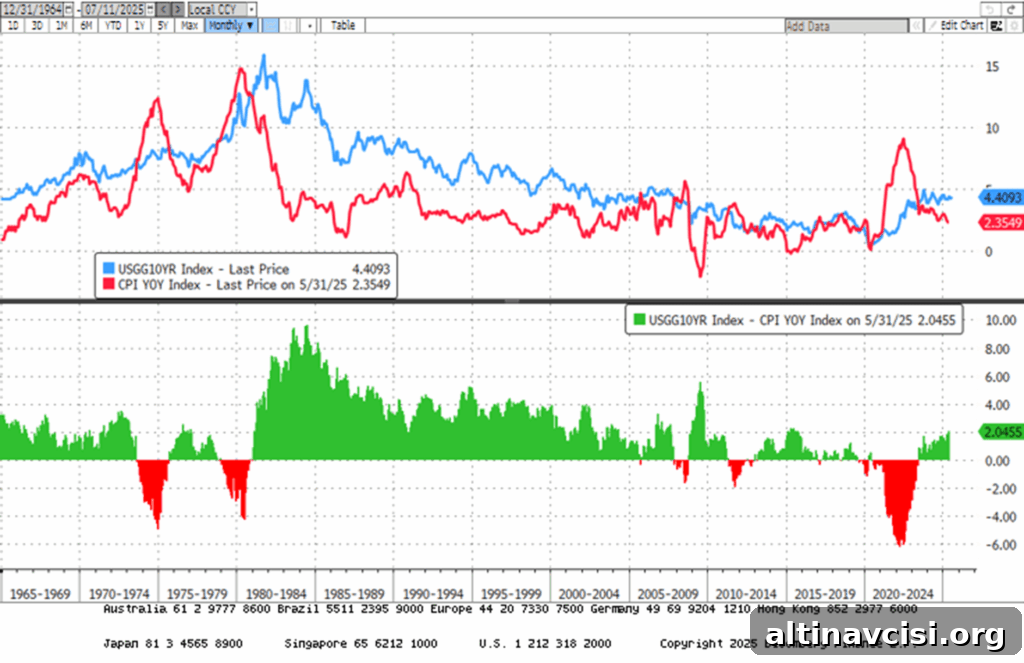
Macro forces suggest long-term yields are unlikely to fall dramatically unless fiscal pressures and geopolitical tensions ease. Inflation remains a concern in many regions, fiscal deficits are large, and some foreign buyers of U.S. debt have signaled discomfort with continued fiscal expansion. That dynamic increases the risk of sideways or rising yields over time.
US 10-Year Yield (blue line); US CPI YoY Change (red line) & Spread between US 10-Year Yield & US CPI YoY Change (histogram).
Recent fiscal policy moves in the U.S. have drawn scrutiny. Analyses of large bills and tax changes can vary widely depending on baseline assumptions; some assessments show sizable near-term deficit reduction while others, accounting for front-loaded tax cuts and delayed spending adjustments, project higher deficits over a decade. Those differences matter because rising deficits generally increase the need for financing and can put upward pressure on yields unless offset by monetary policy or stronger growth.

One practical consequence of short-term bill issuance is greater liquidity and a shorter average maturity for government debt. Shifting issuance toward bills can make the debt profile feel more like cash to markets and may encourage risk-taking. However, shortening maturities leaves the government more exposed to rate moves and can raise refinancing risk over time.
Ratio of US Total Debt Outstanding Bills to US Total Government Debt (blue line); S&P 500 Index (red line).
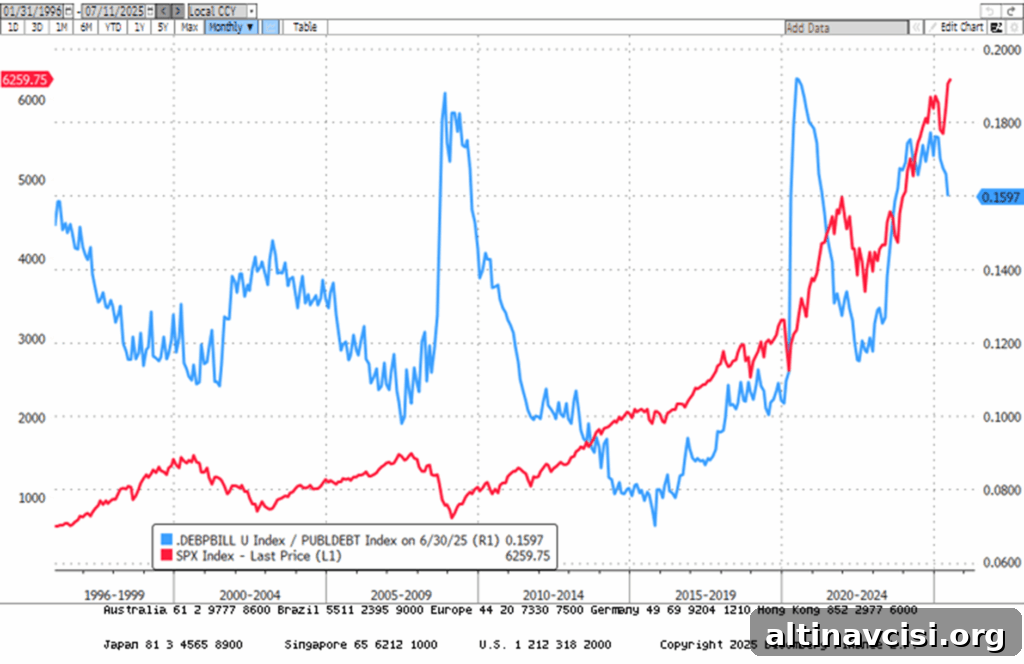
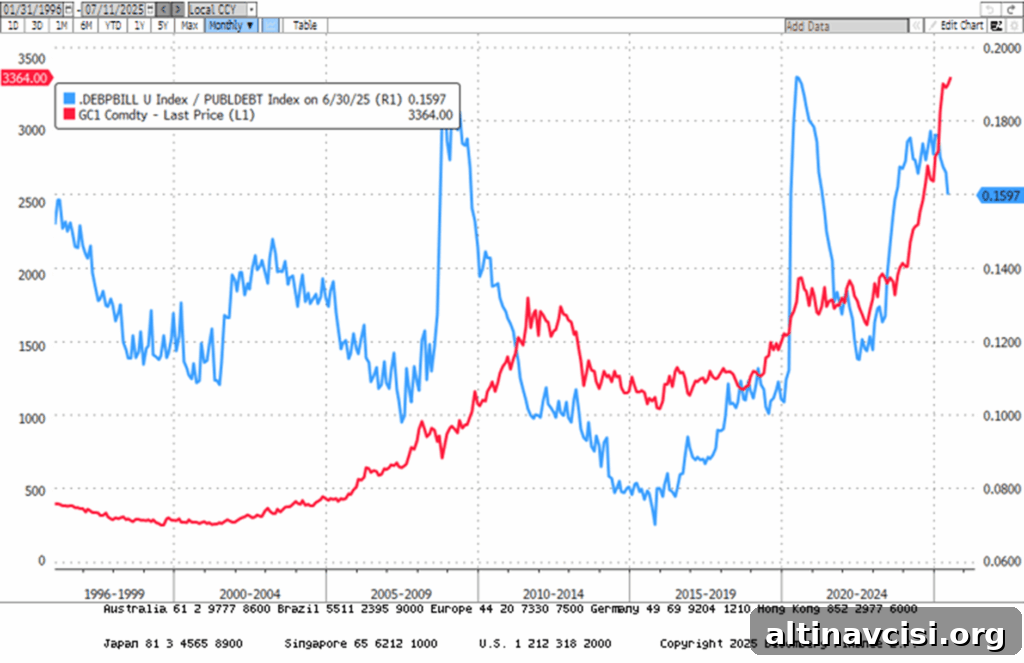
As the Treasury leans toward shorter maturities and rebuilds cash buffers, gold can benefit. When investors perceive greater monetary and fiscal risk, demand often shifts toward tangible assets that carry no counterparty risk.
Ratio of US Total Debt Outstanding Bills to US Total Government Debt (blue line); Gold price in USD Terms (red line).
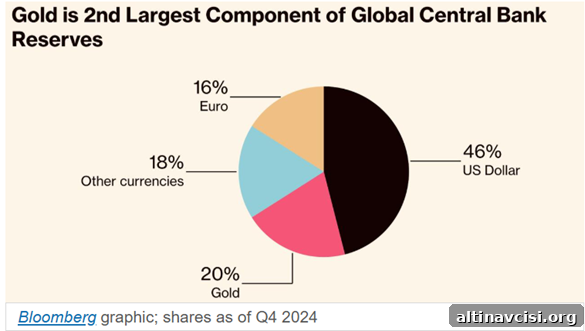
Central banks around the world have been increasing their official gold holdings in recent years. Many reserve managers see gold as a complementary reserve asset that reduces exposure to any single fiat currency or to sanctions-related risks. That trend—especially visible among emerging-market central banks—has contributed to a structural demand backdrop for the metal.
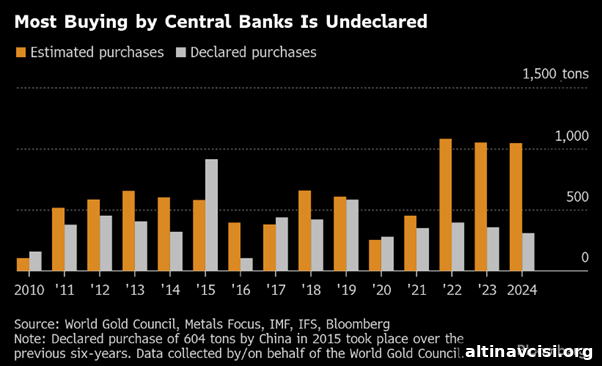
Official purchases have been notable: many central banks have added hundreds of tons over recent years, bringing official holdings to multi-decade highs. While details and motives vary by country, a common theme is diversification away from concentrated currency exposure and toward a non-sovereign store of value.
Geopolitical tensions and the use of financial tools to achieve strategic goals have reinforced the appeal of assets that cannot be frozen or seized through central clearing mechanisms. For many reserve managers, the message is clear: some portion of reserves should be outside the reach of potential geopolitical leverage.
That shift is visible in reserve compositions: although the dollar remains dominant, its share of global reserves has declined from historical highs, while gold’s share has risen. Emerging-market central banks—especially in Asia—have been particularly active buyers of gold and other non-dollar assets.
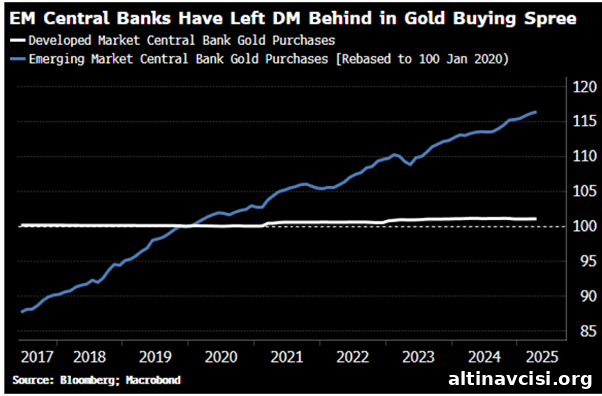
Retail investor behavior has lagged this trend in many Western markets, but interest in physical gold and gold ETFs has increased as awareness of inflation, fiscal pressures, and geopolitical risk has grown. Asian retail buyers have been particularly active, helping drive a more diversified global demand picture.
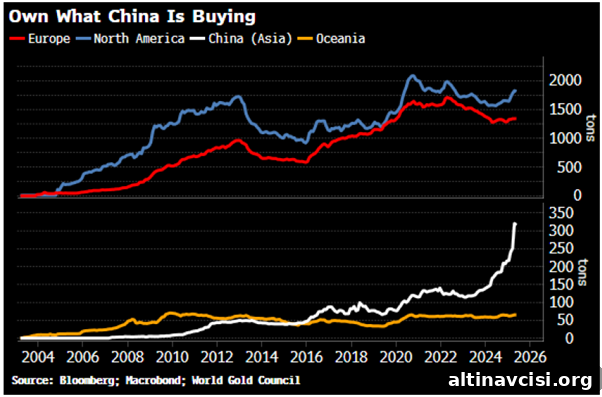
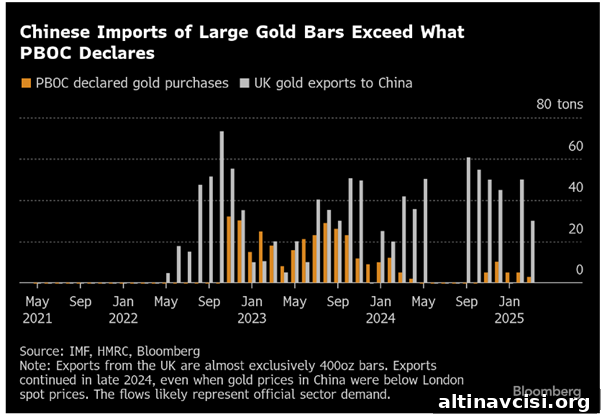
Market observers also note opaque flows and shifts in custody patterns—large bars moving between centers and statistical anomalies in official reporting. While definitive public proof of every move is often absent, the footprints suggest a broader reallocation toward physical metal in some quarters.
Central-bank gold purchases continue with many countries adding to reserves. The pattern of accumulation—led by a mix of emerging and smaller advanced economies—reinforces gold’s role as part of a diversified reserve strategy.
In many Asian markets, both central banks and private investors have increased allocations to gold. High-net-worth individuals and institutions in Hong Kong, China, and other regional financial centers have raised their exposure, reflecting a broader diversification away from cash and long-duration bonds.
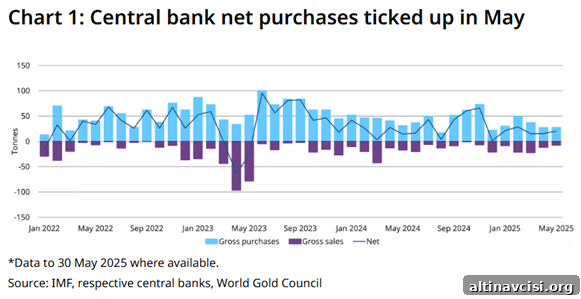
Poland, Kazakhstan, Turkey, and China are among the notable official buyers this year, while a few jurisdictions have reduced holdings. Net official buying remains a meaningful component of global demand.
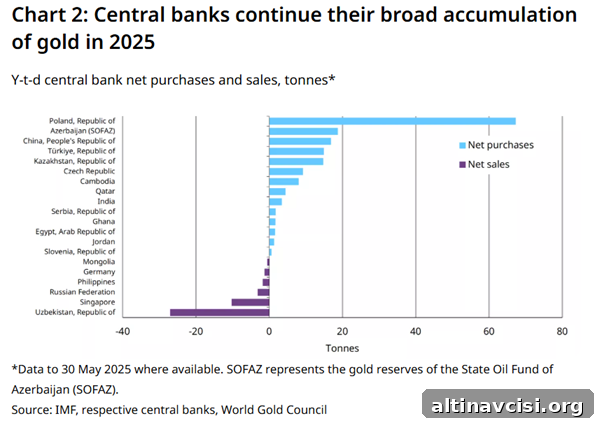
The rise in geopolitical and monetary risk has shifted the reserve-management conversation. For many central banks, the fear of assets being frozen or constrained has accelerated interest in holdings that are outside traditional clearing systems—most notably, physical gold.

KEY TAKEAWAYS
Key points for investors considering how to position portfolios in this environment:
- Understand the difference between contractual assets (cash, bonds) and real assets (gold, stocks).
- Traditional assumptions about Treasuries being entirely “risk-free” are being challenged by persistent inflation, fiscal expansion, and shifting reserve behavior.
- Short-term bill issuance can boost liquidity and risk-taking but creates refinancing risk and can favor assets that are perceived as money-like.
- Central banks—especially in emerging markets—have increased gold purchases as part of reserve diversification and insurance against geopolitical and monetary risks.
- Physical precious metals act as a non-sovereign store of value with no counterparty risk, and they can complement a diversified portfolio focused on preserving capital.
- Investors should focus on liquidity management: short-duration, high-quality credit and T-bills for cash management, while selectively holding physical metals and resilient equities.
- Expect higher volatility and potentially muted inflation-adjusted returns in the near term; prioritize preservation of capital as well as selective growth exposure.




HOW TO TRADE IT?
As of mid-2025, the U.S. economy shows signs of an inflationary boom that could transition into an inflationary bust. Market indicators such as the S&P 500 to gold ratio suggest that precious metals may outperform equities when monetary policy and fiscal pressures collide. Investors should stay disciplined and use cycle-sensitive indicators rather than following headline-driven sentiment.
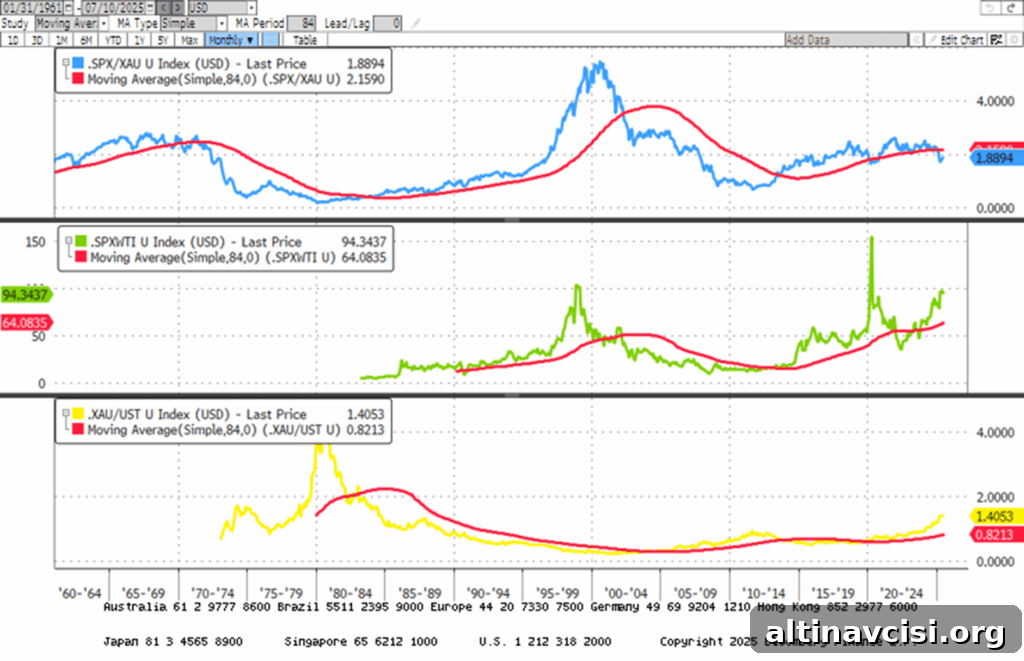
Practical steps to consider:
- Maintain liquidity with short-dated, high-quality USD instruments and T-bills for flexibility.
- Favor low-debt, high-cash-flow companies in equity allocations—these businesses are better positioned to weather supply-chain disruption and rising input costs.
- Hold a measured allocation to physical gold and silver as insurance against monetary and geopolitical risk. Physical metals provide a non-sovereign store of value with no counterparty exposure.
- Avoid extending duration in fixed income; prefer investment-grade corporate credit with short maturities if yield is required.
- Be prepared for elevated volatility and focus on preserving purchasing power and the return of capital.
The era of easy returns from long-duration bonds is likely over. For investors focused on durable wealth preservation, tangible assets—especially physical precious metals—deserve consideration as part of a diversified, resilient portfolio strategy.
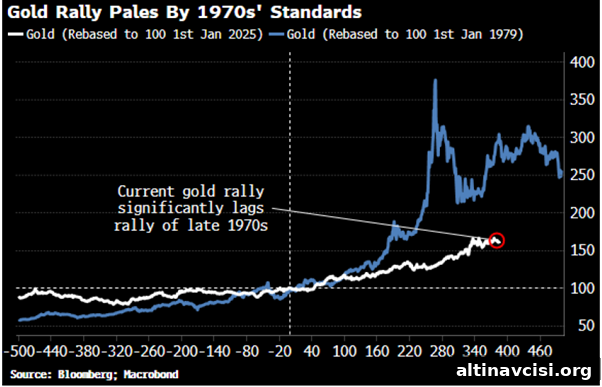
History shows that when monetary regimes change and trust in institutions weakens, real assets tend to hold value better than long-duration contractual claims. The policy mix of rising deficits, shorter-dated borrowing, and geopolitical uncertainty increases the case for owning assets with no counterparty risk.
If you want to read the original, full-length piece from The MacroButler, it is available on the MacroButler Substack.
Popular Topics
Picked from the archive
-
01
 Topics
Profit-Taking Pauses Gold Near $3,380 Amid Trade Policy Fears
-
02
Topics
Copper Surge: What the Melt-Up Means for Markets
-
03
Topics
Trump Raises Metal Tariffs to 50% as EU Reports Trade Progress
-
04
Topics
US Presses Allies to Cut China from Supply Chains by July
-
05
Topics
House Mega Bill: Tax Cuts, Rising Deficits and Key Provisions
-
06
Topics
Central Banks Shift Reserves to Gold as Geopolitical Risk Grows
-
07
Topics
Vietnam Ends State Gold Monopoly, Opens Market to Private Firms
-
08
Topics
China Stabilizes Yuan, Slows Asian Currency Rally vs Dollar