
Last verified September 2026.
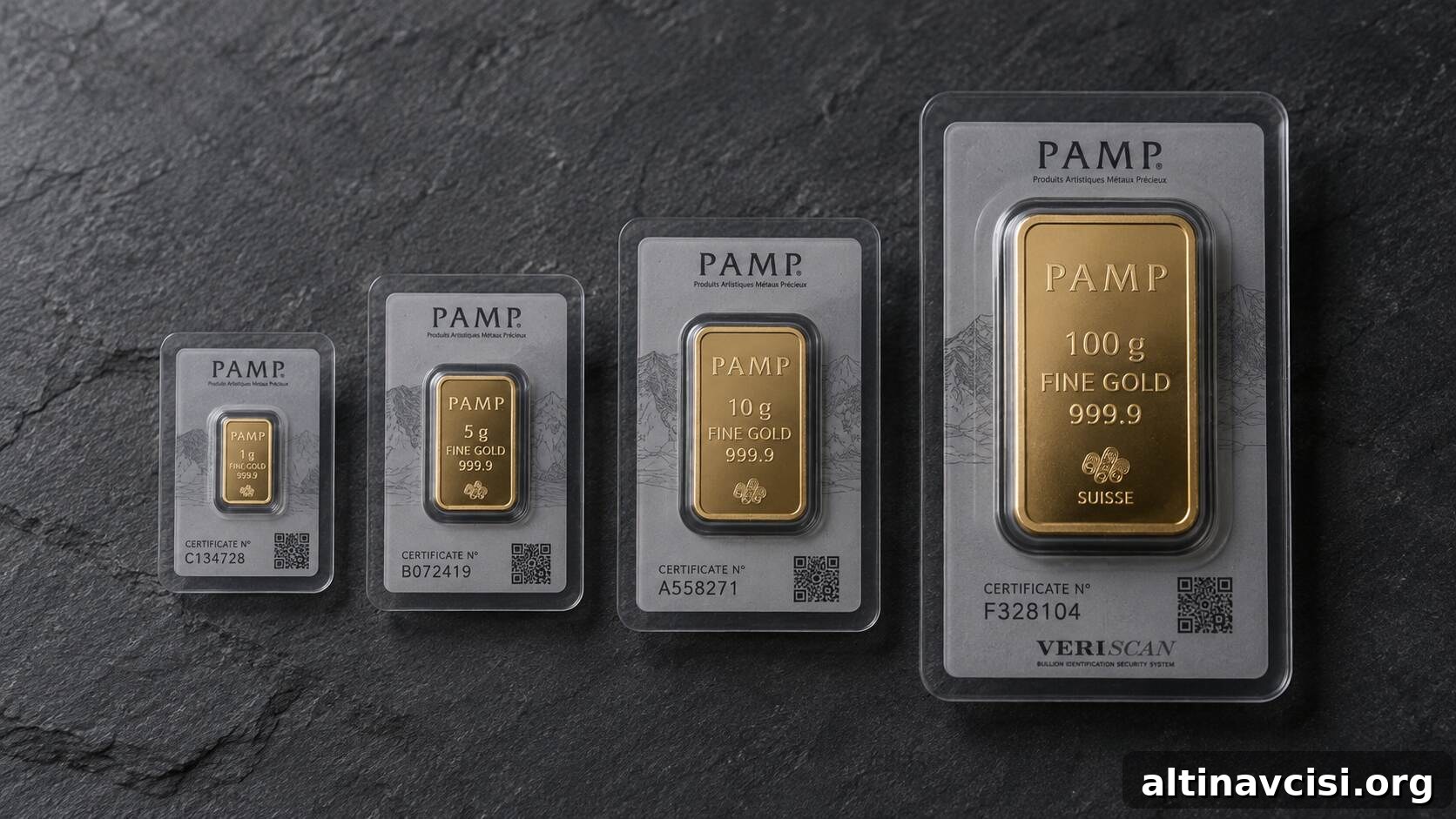
A one-gram gold bar has a melt value roughly equal to the spot price of gold divided by 31.1035 grams per troy ounce. At today’s prices that puts one gram of gold in a very affordable range for many buyers. That accessibility is precisely why gram bars are produced: they let people own physical gold at amounts comparable to the price of a nice meal or a modest piece of jewelry.
The tradeoff is the premium. On a percentage basis, gram bars are the most expensive way to buy gold. Knowing why they carry higher premiums helps you decide whether buying one is a deliberate choice or simply an impulsive purchase.
How Much Does a 1 Gram Gold Bar Cost?
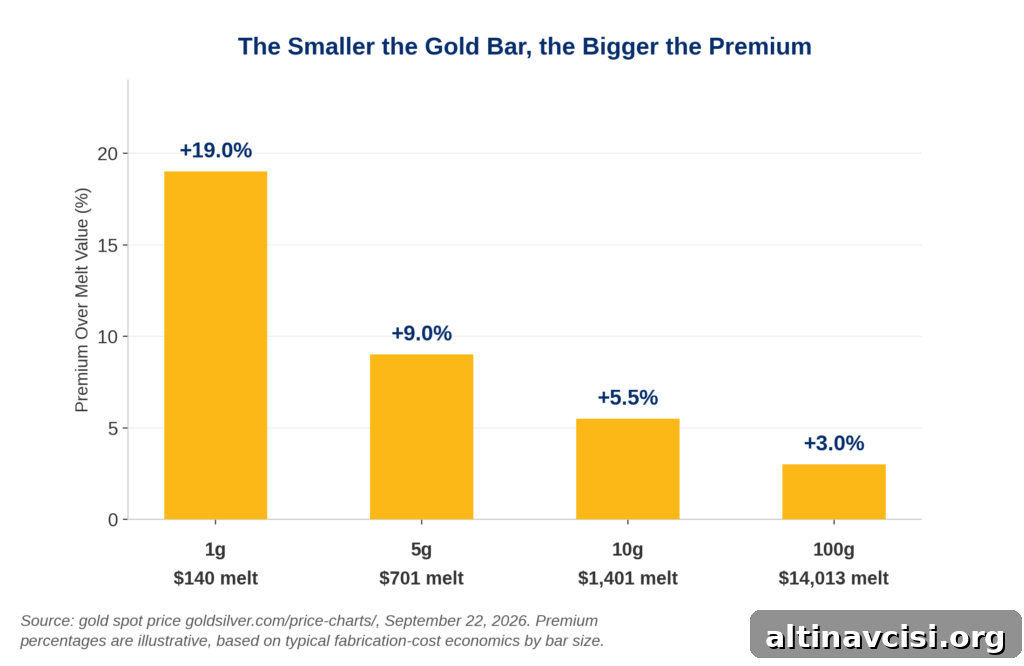
The metal’s melt value is straightforward: divide the live spot price per troy ounce by 31.1035 to find the value per gram. Retail prices are higher because refiners and dealers add fabrication, certification, packaging and distribution costs. Whereas larger bars often trade at a few percent above spot, gram bars commonly trade at significantly higher premiums — frequently in the mid-teens to low-twenties percent range.
Those higher percentages occur because many of the costs that go into producing a certified bullion product are largely fixed, regardless of size. A tiny bar still requires stamping, assay verification and tamper-evident packaging, so the absolute cost of those processes is spread across far fewer grams of metal. In practice, a gram bar with a melt value in the low hundreds of dollars can carry a retail price approaching the mid- to high‑hundreds after those costs are included.
Why Do Small Bars Cost So Much More Per Gram?
The reason is largely a fixed-cost issue rather than a pricing gimmick. Processes like refining, stamping, assaying and packaging take time and resources that don’t scale down proportionally with weight. When those fixed costs are allocated across one gram, the percentage premium becomes large. Allocate the same costs across 100 grams or a kilogram and the premium percentage shrinks dramatically.
That same math explains why 100-gram and 1-kilogram bars sit at the lower end of the premium curve: more metal absorbs those fixed costs, compressing the markup toward the raw metal price.
How Many Grams of Gold Can You Buy for $1,000?
Using the melt value alone, $1,000 buys about seven grams of gold if one gram equals roughly $140 in raw metal. After adding a typical gram-bar premium in the mid-teens to low-twenties percent, that same $1,000 realistically buys closer to about 5.8 to 6.2 grams. The difference represents the fabrication and certification costs embedded in the retail price of small bars.
1 Gram vs. 5, 10, and 100 Grams: Where Does the Premium Flatten Out?
Across common sizes, the same pattern appears:
- 1 gram: highest percentage premium of the usual bar sizes.
- 5 grams: melt value increases proportionally and the premium drops, but it remains elevated compared with larger formats.
- 10 grams: premiums continue to fall, approaching those of standard investment bars.
- 100 grams: the premium curve largely flattens and pricing approaches bulk bar levels.
The practical takeaway: moving up in bar size reduces cost per gram until the curve flattens in the 100-gram to 1-kilogram range. Every step up buys you greater cost efficiency.
Is a 1 Gram Gold Bar Worth Buying?
It depends on your objective. If your goal is cost-efficient accumulation of bullion, the gram bar is the least efficient format. If your goal is to own physical metal immediately and affordably — for a first purchase, a trial, or a small gift — gram bars make ownership accessible in ways larger formats cannot. They let someone hold real gold without saving for months to buy a one-ounce coin.
Consider resale too: while gram bars are recognized globally and generally trade close to spot, the higher purchase premium rarely returns in full on resale. Buying a gram bar as your first step into gold ownership can make sense. Relying on gram bars as your primary accumulation strategy, however, means paying a higher premium on every gram for the life of your position.
What Should You Look For in a Gram Gold Bar?
Three attributes matter for liquidity and resale value. First, purity: investment-grade gram bars should be stamped .999 or .9999 fine and show the weight and purity on the bar itself. Second, an assay card or tamper-evident packaging with a serial number helps a future buyer confirm the bar’s authenticity. Third, refiner reputation: bars from well-known, accredited refiners carry far greater recognition and are easier to sell. A bar lacking any of these elements is not automatically counterfeit, but it will be harder to sell and effectively carries an extra invisible cost.
The Knowledge That Changes Everything
Two essential guides — yours free. Understand why gold matters and why fiat currencies always fail.
Are Gram Gold Bars a Good Gift?
Gram bars are an excellent gift option when the goal is to give real, tangible value without spending four figures. A one-ounce coin often exceeds typical gift budgets. A 1-gram or 2.5-gram bar costs about as much as a thoughtful bottle of wine or a modest piece of jewelry and gives the recipient a portable, durable store of value. For gifting, the premium per gram is less important than the symbolic and educational value of giving physical metal.
Quick Answers
How much is a 1 gram gold bar worth today? One gram of gold equals the spot price per troy ounce divided by 31.1035. Retail prices for gram bars are higher due to fabrication and certification premiums.
Is buying gold by the gram a good idea? For a first purchase, a gift, or to learn the physical ownership process, yes. For building a long-term, cost-efficient position, larger formats are generally a better choice.
Do gram gold bars hold their value? The gold content tracks the spot price, but the premium paid at purchase does not always return on resale. Format matters especially for gram bars because the premium can be substantial.
How many grams are in a troy ounce of gold? A troy ounce equals 31.1035 grams. That is the standard conversion used for precious metals.
Are gram gold bars a scam? No. Gram bars from reputable, accredited refiners are legitimate bullion. The higher premium reflects actual fabrication and certification costs rather than fraud, though bad actors can counterfeit inferior products — which is why reputation and assay packaging matter.
What size gold bar has the lowest premium? Larger bars, typically 100 grams and up to 1 kilogram, usually carry the lowest percentage premium over spot because fixed production costs get spread over more metal.
Why Does Any Amount of Real Gold Still Matter?
Conversations about premium are about efficiency, not about whether gold belongs in a portfolio. The fundamental reasons institutions and individuals hold gold are unchanged by bar size: it is a physical asset outside the direct control of any single currency issue, and it serves as a diversifier in many portfolios. Large institutional buyers continue to add bullion to reserves, while gram bars make the same asset accessible to private savers who want to own real metal in small, tangible increments.
Deciding on format is a separate question from deciding whether to own gold at all. If you plan to accumulate meaningful quantities, larger bars typically deliver more metal per dollar. If you want immediate, affordable physical ownership or a meaningful, memorable gift, gram bars solve that problem efficiently despite their higher per-gram cost.
Stay On Top of Gold & Silver Prices
Get important market alerts sent straight to your inbox.
SOURCES
1. Gold & silver price charts (accessed September 22, 2026).
2. Industry guidance on premiums and pricing (published and updated in 2026).
3. Consumer Price Index historical series (1971–2026).
4. Industry report on gold demand trends for full year 2025.
Disclaimer: This article is for informational purposes only and does not constitute investment advice. Past performance is not indicative of future results. Always consult a qualified financial advisor before making investment decisions.
You May Also Like:
- What Are Negative Real Interest Rates, and Why Does Gold Thrive in This Environment?
- Cheapest Way to Buy Gold? We Measured 110 Live Prices
- How Much Silver Should You Own? A Portfolio Allocation Guide by Age and Goal
- Who Owns US Debt? Central Banks Own Less Than You Think
- What Is Junk Silver? The Old Dimes and Quarters Worth Nearly 50x Their Face Value
- Why Is Silver Demand Tied to AI Data Centers?
- The Copper Mine That Isn’t Trying to Mine Silver Just Explained the Whole Deficit
- Inherited Gold IRA: Beneficiary Rules & the Step-Up Basis Gap