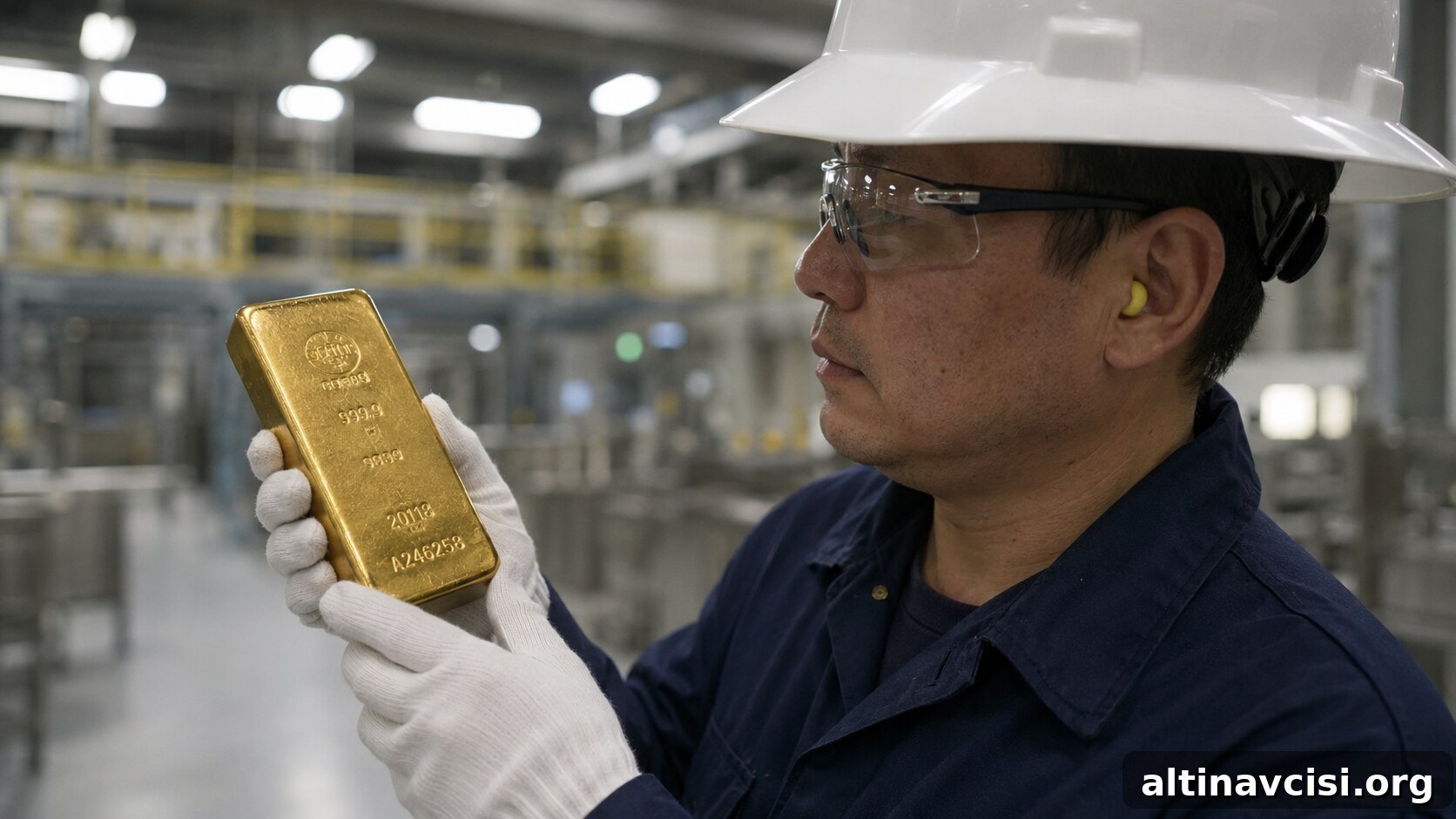
Gold’s role as a store of value has not changed in millennia. What has shifted is who confirms that role: today it’s the institutional players who process and hold the metal—refineries, bullion banks, and central banks—rather than only theorists or advocates of sound money.
Simone Knobloch became CEO of Valcambi on June 1, 2026. Valcambi refines roughly 1,000 tonnes of precious metals per year. Its clients include central banks, bullion banks, and the large international traders that influence global spot pricing. When Knobloch says, “In an unpredictable world, gold is still a safe haven,” he is describing how those institutions actually use gold in practice, not merely a hopeful endorsement.
That is the institutional case for gold in 2026, and it comes from someone whose business depends on understanding it.
In this article:
- Why the CEO of the world’s largest gold refinery by capacity still calls gold a safe haven and what client behaviour reveals
- What drove central banks to buy more than 1,000 tonnes of gold per year for three consecutive years
- Why the origin of gold matters as much as the metal itself and what institutional due-diligence standards mean for individual investors
What Is a Gold Safe Haven — and Is It Still True?
Gold’s reputation as a safe haven is long-standing, and some investors assume it is outdated. In his first official press interview as CEO, Knobloch was clear and concise: “In an unpredictable world, gold is still a safe haven.” That statement carries institutional weight because Valcambi processes significant volumes and serves sovereign and institutional clients.
This is more than opinion; it reflects behavior. Central banks purchased more than 1,045 tonnes of gold in 2024, marking a 15-year streak of net buying. They have bought over 1,000 tonnes per year for three consecutive years—about twice the annual average seen between 2010 and 2021. These are balance-sheet decisions driven by reserve management math, not short-term sentiment.
The Knowledge That Changes Everything

Two essential guides — yours free. Understand why gold matters and why fiat currencies always fail.
Why Do Central Banks Still Buy Gold?
Knobloch explains the central reason succinctly: gold is unique among reserve assets because it is not consumed. It does not rot, corrode, or disappear. The total above-ground stock of gold—roughly 201,000 tonnes—remains available as a physical store of value.
That permanence allows central banks to hold gold as a durable backstop in ways they cannot with commodities that are used and consumed. Newly mined gold adds only about 1.5–2% to supply each year, a slow and predictable growth that reinforces its value as a reserve asset. Predictable supply growth and physical durability make gold a reliable component of a sovereign balance sheet.
Net tonnes per year · 2014–2024
Above 1,000 t — record era
Source: World Gold Council, Annual Gold Demand Trends 2024
2010–2021 avg
473 t/yr
2022 record high
1,136 t
Consecutive years >1,000 t
2022–2024
Net buying streak
15 years
Gold $4,379.88/oz · Silver $70.11/oz — goldsilver.com/price-charts/, June 5, 2026, 9:56 AM ET
Why the 2022 Sanctions Changed the Calculation Permanently
The buying surge since 2022 reflects more than supply mechanics; it reflects a shift in risk calculation. In February 2022, Western governments froze more than $300 billion in Russian foreign-exchange reserves. Dollar- and euro-denominated assets held in Western institutions became effectively inaccessible overnight. That episode resonated with sovereign managers worldwide.
Gold held in a national vault cannot be frozen, sanctioned, or blocked by messaging systems. As Knobloch put it: “Definitely. Gold is a reaction to the weaponisation of the financial system.” The World Gold Council’s 2024 central bank survey found nearly 70% of central banks plan to increase their gold allocation over the next five years—a structural repositioning, not a short-term trade.
What Makes Swiss Gold Different — and Why It Matters for Investors
Swiss-refined gold carries institutional advantages beyond the metal itself. Knobloch highlights three layers of value that matter to national banks and large traders.
Regulatory Certainty: Sworn Assayers and LBMA Accreditation
Swiss refineries use sworn assayers—independent experts who certify each bar’s purity. That third-party oversight is uncommon elsewhere. Mistakes in purity risk a refinery’s reputation and its LBMA Good Delivery accreditation, the benchmark for institutional-grade gold.
Financial Infrastructure: Credit Lines During Processing
Switzerland’s precious-metals financing reduces the capital cost of processing. Other hubs may face higher carrying costs while metal is refined; Switzerland’s established financing ecosystem is a structural efficiency that benefits large-scale processing.
Security and Insurance Advantages
Political stability lowers insurance and security costs. Moving and storing dense, high-value metal in a low-risk jurisdiction reduces transaction expenses and risk premiums, making Swiss processing financially attractive for institutional clients.
These factors explain why Swiss bars—especially Valcambi bars that meet LBMA and COMEX specifications—remain the institutional standard used by central banks and major bullion traders.
Why the Source of Gold Now Matters More Than Ever
One of the clearest takeaways from Knobloch’s interview is his candid discussion of sourcing. The provenance of supply matters to institutional buyers and to the integrity of the market.
Switzerland imported roughly 420 tonnes of gold from the UAE in a recent year—about three times its historical annual average. Part of the spike reflected demand from U.S. buyers seeking COMEX-specification bars during tariff uncertainty in early 2025. To meet that demand, non-standard bars needed conversion into deliverable form.
Valcambi’s response illustrates institutional due diligence: the refinery maintains a strict whitelist of approved UAE suppliers—two firms out of more than fifty refineries—and requires statements of conformance, origin declarations, and written assurances that deliveries contain no sanctioned material. Knobloch emphasizes that refiners are service providers; the metal arrives from banks and traders, who bear responsibility for sourcing upstream.
For investors, this underscores that institutional standards—LBMA Good Delivery and OECD due-diligence guidelines—are embedded in the supply chain long before retail buyers take physical delivery. Credibility and resale value depend on that institutional architecture.
Where Gold Stands Now — and Why the ATH Isn’t the Story
As of June 5, 2026, gold traded around $4,379 per ounce—below its January 2026 peak near $5,590 per ounce. Silver was trading near $70.11 per ounce. The pullback from the January high reflects near-term rate-hike expectations driven by above-target inflation, a cyclical factor rather than a reversal of the structural drivers.
The structural forces that pushed gold from roughly $2,624 at the start of 2025 to the January 2026 peak—intense central-bank buying, moves toward de-dollarization, and compression of real yields—remain in place. A rapid institutional accumulation like that does not vanish because of a single monetary tightening cycle.
Knobloch’s description of gold as a “strategic asset and commodity” signals a deeper change: gold is being reintegrated into sovereign and institutional reserve frameworks, not just held as portfolio insurance. When a major refinery CEO calls gold strategic, he reflects the actions of the national banks and bullion institutions that are his customers.
The Second Corner: What Most Gold Commentary Misses
Typical gold analysis isolates single drivers—inflation, rates, dollar moves, or geopolitical risk. The institutional view highlights a convergence of forces: rising geopolitical uncertainty that makes gold strategically necessary; the weaponization of financial systems that elevates non-freezable assets; and producing countries retaining more of their mined gold domestically instead of selling into the global market.
That third factor is often overlooked. If producing nations keep a greater share of their output within domestic reserves, secondary-market supply tightens just as institutional demand surges. This dynamic suggests a structural revaluation of gold’s role in the global monetary system rather than a temporary safe-haven trade.
Individual investors who hold physical gold outside the financial system are, at a small scale, aligning with the same preferences that are shaping sovereign reserve policy.
Stay On Top of Gold & Silver Prices
Get important market alerts sent straight to your inbox.
People Also Ask
Is gold still considered a safe haven in 2026?
Yes. Institutional behaviour supports that view. The CEO of Valcambi reaffirmed gold’s safe-haven status in June 2026, and central banks have bought over 1,000 tonnes per year for three consecutive years, reinforcing the institutional case.
Why are central banks buying so much gold?
Central banks are increasing gold holdings to diversify away from the U.S. dollar and to hold a reserve asset that cannot be frozen or sanctioned. The freezing of large reserves in 2022 accelerated this shift, and surveys show many central banks plan further increases in the coming years.
What makes Swiss-refined gold different from gold refined elsewhere?
Swiss gold benefits from sworn assayers who certify purity, an established financing system that lowers processing costs, and political stability that reduces insurance expenses. Swiss refineries often hold LBMA Good Delivery and COMEX accreditations, meeting institutional standards.
Does where gold comes from matter to individual investors?
Yes. Bars refined by LBMA-accredited refineries meet sourcing and purity standards relied upon by institutions. Those standards are built into the supply chain before retail investors acquire physical metal, affecting credibility and resale value.
What is the current price of gold and how does it compare to its all-time high?
Gold traded around $4,379 per ounce as of June 5, 2026, 9:56 AM ET, below its January 2026 all-time high near $5,590. That difference reflects short-term rate expectations; the structural case for accumulation remains intact.
Key Takeaways
- Valcambi’s CEO confirms gold remains a strategic safe haven for central banks and bullion institutions.
- Central banks purchased about 1,045 tonnes of gold in 2024, the third consecutive year above 1,000 tonnes and well above the 2010–2021 average.
- The 2022 freezing of large foreign reserves accelerated sovereign demand for non-freezable assets like gold.
- Gold-producing countries are keeping a larger share of output in national reserves, tightening supply as institutional demand rises.
- Gold traded around $4,379/oz on June 5, 2026; despite being below the January peak, the structural drivers of demand remain intact.
SOURCES
1. Swissinfo — Valcambi CEO: In an Unpredictable World, Gold Is Still a Safe Haven, 2026
2. World Gold Council — Gold Demand Trends: Central Banks, Full Year 2024
3. World Gold Council — Central Bank Gold Reserves Survey, 2024
4. Reuters — Factbox: What and Where Are Russia’s $300 Billion in Reserves Frozen in the West, 2022
5. LBMA — Good Delivery Rules and Standards, 2026
6. GoldSilver — Live Gold and Silver Price Charts, June 5, 2026, 9:56 AM ET
Disclaimer: This article is for informational purposes only and does not constitute financial or investment advice. Consult a qualified financial adviser before making investment decisions.
You may also like:
- Rate Hike Odds Just Hit 85%. Gold Is Up. Here’s Why.
- Gold Confiscation: Could the Government Take Your Gold Again?
- Gold Price History: From $35 to $4,500 in 100 Years
- The Debasement Trade Explained: Mechanism, History, and What It Means for Gold
- Gold or Silver First? A First-Time Buyer’s Framework
- Gold Reserves by Country: The 2026 Rankings
- Gold Portfolio Allocation: Why Wall Street Is Rewriting the 60/40
- What Does the SILVER Act Mean for Precious Metals Investors?
- What Backs the US Dollar? Not Gold. Not Silver.
- Why Is Gold Valuable? The 5,000-Year Answer Most Investors Get Wrong