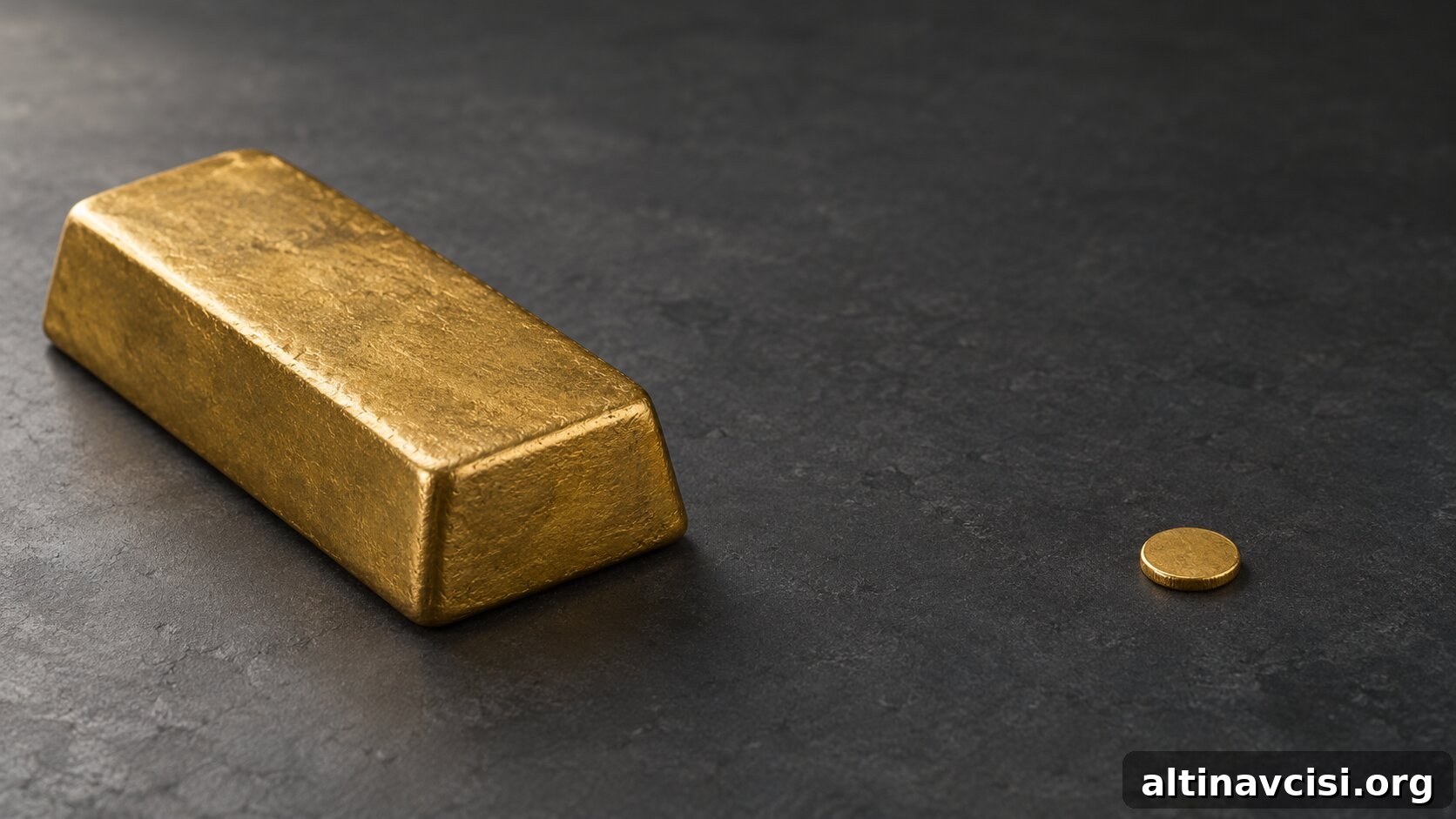
Tokenized gold converts physical bullion into a tradable digital token. Two products, Tether Gold (XAUT) and PAX Gold (PAXG), lead the market. But because of redemption minimums, issuer policies, and custody arrangements, holding a token is not identical to holding the metal itself.
Below is a clear explanation of how tokenized gold works, why it’s attractive, and where the common marketing message—“gold you can trade 24/7”—can be misleading.
What Is Tokenized Gold?
A tokenized gold token is a blockchain-based claim representing a fixed unit of physical gold held by a custodian. Two products dominate this category. PAXG and XAUT together accounted for the bulk of tokenized-gold growth in recent market data. Each token is designed to correspond to one fine troy ounce of gold.
- PAX Gold (PAXG): Issued by Paxos Trust Company, a New York-chartered trust regulated by the NYDFS. Paxos backs each PAXG token with allocated London Good Delivery bars stored in Brink’s vaults in London, with monthly attestations of reserves.
- Tether Gold (XAUT): Issued by Tether and backed by physical gold stored in Swiss vaults, with each token intended to represent one troy ounce of gold.
Both tokens trade continuously on crypto exchanges and generally track the spot price of gold. That means they are as volatile as the metal itself. Calling these tokens “stablecoins” is misleading: unlike a dollar stablecoin, which is intended to hold a stable fiat value, a gold token simply represents exposure to a floating commodity price denominated in gold rather than currency.
What’s the Appeal of Holding a Tokenized Gold Token?
Tokenized gold offers several real conveniences: no direct storage fees for the token holder, fractional ownership down to small denominations, fast transfers across borders, and continuous trading outside normal exchange hours. Increasingly, tokenized gold is also accepted as collateral in crypto lending markets. These features create liquidity and utility that physical bars, held privately, cannot match easily.
Those advantages make tokenized gold attractive for traders and decentralized finance use cases. But the trade-off is that the token is a claim administered by an issuer and custodian, not the same as holding an allocated bar in your own name.
Where Does the “Just Like Owning Gold” Pitch Break Down?
The key detail marketing often omits: direct redemption for physical metal is not the default experience for most token holders. Redemption rules typically include minimum amounts, identity checks, and settlement procedures that make receiving a physical bar impractical for small holders.
For example, Paxos requires a minimum of roughly 430 PAXG tokens to redeem an allocated London Good Delivery bar. Since a London Good Delivery bar weights between 370 and 430 troy ounces and cannot be subdivided by the issuer, holders beneath that threshold cannot obtain the specific bar their tokens nominally represent through direct bar redemption. Smaller holders usually either sell tokens on the open market for cash or use third-party programs that provide smaller physical denominations. In practice, then, for most participants a gold token functions as a liquid, dollar-tradable exposure to gold’s price with a conversion option that relatively few will exercise.
XAUT has its own redemption pathway through its issuer with minimums, identity requirements, and settlement timelines. The friction is similar regardless of which issuer you use—only the administrator and exact terms differ.
What Counterparty Risk Do You Take On With a Token?
Tokenized gold introduces counterparty risk that physically holding a bar in your possession does not. You depend on the issuer to maintain reserves, to publish reliable attestations, and to honor redemption requests according to its terms. Monthly attestations provide snapshots, not continuous proof. The issuer can also change or restrict redemption policies under certain conditions.
There is additional dependence on the custody chain and any smart contracts used to represent the claim. None of this makes tokenized gold inherently bad; it simply clarifies that what you hold is a claim on gold administered by a company, not the metal itself sitting under your direct title.
Is Tokenized Gold Regulated Like a Stablecoin?
No. Recent federal rules targeted at payment stablecoins—tokens pegged 1:1 to the dollar or another fiat currency—do not apply to commodity-backed tokens that track a floating price. Payment-stablecoin frameworks focus on redemption rights, reserve quality, and disclosures tied specifically to fiat-pegged tokens. Because gold-backed tokens track a commodity price rather than a fiat peg, they generally fall outside that particular regulatory definition and therefore outside that specific set of rules.
As a result, tokenized gold remains governed by the issuer’s charter, trust structure, and the applicable state or national rules that apply to custody and trust assets, rather than by the federal payment-stablecoin rulebook.
Is the CLARITY Act Going to Change That?
Legislation intended to allocate regulatory responsibility between agencies for various crypto tokens has been under consideration. Until a companion bill that clarifies treatment of commodity-backed tokens becomes law, tokenized gold will continue to be regulated according to the issuer’s legal structure—trust charter, state law, or other frameworks. That creates more regulatory clarity for fiat stablecoins than for commodity-backed tokens in the near term.
Physical Gold vs. Gold ETF vs. Tokenized Gold: What’s the Difference?
| Physical gold (owned/allocated) | Gold ETF (e.g., GLD) | Tokenized gold (PAXG/XAUT) | |
|---|---|---|---|
| Settlement | Immediate possession when transferred | T+1/T+2, trades during exchange hours | Near-instant transfers, 24/7 trading |
| Storage cost | Vault and insurance fees or self-custody responsibility | Expense ratio covers storage and management | No direct storage fee for the token itself; custody costs embedded by issuer |
| Redemption for metal | Direct: you hold the metal | Not directly redeemable by retail holders for metal | Possible but typically requires large minimums and issuer approval |
| Counterparty risk | Minimal if self-held; vault-specific if allocated | Fund and custodian risk | Issuer and custodian risk plus technical dependencies |
| Usable as DeFi collateral | No | No | Yes, commonly used in crypto lending and DeFi |
| Federal regulatory framework | Not applicable: physical property | Regulated as an SEC-registered fund | No unified federal framework specific to commodity-backed tokens as of this writing |
If you already keep physical metal, evaluate professional allocated custody against fund or token claims. Allocated storage titles the metal to you at an independent custodian, while tokens remain claims governed by an issuer’s terms even when they track the same spot price.
Does Tokenized Gold Still Count as Sound Money?
Gold’s defining advantage is that it is nobody’s liability. A bar held in allocated custody or in your possession does not depend on an issuer’s solvency or a smart contract’s correct execution. Tokenized gold reintroduces a counterparty layer in exchange for convenience. That trade-off can be acceptable for trading, liquidity, and collateral uses, but it is not equivalent to the core case for holding physical metal outright.
If removing counterparty exposure is your priority, allocated vault storage with title in your name is the closest analogue to direct ownership. There, the custodian holds the metal on your behalf without a separate issuer in the middle.
Which One Actually Owns the Metal?
Tokenized gold addresses a clear market need by making gold exposure liquid, tradeable, and usable as collateral. But the term “tokenized” describes an ownership wrapper, not actual possession. Holding PAXG or XAUT means holding a claim on gold stored by an issuer and custodian, redeemable under that issuer’s rules. Holding allocated physical gold means the metal is titled to you and not subject to an issuer’s redemption policy. Both approaches provide exposure to gold; only allocated physical ownership constitutes direct possession of the metal.
People Also Ask
Is tokenized gold the same as a gold ETF?
No. An ETF is a regulated security representing a pooled fund that holds gold. A tokenized gold token is a claim on allocated bullion held by a private issuer and custodian and typically sits outside the ETF regulatory framework.
Can I redeem a gold token for physical gold?
Yes, in principle, but redemption is subject to issuer minimums, identity checks, and settlement procedures. Full-bar redemption often requires hundreds of tokens, and smaller holders usually convert to cash or unallocated metal instead of receiving a specific bar.
How do I actually buy or convert tokenized gold?
You acquire PAXG or XAUT via supporting crypto exchanges or wallets and hold tokens in a custodial account or self-custodied wallet. Converting tokens back to physical metal requires following the issuer’s redemption process, meeting minimums, and completing any required identity verification.
What fees and risks come with tokenized gold?
Fees are generally modest: creation, redemption, or small purchase fees are common. The larger consideration is counterparty risk. Your token’s value depends on the issuer maintaining reserves, publishing accurate attestations, and honoring redemption terms under potential stress scenarios.
Is holding tokenized gold the same as vault storage?
No. Allocated vault storage means metal is held and titled in your name at an independent insured facility. A token represents a claim administered by an issuer and governed by that issuer’s redemption policy. These are different risk profiles even when both track the same market price.
What happens if Paxos or Tether ran into financial trouble?
Issuers can exercise discretion over redemption under certain conditions. Monthly attestations confirm reserves at specific times but do not guarantee solvency or uninterrupted redemption access during a crisis. That risk is the key difference between token claims and physically owned metal.
SOURCES
Federal Register — GENIUS Act Regulations on Payment Stablecoin Issuance (federal rulemaking).
Federal Reserve education on stablecoin regulatory developments.
Industry reporting on tokenized-gold market growth and issuer custody disclosures.
Issuer terms and conditions published by Paxos and Tether describing redemption mechanics.
Market commentary on tokenized-gold use in lending and DeFi.
Disclaimer: This article is for informational purposes only and does not constitute investment advice. Past performance is not indicative of future results. Consult a qualified financial advisor before making investment decisions.
You May Also Like:
- IRA-Eligible Gold: The Coins and Bars That Actually Qualify
- The No-Home-Storage-IRA Myth: Why the IRS Requires a Depository
- What Is a Gold IRA? The Purity Rule the IRS Never Wrote
- What Is ZIRP (Zero Interest Rate Policy) and How It Changed Gold Forever
- How Much Is a Gold Bar Worth? Every Size, From 1 Gram to 400 Ounces
- What Happens to Your Gold If Your Storage Company Goes Bankrupt?
- Silver Price Prediction: Market Drivers and Institutional Target Revisions
- Will Gold Move Lower? Institutional Target Revisions and Price Trends