Gold’s price may be grabbing headlines, but a larger story is unfolding across the mining sector.
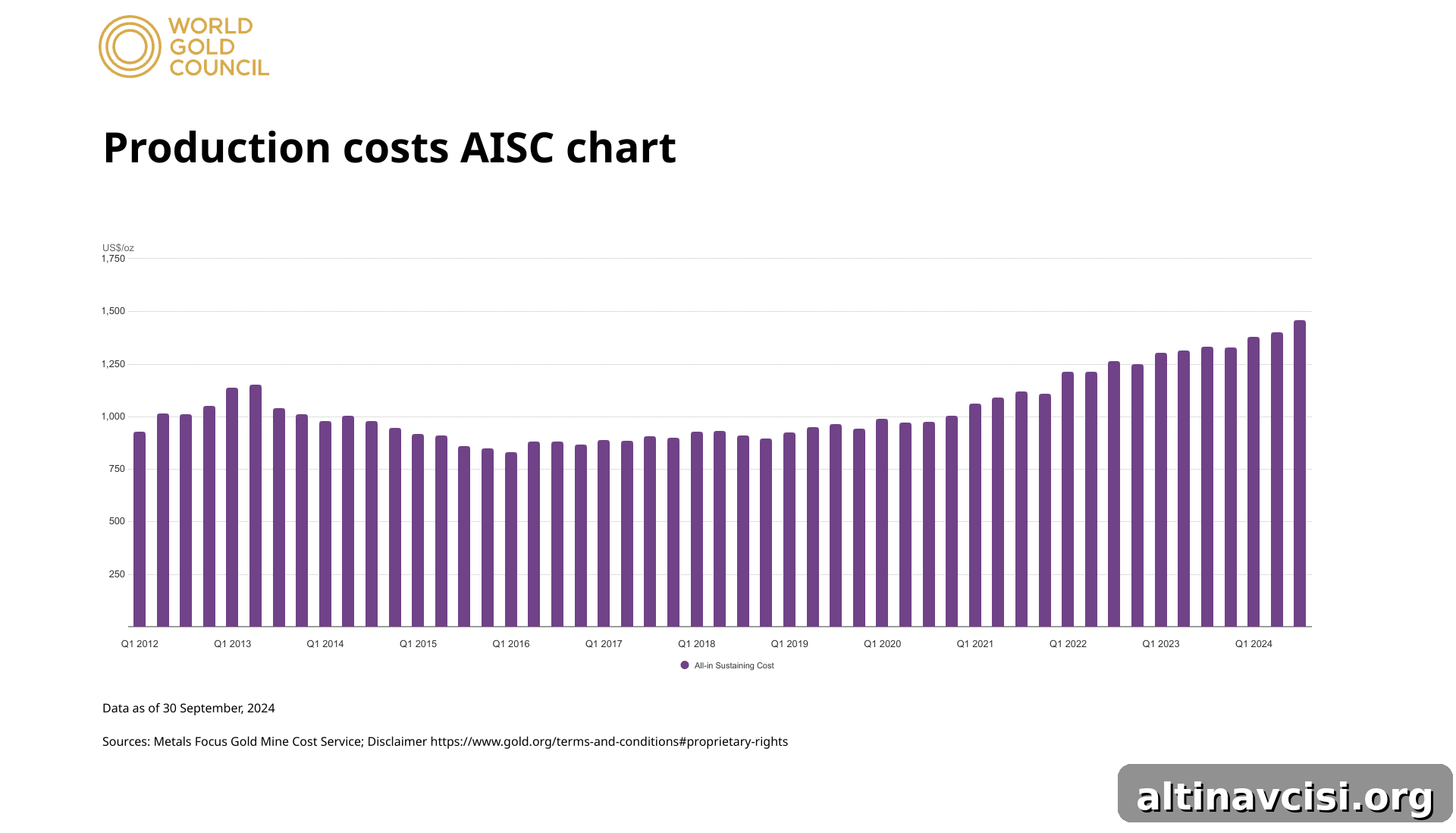
Although gold reached near-record highs earlier this year, mining companies face a serious challenge: production costs are rising rapidly, putting pressure on profitability.
The World Gold Council warns that rising costs are pushing some operations to the breaking point, even as bullion remains in demand.
The True Cost of Gold Mining
To understand the pressure miners face, consider the All-in Sustaining Cost (AISC). This widely used metric captures the full cost of operating a mine — including extraction, processing, equipment maintenance and ongoing exploration. When AISC climbs, margins tighten and miners must either accept lower profits, cut back on investment or raise prices to remain viable.
Production prospects offer additional context. The World Gold Council projects global gold production to grow by only about 0.9% per year through 2030 — effectively flat growth. At the same time, demand from investors seeking safe-haven assets and from industries that use gold in manufacturing continues to climb.
Basic supply-and-demand dynamics suggest that when supply struggles to keep pace with rising demand, upward pressure on prices follows. With rising AISC and constrained production growth, the environment appears favorable for higher gold prices over time.
Are We Headed for a Recession?
Some economic indicators have a strong track record of signaling recessions. One widely discussed predictor has accurately anticipated every U.S. recession since 1960. Analysts and market commentators are watching it closely for signs of what 2025 could bring.

Robert Kiyosaki: “Buy Silver Now”
Robert Kiyosaki, author of Rich Dad, Poor Dad, has been vocal about precious metals on social media. He recently encouraged followers to consider buying silver bullion, citing concerns about banking-sector stability and broader economic risks.
Kiyosaki argues that silver is accessible to many investors and that even modest positions could benefit those seeking protection in volatile markets. While some of his past price calls have not materialized, his emphasis on accessibility highlights silver’s appeal for retail investors.
But silver’s investment story is only part of the picture.
Silver: More Than a Precious Metal

Unlike gold, which is primarily held as a store of value, silver plays a dual role: it is both a monetary-investment asset and a critical industrial metal. Silver is used extensively in electronics, solar panels, medical devices and automotive applications, including electric vehicles.
Each new solar installation and every electric vehicle produced consumes silver that cannot be recycled back into the market immediately, steadily increasing industrial draw on available supplies. Because silver supply cannot be created on demand like paper currency, rising industrial and investment demand can create tightness in the market.
This mix of steady industrial consumption and renewed investment interest creates distinctive dynamics for silver’s future. While precise price movements are impossible to predict, the underlying supply-and-demand picture suggests potential for meaningful shifts.
If you’re considering precious metals, it’s worth weighing both the macroeconomic backdrop and the specific supply fundamentals for gold and silver before allocating capital.
Log In Now to Buy Precious Metals
Here to help you build lasting wealth,
Brandon S.
Editor
GoldSilver