President Trump used a video address to the World Economic Forum in Davos to lay out a clear “carrot-and-stick” message to global business leaders on his third day in office.
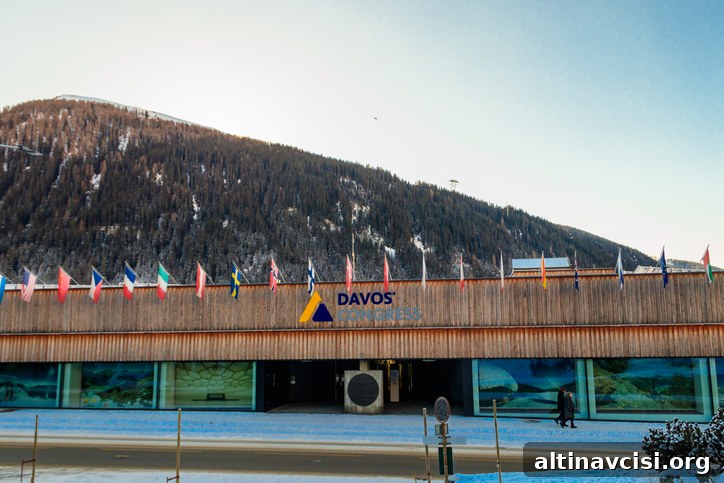
He pledged one of the most competitive corporate tax environments for companies that manufacture in the United States, while warning that firms that do not would face significant tariffs. Trump suggested those penalties could raise “trillions of dollars” for the U.S. Treasury. The speech was delivered to a large audience—about 850 people—in Davos’s largest hall and prompted a range of reactions from attendees.
Several moments stood out during the appearance. Trump cited a reported Saudi commitment of $600 billion in investment, suggesting the figure could swell to $1 trillion, a claim that drew laughter from the crowd. He also touched on the Russia-Ukraine conflict, saying he would like to meet with Vladimir Putin and criticizing OPEC+ for keeping oil prices high, which he argued helps sustain the war.
The address emphasized a trade policy designed to reward domestic manufacturing and penalize offshoring, framing tax incentives as the reward and tariffs as the deterrent. This approach aims to shift corporate decisions by making U.S.-based production more financially attractive while disincentivizing relocation of factories and supply chains abroad.
Reaction in Davos reflected a mix of curiosity and concern. Supporters welcomed the promise of low taxes and a more protectionist stance intended to revive American industry, while critics warned that aggressive tariff policies could provoke retaliation, disrupt global supply chains and raise costs for consumers and businesses worldwide.
On geopolitical topics, the address blended calls for diplomatic engagement with firm criticism of policies seen as contributing to instability. Trump’s stated willingness to meet Putin was presented alongside strong remarks about oil producers’ role in global price dynamics, signaling that energy policy and geopolitics would be linked to his economic strategy.
Overall, the speech presented a succinct, transactional vision of U.S. economic policy: offer generous incentives to bring jobs and investment back to America, and impose steep penalties on companies that choose to move production overseas. Whether the proposals will win broad international support remained unclear, but the address served to outline priorities and signal the administration’s readiness to reshape the rules governing trade, investment and energy.