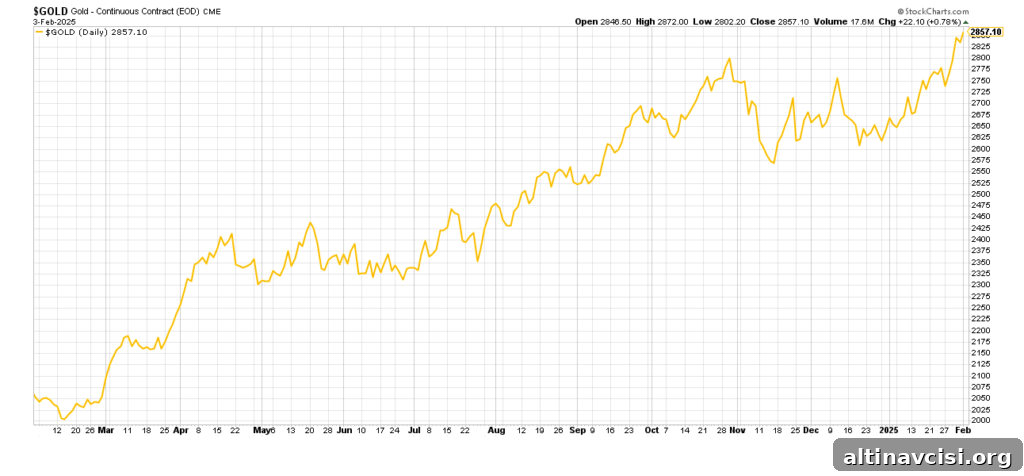
The escalating trade conflict between the United States and China has kept gold prices near record highs. Spot gold recently traded around $2,814.94 per ounce after briefly reaching an all-time peak of $2,830.74.
Tensions rose when President Trump introduced 10% tariffs on a range of Chinese imports. Beijing responded with retaliatory measures, including countervailing duties and a high-profile antitrust inquiry into Google. Those moves have unsettled commodity markets, particularly for precious metals, as participants reassess supply chains, pricing and storage strategies amid growing uncertainty.
One immediate effect has been a divergence between US and global prices. Demand for physical metal in the United States increased as traders and institutions sought to relocate significant volumes of gold and silver to the U.S. ahead of any further trade barriers, driving American prices above some international benchmarks.
At the same time, lease rates for gold and silver in London’s vaulting system rose sharply, reflecting tighter physical availability and higher short-term borrowing costs for metal dealers. That dynamic has drawn attention from investors who watch the relationship between spot and lease markets as a gauge of liquidity stress in the physical market.
Currency movements are also a key factor. A stronger dollar typically exerts downward pressure on dollar-priced commodities, but geopolitical risk and safe-haven demand for gold have helped keep prices elevated despite currency strength. Analysts are watching both the greenback and economic indicators from the two countries to judge how persistent the metal’s rally might be.
The Federal Reserve has adopted a cautious approach, holding interest rates steady while it evaluates the economic and market consequences of the trade dispute. Low or stable policy rates generally support higher gold prices by reducing the opportunity cost of holding non-yielding assets, which can reinforce investor demand for precious metals during periods of uncertainty.
Market participants cite several drivers behind the recent price behavior: heightened geopolitical risk, shifts in physical demand and supply flows, elevated lease rates, and central bank policy that remains accommodative. Together, these factors have created an environment where gold can stay near record levels even as other parts of the global economy show resilience.
Looking ahead, traders will be watching developments in trade negotiations, any further retaliatory measures, central bank guidance, and data on currency and capital flows. Those elements will likely determine whether gold consolidates at current levels, extends its run higher, or retreats if geopolitical tensions ease and liquidity conditions normalize.