Why the U.S. Lists $1 Trillion in Gold at $11 Billion
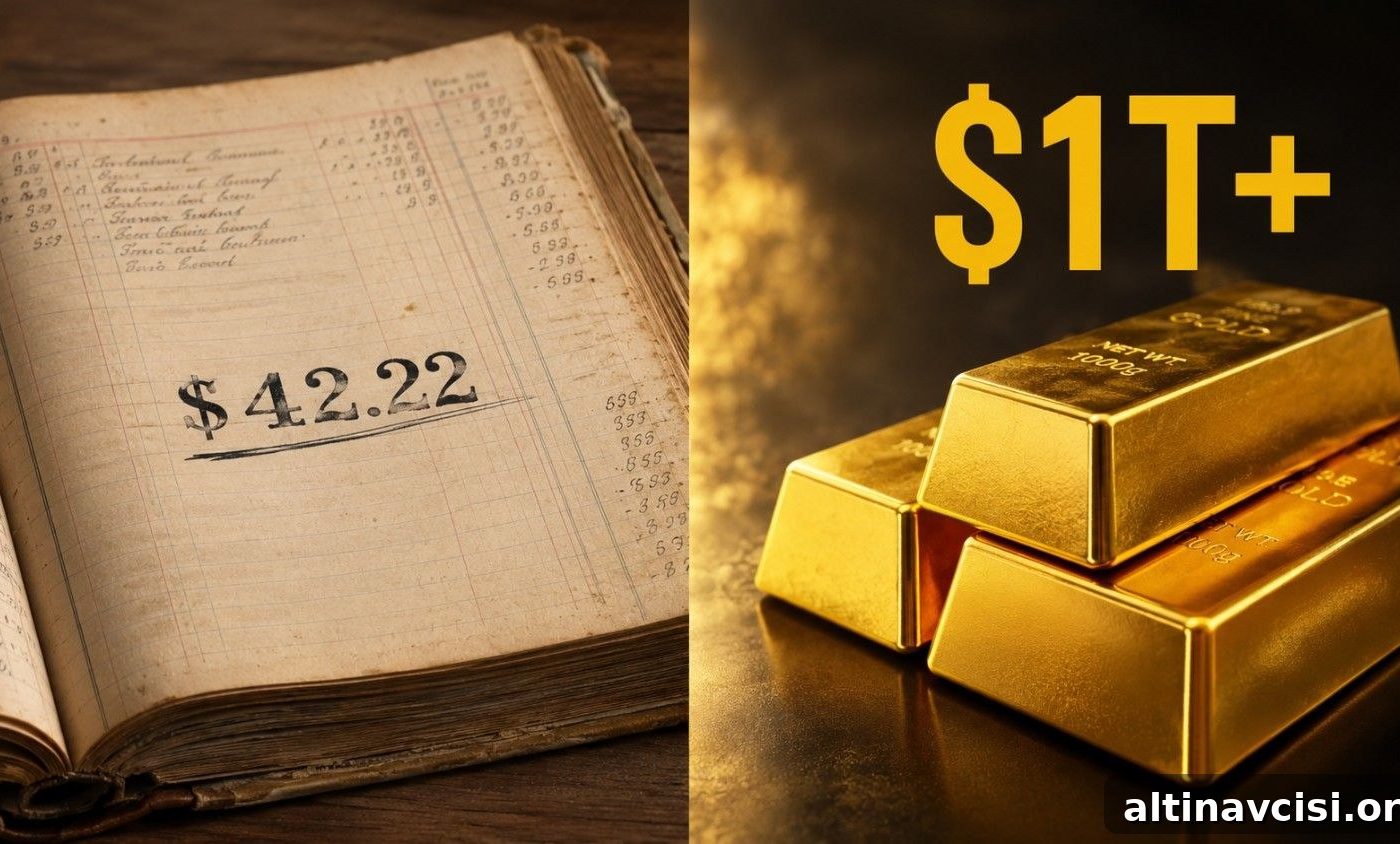
On July 15, Scott Bessent told Fox News that the United States holds more than $1 trillion in gold. That statement is correct when measured at current market prices. With gold trading near $4,050 per troy ounce, America’s official holdings — roughly 261.5 million fine troy ounces — have a market value in the neighborhood of $1.06 trillion.
Yet the U.S. government does not record that bullion at market value on its balance sheet. Instead, federal law fixes the statutory price of gold at $42.2222 per fine troy ounce. At that figure, the same stockpile appears on government books at roughly $11 billion.
Why Is US Gold Valued at $42 an Ounce?
The short explanation is legal inertia: the statutory price was set in the early 1970s and has not been updated. The figure dates to the end of the Bretton Woods system. After the United States closed the gold window on August 15, 1971, Congress and the Treasury adjusted the statutory gold valuation through legislation in 1972–1973 and left the price fixed at $42.2222 per fine troy ounce.
Since that time, market prices for gold have climbed dramatically while the legal book value has remained unchanged. Put another way, the government’s accounting reflects the monetary regime as it existed in 1973, not the current market for precious metals.
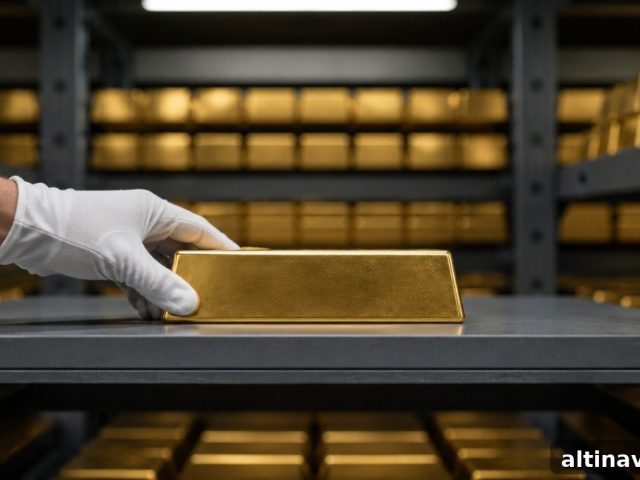
Most of the U.S. official stockpile is stored at Fort Knox. That facility contains about 147,341,858 fine troy ounces — roughly 56 percent of total U.S. reserves. At the statutory $42.22 per ounce, the Fort Knox holdings show a book value of approximately $6.2 billion. At today’s market price, those same ounces are worth roughly $597 billion. Additional U.S. government gold is kept at West Point, Denver, and the Federal Reserve Bank of New York; the New York Fed stores about 13.4 million ounces of government-owned gold, roughly 5 percent of the total.
What Does the $42 Valuation Mean for the Dollar?
The valuation highlights a broader shift in the U.S. monetary system. Prior to the 1970s, U.S. currency had backing in gold and silver at various times. Since the early 1970s the country has operated on fiat money — a currency not backed by a physical commodity. That change removed the need for gold to serve as the legal basis for money, leaving gold’s role to the open market.
This separation has a clear consequence: the United States holds the world’s largest official gold stockpile, but that bullion carries virtually no monetary weight in official accounting because the statutory valuation is decades out of date. The gold is physically present, but government financial statements continue to show figures rooted in a different monetary era.
Inflation and currency depreciation are part of the same story. The Federal Reserve Bank of Minneapolis’s consumer price index calculator shows that $100 in 1971 has the same purchasing power as roughly $826 in 2026. In other words, the dollar has lost about 87 percent of its purchasing power since 1971 — the same period during which market gold rose from about $42 to over $4,000 per ounce. Those trends point in opposite directions for the same reason: changing monetary conditions, inflation, and market valuation of real assets.
What Would Happen If the US Revalued Its Gold?
There is no active federal plan to revalue U.S. gold reserves. When asked about revaluation while discussing sovereign wealth fund ideas in February 2025, Scott Bessent said revaluing the reserves was “not what I had in mind.” Revaluation therefore remains a theoretical policy option rather than an announced course of action.
Economists who have modeled a revaluation note that it would not require selling any metal. Revaluation would mean updating the book value on official accounts to better reflect market prices. At roughly $4,050 per ounce, the unrealized gain on U.S. gold holdings is near $1 trillion — a gain not reflected on the government’s balance sheet but present in every physical ounce stored at Fort Knox and other depositories.
The United States owns more gold than any other single entity. Recorded at $42.22 per ounce, that asset totals just over $11 billion on official books, while the national debt exceeds $39 trillion. This contrast does not predict imminent collapse; rather, it illustrates how a fiat monetary system accounts for certain assets differently than market participants do. Gold’s market price rose substantially as the dollar’s purchasing power declined, and the resulting gap between book value and market value reflects that divergence.
That gap is not a budgetary windfall for Washington; it is market value accessible to anyone holding physical metal directly. For private investors and institutions, the market price defines the asset’s worth. For statutory accounting purposes, the legal valuation remains the binding number until lawmakers choose to change it.

The Edge Every Investor Needs
Smarter precious metals investing starts here. The Nuggets Newsletter delivers market insights, central bank updates, global trends, educational videos, and more.
SOURCES
1. U.S. Mint — Fort Knox Bullion Depository: Official Holdings and Statutory Valuation
2. U.S. Treasury Bureau of the Fiscal Service — Status Report of U.S. Government Gold Reserve
3. U.S. Treasury — International Reserve Position (July 17, 2026): total fine troy ounces confirmed
4. Federal Reserve Bank of Minneapolis — Consumer Price Index Historical Table, 1913–2026
5. Fox News / Jesse Watters — Scott Bessent interview, July 15, 2026
6. Bloomberg TV — Scott Bessent on sovereign wealth fund and gold revaluation, February 2025
7. Live gold and silver spot price services (market pricing cited as of July 2026)
Disclaimer: This article is for informational purposes only and does not constitute financial or investment advice. Consult a qualified financial adviser before making investment decisions.
You May Also Like:
- 187,000 Jobless Claims: The Lowest of 2026 — What It Means for Gold
- A War Expanded Into a New Shipping Lane: Why Gold Fell
- Gold May Trade 24/7: A Prediction Market Filing That Could Change Trading Hours
- Gold Hit a Two-Week High: Three Forces That Moved Prices
- The Fed Meets July 29: How Markets Are Pricing a Hold and What Silver Signals
- Silver Surged Nearly 5%: What Drove the Move
Popular Topics
Picked from the archive
-
01
 Topics
Gold Remonetization: 6 Forces Reviving Gold as Money
-
02
Topics
CPI 3.3% and GDP Stalling: Is 2026 Stagflation Coming?
-
03
Topics
Why Is Gold Falling While War Rages?
-
04
Topics
Can Silver Outpace Gold in a Bull Market?
-
05
Topics
Gold Radar: 5 Hidden Signals Your Price Chart Misses
-
06
Topics
Gold Pullback Driven by Treasury Buyback, Not ETFs
-
07
Topics
Hong Kong Completes First Gold Settlement; Banks Also Run London
-
08
Topics
How a Falling Gold/Silver Ratio Impacts Investor Portfolios