Key Takeaways
- Headline inflation measures price changes across the entire economy, including food, energy, housing and services. Core inflation excludes food and energy to highlight the underlying trend.
- The Federal Reserve’s formal 2% target is defined using headline PCE (Personal Consumption Expenditures), but policymakers often focus on core PCE when making real-time rate decisions.
- The idea of core inflation dates back to economist Robert J. Gordon in 1975. The Fed’s preferred gauge for policy is core PCE rather than core CPI.
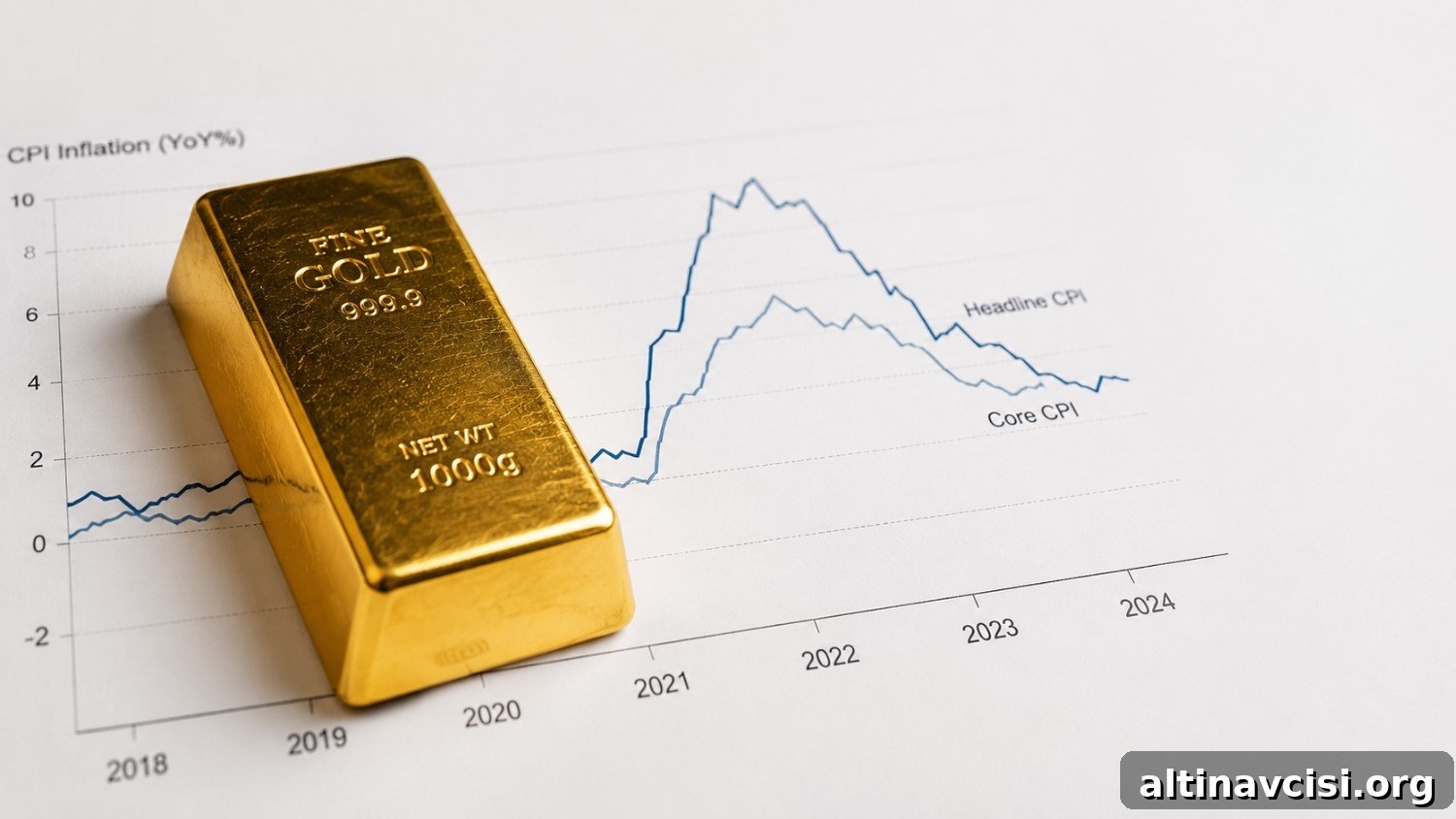
- In mid-2026, headline CPI ran noticeably higher than core CPI — a gap that helps explain much of the current debate about monetary policy.
- For investors in gold, the difference matters: the Fed acts on core data and those actions shape real yields, which are a primary driver of gold prices.
You probably see both “headline” and “core” inflation cited in the same breath in financial coverage, often without explanation. Reporters may note that headline inflation fell while core inflation held steady, and move on. But those two figures are not interchangeable. The distinction influences how the Federal Reserve interprets economic conditions and, ultimately, how it sets interest rates—decisions that ripple through real yields, the dollar, and markets like gold and silver.
This is more than an academic nuance. Policymakers use these measures as a lens to judge the economy’s health. Because monetary policy determines interest rates, and rates determine real yields and investor incentives, understanding which inflation measure the Fed emphasizes is essential for anyone managing long-term savings or precious metals exposure.
What Is Headline Inflation?
Headline inflation is the broadest measure of price change. When the Bureau of Labor Statistics (BLS) publishes the Consumer Price Index (CPI), the headline number reflects average price movement across all consumer categories: groceries, fuel, rent, medical care, travel, dining out and apparel. It includes volatile components such as food and energy, which can swing sharply month to month due to weather, geopolitical events, or supply disruptions.
Because it includes those volatile categories, headline inflation tends to move more quickly and is the number most directly felt by households. It shows how the purchasing power of wages and savings is changing in everyday life. For many people, headline inflation best captures the immediate impact on the cost of living.
The Knowledge That Changes Everything

Two concise guides — free. Learn why gold matters and why fiat currencies struggle over the long term.
What Is Core Inflation?
Core inflation excludes food and energy from the price index, tracking the remaining basket of goods and services. The rationale is that food and energy prices can swing for reasons largely beyond the Federal Reserve’s control — weather, geopolitical shocks, or temporary supply problems. By excluding those volatile categories, core inflation aims to reveal the underlying trend in prices.
The idea of focusing on a less volatile measure traces back to work in the 1970s. Today, statistical agencies publish core CPI alongside headline CPI each month. When the gap between headline and core widens, it typically signals that temporary commodity movements are driving overall inflation. A narrower gap suggests broad, persistent inflation across many sectors of the economy.
Which Inflation Measure Does the Fed Actually Use?
Formally, the Fed’s 2% inflation goal is expressed in terms of headline PCE (Personal Consumption Expenditures), the price index published by the Bureau of Economic Analysis. But in practice, when officials assess near-term policy choices they frequently emphasize core PCE. Core PCE removes food and energy and uses chain-weighted methods that account for consumer substitution and a broader portion of spending, including certain healthcare costs paid through employers or government programs.
Because PCE and CPI are constructed differently, their readings can diverge. PCE’s methodology often produces a somewhat lower number than CPI, though that relationship can change over time. Policymakers watch core PCE closely because it offers a smoother signal of underlying inflationary pressure, which is central to decisions on interest rates.
Why Does the Gap Between Core and Headline Matter for Gold Investors?
The link from inflation measures to gold runs through real yields: the nominal interest rate minus inflation expectations. Gold pays no interest, so when real yields fall, the opportunity cost of holding gold declines and gold tends to become more attractive relative to bonds and cash. Historically, movements in real yields have been among the strongest short- and medium-term influences on the gold price.
Crucially, the Fed sets policy based on the measures it deems most informative — notably core PCE — not on headline moves driven by temporary spikes in food or energy. That means headline inflation can be hurting household budgets while the Fed, focusing on core readings, stands pat on rates. Such a policy stance can compress real yields even as headline inflation remains elevated, creating an environment where precious metals commonly perform well.
Stay On Top of Gold & Silver Prices
Get timely market alerts delivered to your inbox.
People Also Ask
Is core inflation or headline inflation a better measure of what I actually experience?
Headline inflation more closely mirrors what households actually pay, because it includes food and energy — categories that take up a large share of many family budgets. Core inflation excludes those volatile items, so it is better at signaling persistent, economy-wide price pressure rather than short-lived swings in commodities.
Why does the Fed prefer PCE over CPI?
PCE covers a wider array of spending, adjusts for consumer substitution between goods and services, and captures certain healthcare expenses not fully reflected in CPI. Those features make PCE a more comprehensive measure of overall consumer spending, which is why the Fed uses it as its formal benchmark.
What is the difference between core PCE and core CPI?
Both exclude food and energy. Core PCE uses chain-weighting and broader coverage, while core CPI relies on a fixed basket updated less frequently. In practice they usually move in the same direction, but the levels can differ due to methodology and coverage differences.
How does core inflation affect gold prices?
Core inflation influences the Fed’s policy choices. Elevated core readings make tighter policy more likely, which can raise real yields and weigh on gold. Conversely, moderating core inflation can allow easier policy, lower real yields and support gold prices. Headline inflation matters to consumers; core inflation matters to policymakers — and it is the policy response that often moves real yields and gold.
What does it mean when headline inflation is much higher than core?
A large gap usually signals that energy or food prices are driving the headline increase. Those episodes tend to be temporary and can arise from supply shocks. The Fed often looks through such temporary swings, focusing instead on whether core inflation is showing persistent acceleration.
The Bottom Line: Two Numbers, One Rate Decision That Shapes Your Savings
Headline inflation reflects the immediate impact on your cost of living. Core inflation reflects what the Fed watches when setting interest rates. When the two diverge significantly, monetary policy can feel misaligned with household experience. That gap — the difference between the cost of living people face and the measure the Fed uses to set rates — helps explain why assets like gold can serve as a hedge against purchasing-power erosion over longer cycles.
SOURCES
1. Bureau of Labor Statistics — Consumer Price Index releases and Employment Situation summaries; 2. Bureau of Economic Analysis — PCE price index data; 3. Federal Reserve Bank research on headline versus core measures; 4. Industry commentary on recent core PCE readings. (Specific report and release links removed from this version.)
Disclaimer: This article is for informational purposes only and does not constitute investment advice. Past performance does not guarantee future results. Consult a qualified financial advisor before making investment decisions.
You May Also Like:
- Why Your Commodity ETF Gives You Almost No Gold — and What That Costs You
- American Gold Buffalo Coin: The Complete Guide to the U.S. Mint’s Purest Gold
- The Fed Printed $7 Trillion. Velocity Kept It Quiet. That’s Changing.
- Most 401(k)-to-Gold-IRA Rollovers Lose 20% Immediately. Here Is Why — and How to Avoid It.
- Gold Just Climbed to a 7-Week High. One Number Changed Everything.
- The Jobs Report Did What Iran Couldn’t: Move Gold and the Fed in the Same Direction
- China Has Been Buying Gold for 20 Straight Months. Now It’s Moving It.