Why Gold and Oil Move Opposite and What It Means for Investors
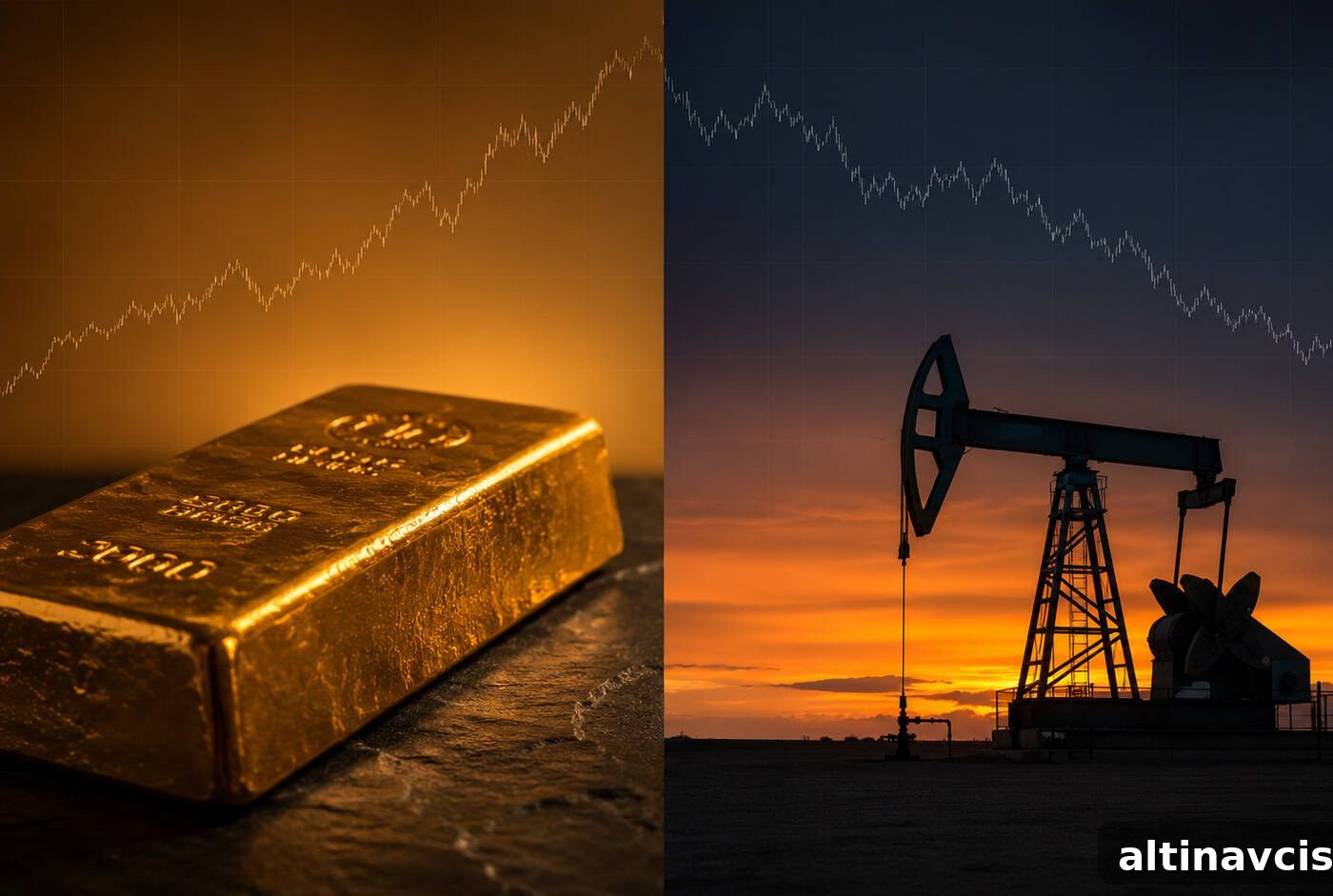
Gold and oil frequently tell two different economic stories. Gold typically rises when investors seek protection; oil rises when growth and demand are strong. Right now that distinction matters more than ever — and understanding it can change how you think about portfolio risk and inflation protection.
In early May 2026, gold traded near $4,700 per ounce while Brent crude swung from about $61 at the start of the year to an intraday high of $126 before retreating toward $95. WTI reached roughly $105–$113, and the Brent‑WTI spread widened to around $25 per barrel as Middle East supply disruptions affected Europe and Asia more than North America [U.S. Energy Information Administration]. That contrast—two key commodities moving for very different reasons—captures the core of the gold-oil relationship.
Why Do Gold and Oil Prices Move in Opposite Directions?
Simply put: they respond to different drivers. Oil is a cyclical, demand‑driven commodity tied closely to economic activity. When growth accelerates, energy demand rises and oil prices climb. When growth slows, demand weakens and oil often falls. Oil is also subject to rapid physical shocks—production cuts, pipeline outages, or geopolitical events can move prices in days.
Gold is fundamentally a monetary asset. It is a long-term store of value that investors buy to protect purchasing power when trust in paper assets, currencies, or the financial system falters. Gold typically benefits from uncertainty, persistent inflation, a weakening dollar, or financial stress.
Because the conditions that push gold higher—economic fear, currency debasement, elevated financial risk—tend to reduce growth and therefore oil demand, gold and oil often diverge. Over the past five years their statistical correlation has been essentially flat, indicating this inverse tendency is structural rather than episodic [FTSE Russell / LSEG].
What Is the Gold-Oil Relationship?
The gold-oil relationship, sometimes called the gold-to-oil ratio, describes how the two assets respond differently to economic and geopolitical conditions. When growth and risk appetite are strong, oil generally outperforms. When inflation, monetary uncertainty, or geopolitical risk dominate, gold tends to lead. They can move together during broad commodity supercycles driven by global inflation, but those episodes are typically short-lived.
What Drives the Divergence Between Gold and Oil?
Three primary forces shape the divergence: the US dollar, monetary policy (real interest rates), and the nature of geopolitical shocks.
The US dollar. Since both commodities are dollar‑priced, a weaker dollar can lift both. But gold is more directly a hedge against dollar debasement and monetary risk. When confidence in the dollar erodes, gold benefits more because its role is monetary preservation rather than consumption.
Monetary policy. Gold is sensitive to real interest rates—nominal rates adjusted for inflation. Lower real rates reduce the opportunity cost of holding non‑yielding gold. Oil reacts mainly to growth expectations; central bank tightening can cool oil by slowing demand, but monetary policy affects oil indirectly.
Geopolitical shocks. The effect depends on the shock’s character. A supply disruption that spikes oil prices can also create inflation fears and push up rate expectations, which may suppress gold in the short term. The early‑2026 Strait of Hormuz disruption pushed Brent sharply higher while simultaneously stoking inflation and changing rate dynamics—an example of how an oil shock can temporarily invert the usual relationship [U.S. Energy Information Administration].
Is Gold a Better Inflation Hedge Than Oil?
Yes—but the answer depends on the type of inflation. Oil spikes during supply‑driven inflation when energy costs surge, but oil is highly cyclical and tends to decline during the recessions that follow central bank tightening. Holding oil through a full inflation‑then‑recession cycle often delivers little long‑term protection.
Gold hedges monetary debasement: the gradual erosion of purchasing power through persistent money‑printing, chronic deficits, or loss of confidence in fiat currency. That erosion compounds over years and decades rather than quarters. Central banks recognize this distinction: from 2022 through 2024 net central bank gold purchases rose dramatically, with major buyers treating gold as a strategic reserve rather than a short‑term inflation trade [World Gold Council].
How Do Gold and Oil Supply and Demand Differ?
Oil supply and demand react quickly to short‑term forces: OPEC+ policy, US shale activity, weekly inventories, and geopolitical disruptions move prices within hours or days. That responsiveness makes oil an effective near‑term economic indicator but also a volatile holding during extended uncertainty.
Gold’s supply is far steadier. Mine output grows slowly—typically 1–2% per year—and the stock of above‑ground gold dwarfs annual production. Price moves are driven more by investment demand and monetary factors than by new physical supply. Recent years saw strong ETF inflows and sizable central bank purchases that have supported price levels and investor conviction [J.P. Morgan Global Research].
Does It Matter Which Commodity You Hold?
Yes. Gold and oil serve distinct portfolio roles and are not interchangeable. Oil is effective as cyclical growth exposure and as a hedge against energy‑driven price spikes. Gold is a monetary asset that tends to protect purchasing power during financial stress and prolonged monetary deterioration. Gold’s low correlation with equities and its capacity to hold value when markets sell off make it a unique diversifier.
The 2026 episode illustrated this: the Hormuz closure turned oil into an inflation driver while gold initially fell as rate expectations changed. Later, as oil eased and the rate‑cut path returned, gold regained ground and remained substantially higher year‑over‑year, underscoring the structural drivers behind gold demand.
People Also Ask
Why do gold and oil prices often move in opposite directions?
Because gold is a monetary safe haven and oil is a cyclical energy commodity. Conditions that increase demand for safety—uncertainty, currency weakness, financial stress—tend to reduce growth and energy demand, creating divergence between the two.
How does the inverse relationship affect investment strategy?
Gold and oil serve different portfolio functions. Gold is a long‑term hedge against monetary debasement and financial stress. Oil provides cyclical exposure tied to growth and supply disruptions. Using them interchangeably can leave portfolios exposed to the wrong risks at the wrong time.
What economic factors influence the correlation?
Key drivers are the US dollar, real interest rates, and growth expectations. A weaker dollar and lower real rates favor gold; strong growth and higher energy demand favor oil. Short, supply‑driven inflation can temporarily push both higher, but structural divergence usually returns once the shock passes.
So Which One Actually Protects You?
Oil indicates where the economy is headed; gold indicates whether your money will preserve its value when it gets there. For durable protection against monetary erosion and long‑term purchasing power loss, gold is the more reliable hedge. Oil can protect against specific energy shocks but is less effective across full inflation‑plus‑recession cycles.
Your Gold Buying Guide Most investors overpay when buying gold and again when selling. This guide explains what to own and why.
Stay On Top of Gold & Silver Prices
Get important market alerts sent straight to your inbox.
SOURCES
1. U.S. Energy Information Administration — Crude oil and petroleum product prices increased sharply in Q1 2026
2. FTSE Russell / LSEG — Gold in a Fragmented World: Safe Haven and Strategic Asset
3. World Gold Council — Are Fiscal Concerns Driving Gold?
4. World Gold Council — Central Bank Gold Reserves by Country
5. Trading Economics — Crude Oil Price Chart, Historical Data and News
6. J.P. Morgan Global Research — Gold Price Predictions and Outlook
7. Morgan Stanley — Gold’s Safe‑Haven Status Faces a Reality Check as Prices Fall
Disclaimer: This article is for informational and educational purposes only and does not constitute investment advice. Consult a qualified financial adviser before making investment decisions.
You may also like:
- 7 Timeless Warren Buffett Rules for Gold & Silver Investors
- Gold vs. Bitcoin: Which Hard Asset Will Protect Your Wealth?
- Why Central Banks Sell Gold — And What It Means for Prices
- Why Gold Deserves a Permanent Spot in Your Portfolio
- Silver vs. Gold: A Clear 5-Year Investment Guide (2026–2031)
- $5,500 Gold by Q1 2027? The Central Bank Risk Driving It
- Why Gold Stabilizes — and Silver Amplifies
- COMEX Silver Coverage Ratio: Is Your Paper Silver Real?
Popular Topics
Picked from the archive
-
01
 Topics
Gold’s Bull Run: Fed Rate Cuts and China Buying Drive $5K Target
-
02
Topics
Oil Price Tops $100 as OPEC Fractures – Gold Price Reacts
-
03
Topics
Why Trump Cannot Fire Federal Reserve Chair Jerome Powell
-
04
Topics
Insurance vs Upside: How Gold and Silver Balance Your Portfolio
-
05
Topics
Bank Safety Deposit Box vs Gold Vault: Which Is Safer for Gold?
-
06
Topics
Central Banks Slow Pace but Still Buy Gold as Demand Jumps 3%
-
07
Topics
Gold Bars vs Jewelry: Why Investors Choose Bullion
-
08
Topics
Gold Price Tops $3,800 as U.S. Shutdown Looms