What Investors Missed in Warsh’s Report When Gold Jumped $90
Gold briefly dipped to $3,983 overnight. Then, at 8:30 a.m., the Bureau of Labor Statistics released the June Consumer Price Index showing a 0.4% monthly decline—the largest single-month drop since April 2020. Gold immediately jumped to $4,103. By 10:00 a.m., as Federal Reserve Chair Kevin Warsh began his testimony before the House Financial Services Committee, the metal had rallied more than $90 on the day.
Many reports stopped after noting the headline move. The full story is deeper and worth unpacking.
Why Did Gold Rally on the June CPI Report?
The mechanism behind the rally is straightforward. June headline inflation came in at 3.5% year-over-year, down from May’s 4.2% and stronger than the 3.8% Wall Street consensus. Core CPI, which excludes food and energy, printed 0.0% for the month—flat. The Federal Reserve closely watches core inflation. When core inflation is flat, pressure for further rate hikes eases. Lower expected policy rates tend to reduce real yields. Since gold does not pay interest, falling real yields make gold comparatively more attractive to hold.
Before the CPI release, markets priced roughly a 76% chance of a September rate hike. After the data, the probability that the Fed would hold in July climbed to about 83%. The two-year Treasury yield, which most directly reflects Fed expectations, fell to approximately 4.20% as bond buyers moved in. Gold tracked that decline in yields higher, producing the morning surge.
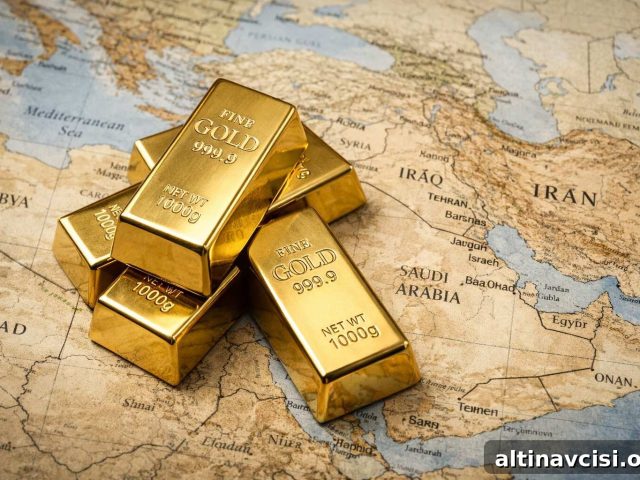
However, the soft June inflation print was driven almost entirely by energy prices. Gasoline fell 9.7% during the month and the energy index declined 5.7%. That weakness reflected a temporary lull in hostilities between the U.S. and Iran in June—an easing that has since ended. In July, oil prices rose roughly 12% after the U.S. reinstated a naval blockade and imposed a tariff on cargo transiting the Strait of Hormuz. Because energy was the main contributor to June’s drop, July’s CPI may tell a different story. Traders know this, which helps explain why gold returned some of its morning gains later in the day.
Put simply: the June CPI was real, but its causes look temporary. The more durable market signal arrived not from the 8:30 a.m. release but from the Fed’s 57-page Monetary Policy Report released earlier in July.
The Edge Every Investor Needs
Smarter precious metals investing starts here. The Nuggets Newsletter brings essential market insights, Fed updates, global trends, educational videos, and more.
What Did Warsh’s Monetary Policy Report Say About Money Supply?
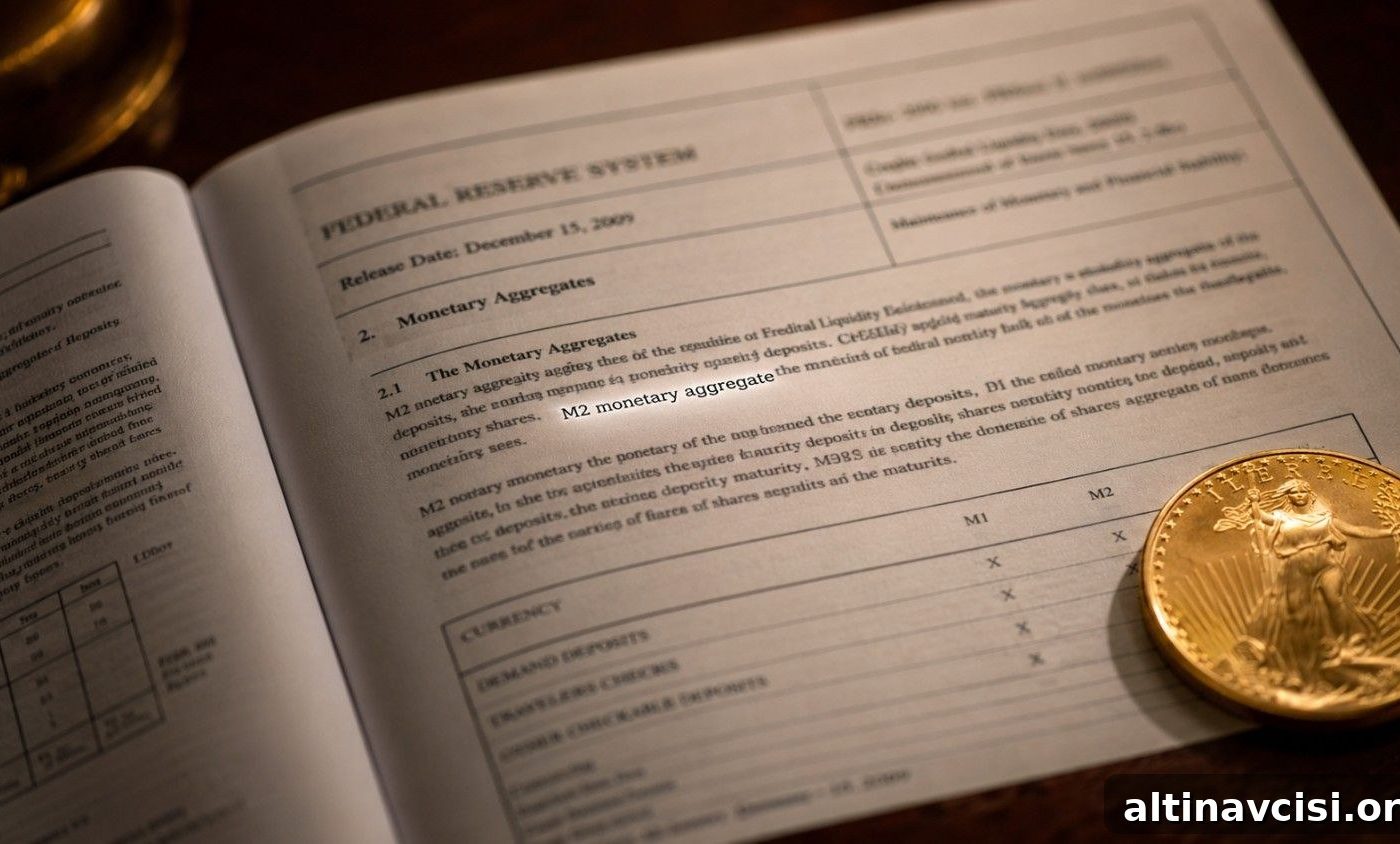
When Chair Warsh came to Capitol Hill, he brought the Federal Reserve’s Monetary Policy Report to Congress, published on July 10. That report reintroduced M2 as a formally defined term in the abbreviations section—something absent from official Fed reports for nearly a decade. M2 measures the broad money supply: currency in circulation plus various types of deposits and retail money-market funds. It represents the total dollars available in the U.S. economy.
Under previous leadership, the Fed treated M2 as increasingly irrelevant—too noisy and slow to be a reliable policy input. Instead, policymakers emphasized near-real-time labor market and price data. M2 fell out of the official vocabulary.
Warsh has put it back in. That shift reflects his practical monetarist outlook: he sees inflation ultimately as a monetary phenomenon driven by the quantity of money relative to goods and services, not solely by energy shocks or temporary supply disruptions. By formally tracking M2 again, the Fed is acknowledging the mechanism that gold investors have long relied on: when money supply growth outpaces real output, purchasing power erodes.
This is a core reason many investors hold gold—not as a short-term bet on geopolitical events or a single CPI release, but as a durable claim on purchasing power that no central bank can permanently dilute.
What Else Did Warsh Signal in His Congressional Testimony?
Warsh offered no forward guidance on rate direction—intentionally. “Forward guidance isn’t the business we should be in,” he said at his first FOMC press conference and repeated during questioning by lawmakers. When asked by Democrats whether he works for the president, he stressed the Fed’s independence: “We’re an independent central bank.” Pressed on potential political pressure, he said he would “follow the law and follow the data.”
He also called the Fed’s 2020 flexible average inflation targeting strategy a mistake, noting that asking for modestly higher inflation had led to much larger inflation outcomes. Warsh announced five task forces to review the Fed’s communications, balance sheet, data quality, productivity models, and—most critically—frameworks for analyzing inflation drivers.
The fifth task force is the one to watch. If it recommends reintegrating monetary aggregates like M2 into policy analysis—a suggestion already hinted at by the report’s M2 definition—the Fed under Warsh would operate under a different analytical framework than the one markets learned to interpret over the past decade.
A Fed that re-adopts money-supply measures is effectively recognizing what gold investors have long asserted: the size and growth of the money supply are central to the inflation story, not an afterthought.
What Happens Next for Gold and Silver?
As of Tuesday afternoon, gold traded near $4,062, up roughly 1.5% on the day. Silver sat around $58.85, up about 1.95%. The gold-to-silver ratio was near 69, a level that historically suggests silver is inexpensive relative to gold and that a narrowing ratio can accompany the early stages of a metals recovery.
The immediate calendar matters. The Federal Open Market Committee meets July 28–29. Chair Warsh is scheduled to testify before the Senate Banking Committee the day after his House appearance. The Producer Price Index is set for release Wednesday morning, offering another inflation datapoint in a busy week.
Over a longer horizon, the structural case for gold remains intact: a central bank chair who is re-centering monetary analysis on long-run monetary forces, plus a near-term inflation path that depends heavily on energy market developments. While today’s CPI gave gold a sharp morning gain, whether that rally endures will depend on incoming data and on whether the Fed’s renewed focus on money supply persists.
Stay On Top of Gold & Silver Prices
Get important market alerts sent straight to your inbox.
SOURCES
1. Bureau of Labor Statistics — Consumer Price Index Summary, June 2026 (USDL-26-1191, July 14, 2026)
2. Federal Reserve Board — Monetary Policy Report to Congress, July 2026 (July 10, 2026)
3. Federal Reserve Board — Testimony by Chairman Warsh, House Financial Services Committee (July 14, 2026)
4. Federal Reserve Board — FOMC Statement, June 17, 2026
5. GoldSilver — Live Gold and Silver Spot Prices (July 14, 2026)
6. CME Group — FedWatch Tool, Federal Funds Rate Probabilities, July 14, 2026
Disclaimer: This article is for informational purposes only and does not constitute financial or investment advice. Always consult a qualified financial adviser before making investment decisions.
You May Also Like:
- Gold Jumped $90 This Morning. June CPI Just Explained Why.
- Silver Fell 3.8% Today. Gold Fell 2.9%. The Gap Has a Name.
- Trump’s Hormuz Toll Is an Inflation Tax. Here’s Why Gold Fell.
- Gold Fell 1.4% on an Iran Strike. One Number Tomorrow Morning Could Change Everything.
- Trump Declared the Ceasefire Over. Gold Barely Moved.
- HSBC Cut Its Gold Forecast by $304. Then Said Gold Will Hit $4,750 by Year-End.
Popular Topics
Picked from the archive
-
01
 Topics
Selling Gold? How the 28% Collectibles Tax Rule Works
-
02
Topics
Gold Volatility Index (GVZ): What It Means for Investors
-
03
Topics
Silver Price Forecast 2026-2027: Bull vs Bear Outlook
-
04
Topics
Gold Hits $4,000: Wake-Up Call for Markets and Policymakers
-
05
Topics
Gold Safe-Haven Demand Returns After 9-Day Selloff
-
06
Topics
Gold, Silver Rally as Federal Reserve Independence Is Questioned
-
07
Topics
PCE Hits 3.8%, GDP 1.6%: What Drove Gold Higher
-
08
Topics
Why Gold Prices Are Holding at $5,000 Today