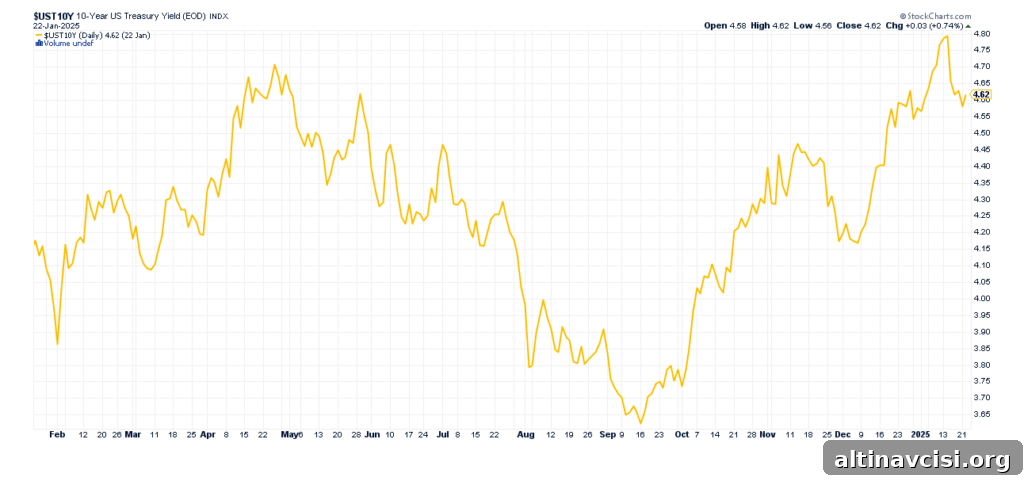
The Treasury’s upcoming $20 billion 10-year TIPS auction is expected to produce a yield near 2.25%, a level not seen since the 2008 financial crisis.
That earlier surge in yields was driven largely by liquidity stress and market dysfunction. Today’s elevated yields reflect different forces: a stronger economy, rising real rates, and concerns about the fiscal trajectory as government borrowing persists.
At the prior 10-year TIPS sale in December, demand appeared softer than usual. Yields came in about seven basis points higher than traders had anticipated, signaling reduced appetite from some investor groups and a market still adjusting to higher rate expectations.
Structural changes in the TIPS market have been considerable since 2008. The market is now roughly three times its previous size and draws support from a broader set of long-term investors, including pension funds and insurance companies. In addition, central-bank policies and clearer communication have altered how shocks are absorbed, while the Federal Reserve’s toolkit and willingness to intervene have evolved, affecting liquidity and pricing dynamics.
Investors preparing for this auction are weighing several competing factors: inflation expectations, the path of real yields, and supply from the Treasury. A larger issuance schedule can push yields higher if demand does not keep pace, while stronger growth or shifting inflation expectations can lift real rates independently of supply dynamics.
Market participants will also watch bid-to-cover ratios and indirect bidder participation as signals of underlying demand. High indirect participation and a healthy bid-to-cover typically indicate robust foreign and dealer interest, while weakness in those metrics can suggest narrower market support and greater sensitivity to changes in yield expectations.
Overall, the approaching auction will provide a fresh data point on the market’s appetite for inflation-protected debt amid a backdrop of elevated yields and evolving fiscal and monetary conditions. How the market absorbs this supply will influence pricing across nominal Treasuries and the broader fixed-income landscape.