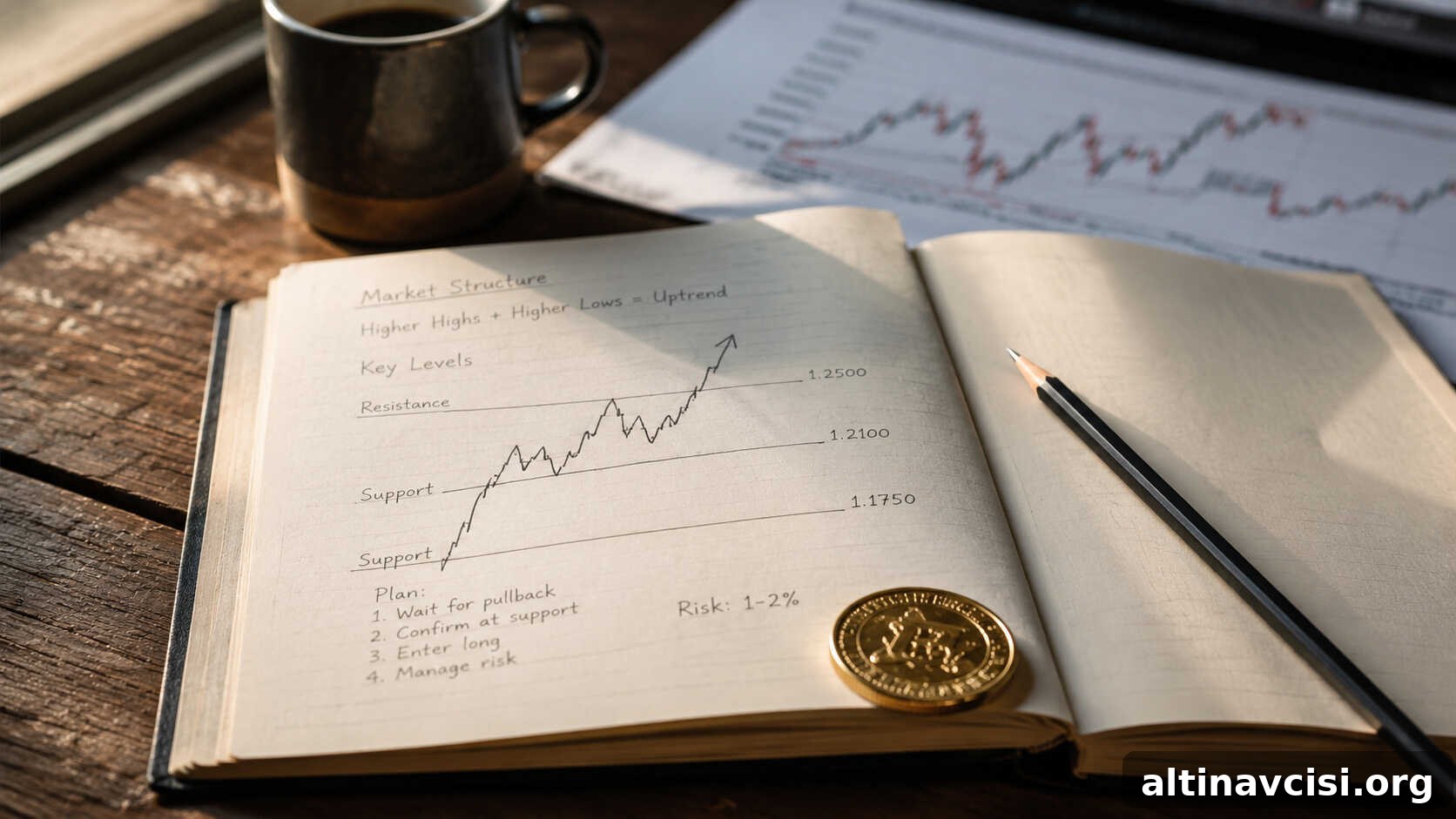
The most useful technical tools for timing gold and silver purchases are support and resistance levels, the 50-day and 200-day moving averages, the Relative Strength Index (RSI), and the gold-silver ratio. When combined, these indicators help long-term investors identify higher-probability buying zones so they can add to their holdings at a discount rather than chasing rallies.
Gold has pulled back about 16% from its all-time high of $5,589.38 set on January 28, 2026. In a confirmed bull market, corrections of this size have often provided buying opportunities rather than reasons to panic. The fundamental drivers—monetary easing, central bank accumulation, and persistent inflation—remain intact. The relevant question for most investors is not whether to own gold and silver, but when to add to positions.
Perfect market timing is impossible, but understanding a handful of technical tools can materially improve long-term results. This guide focuses on practical indicators for physical investors—timeless signals for accumulating metal over years, not short-term trading tactics.
What Are Support and Resistance Levels in Gold and Silver Markets?
Support and resistance form the backbone of technical analysis for gold and silver. Support is a price level where buying consistently overcomes selling, creating a floor and often leading to a bounce. Resistance is the opposite: a level where selling pressure repeatedly caps advances.
For gold, the $4,500 area has acted as a meaningful support zone since the January 2026 pullback. The $4,000 level—breached in October 2025 and since viewed as a deeper structural floor—also carries significance. Round-number zones like these accumulate institutional memory through repeated tests. When price reaches and holds at these levels, it signals that buyers still see value rather than panic selling.
Resistance indicates where rallies may exhaust. If gold approached $5,000–$5,200 after a strong move, that zone could cap further gains before any retest of all-time highs. Buying near support places you closer to recent lows; buying near resistance means paying up for momentum that can reverse. Practical application: pull up a one- or five-year chart, mark repeated bounce and rejection levels, and treat those marked zones as your targets for adding to positions.

Your Gold Buying Guide Most investors overpay when they buy gold and then overpay again when they sell. This guide explains what to own and why.
What Is the Gold-Silver Ratio, and How Can It Sharpen Your Allocation?
The gold-silver ratio shows how many ounces of silver it takes to buy one ounce of gold and is a valuable valuation tool for precious metals. As of May 2026 the ratio was near 59:1, reflecting gold around $4,717 and silver around $80 per ounce.
Since the end of the gold standard in 1971 the ratio has typically averaged between 60:1 and 80:1. Extreme readings provide clear signals: when the ratio rises above 80:1, silver looks cheap relative to gold; when it compresses toward 40:1–50:1, gold becomes the relative bargain. Investors use these extremes to shift allocations and accumulate more total ounces over time.
A practical approach: accumulate silver when the ratio is elevated and rotate toward gold when it compresses. This is not about active trading but about improving long-term accumulation. Across cycles, swapping at ratio extremes can increase the total metal you hold compared with passively holding a fixed split.
How Do Moving Averages Tell You Whether a Dip Is Safe to Buy?
Moving averages filter short-term noise and show the market’s underlying direction. The two most relevant are the 50-day simple moving average (50 SMA) and the 200-day simple moving average (200 SMA).
The 50-day SMA tracks intermediate trend health. In a healthy uptrend, gold often holds above this line on routine pullbacks; a bounce from the 50 SMA typically indicates institutional buyers are active and can be a lower-risk re-entry point.
The 200-day SMA is the long-term trend divider many money managers watch. Gold trading above the 200 SMA signals an intact long-term uptrend. A sustained break below it—not a single bad close but a persistent move—requires reassessment. Pullbacks that hold above the 200 SMA are generally buying opportunities; sustained breaks deserve caution.
The relationship between the two also matters: when the 50 SMA crosses above the 200 SMA (a “Golden Cross”) it’s a commonly watched bullish sign; the opposite (“Death Cross”) is watched for weakness. Neither guarantees outcomes, but both are followed closely by large players and can influence market behavior.
How Does the RSI Help You Avoid Buying Gold at the Wrong Time?
The Relative Strength Index (RSI) measures the speed and magnitude of recent price moves on a 0–100 scale. Readings above 70 are commonly labeled “overbought” and suggest elevated pullback risk; readings below 30 are “oversold” and suggest the potential for a rebound.
Use RSI as a patience tool rather than a strict trigger. An RSI pushing into the mid-70s or higher after a long rally is not an ideal time to add—you’re likely near a short-term peak. Conversely, an RSI dropping toward 30 at a known support level increases the odds in favor of buyers. The highest-conviction setups combine a low RSI (for example, below 35) with tests of established support.
What Are the Biggest Mistakes Investors Make with Technical Analysis for Gold?
Technical tools are probability enhancers, not certainties. Common costly mistakes include:
Treating signals as guarantees. Support can fail, moving averages can break, and RSI can remain oversold in a trending market. Use indicators to tilt odds, not to forecast outcomes.
Ignoring macro context. A break of the 200 SMA means different things depending on the economic backdrop. The chart shows what happened; you still must interpret why and what it implies.
Over-trading physical holdings. Physical bullion has dealer premiums, shipping, and storage costs. Those frictions erode the value of short-term trades. Use technicals to find better accumulation zones rather than to time short-term flips.
Waiting for a perfect entry. Looking for an exact bottom often means missing good buying opportunities. Identify a zone and buy closer to the floor than the ceiling rather than holding out for a pinpoint bottom.
How Do You Build a Gold and Silver Buying System That Actually Works?
Combine two complementary strategies: systematic accumulation through dollar-cost averaging (DCA) and opportunistic additions when technical conditions align.
DCA removes emotion and ensures consistent purchases: allocate a fixed amount on a regular schedule and let the market produce cheaper average costs over time. Overlay technical signals to deploy additional capital when the setup favors buyers—for example, price near support, RSI below 40, and price above the 200 SMA. When the gold-silver ratio signals silver is historically cheap, shift allocation toward silver.
This hybrid approach is neither passive nor speculative. It keeps capital working on a regular basis while reserving the ability to act decisively when higher-probability setups appear. Over decades, entering at technically sound levels rather than emotionally driven highs can significantly increase the total ounces you accumulate.
Gold was trading near $4,717—about 16% below the January 2026 high—so the setup for opportunistic additions is present. Live price charts and alerts are useful tools for identifying where to put your next allocation to work.
Stay On Top of Gold & Silver Prices
Get important market alerts sent straight to your inbox.
People Also Ask
What are the best technical indicators for timing gold and silver purchases?
The most reliable indicators are support and resistance levels, the 50-day and 200-day simple moving averages, and the RSI. Used together, they help identify when metals are near significant floors while momentum is stretched to the downside—conditions that favor new purchases.
What is the gold-silver ratio, and how can it help in timing buys?
The gold-silver ratio divides the gold price by the silver price to show how many ounces of silver equal one ounce of gold. Historically averaging between 60:1 and 80:1 since 1971, readings above 80:1 have signaled silver is relatively cheap; compression toward 40:1–50:1 has favored gold. Stackers use extreme readings to rotate allocations and increase total ounces held over cycles.
How can I use moving averages and RSI to analyze gold and silver trends?
Use the 50-day SMA to assess short- to intermediate-term trend health and the 200-day SMA to confirm the long-term trend. Use RSI as a patience tool: readings below 30–35 at key support increase the odds of a bounce, while readings above 70 suggest overbought conditions and higher pullback risk.
What are the common mistakes to avoid when using technical analysis for gold and silver?
Avoid treating signals as certainties, ignoring macro context, and attempting to trade physical bullion on short-term signals where premiums and friction erase edges. Also avoid waiting for a perfect entry—identify a reasonable zone and act rather than holding out for an elusive bottom.
Is dollar-cost averaging better than using technical analysis to time gold purchases?
They work best together. DCA builds a base position and removes emotion; technical analysis provides an opportunistic overlay to deploy extra capital when charts present higher-probability setups. Combining both typically outperforms relying solely on one method.
You’ve Done the Reading. Now Put It to Work.
Reading about technical analysis won’t move the needle unless you have a funded account, price alerts, and a clear action plan. These tools are most useful when you are already positioned to act—support tests and oversold signals don’t wait for you to get organized.
Serious stackers prepare in advance: set up accounts, create alerts, and define the conditions under which you will add. That way, when a high-probability setup appears, you act rather than scramble.
Disclaimer: This article is for informational and educational purposes only and does not constitute investment advice. Consult a qualified financial adviser before making investment decisions.
SOURCES
1. Fortune — Current Price of Gold: May 11, 2026
2. Trading Economics — Silver Price Chart & Historical Data
3. Investopedia — The Gold-Silver Ratio: Understanding and Trading It
4. Investing News Network — What Was the Highest Gold Price Ever?
5. CBS News — What Is the Highest Gold Price in History?
6. Investopedia — Relative Strength Index (RSI)
7. Investopedia — Moving Averages
You may also like:
- Silver Jewelry or Bullion? A Buyer’s Guide to the Real Difference
- Gold and Oil Move Opposite Ways. Here’s Why That Matters
- 7 Timeless Warren Buffett Rules for Gold & Silver Investors
- Gold vs. Bitcoin: Which Hard Asset Will Protect Your Wealth?
- Why Central Banks Sell Gold — And What It Means for Prices
- Why Gold Deserves a Permanent Spot in Your Portfolio
- Silver vs. Gold: A Clear 5-Year Investment Guide (2026–2031)
- $5,500 Gold by Q1 2027? The Central Bank Risk Driving It