Silver Shortage Looms as Solar and EV Demand Soars
Key takeaways:
- Industrial use drives roughly 56% of annual silver consumption — solar PV alone accounts for about 19% of total demand and 34% of industrial demand.
- Solar PV silver demand expanded roughly 12-fold over the past decade.
- Electric vehicles contain approximately 25–50 g of silver each, about twice the silver in a combustion vehicle.
- The Silver Institute recorded a structural supply deficit for four consecutive years through 2024.
- About 70% of silver supply is recovered as a byproduct of other metal mining and cannot be easily expanded to meet rising silver demand.
- When industrial growth and monetary demand run together, silver tends to outperform gold.
Many people first think of silver as a monetary metal similar to gold — a hedge when trust in central banks wanes. That is part of the story, but monetary factors explain only about 40% of silver’s price dynamics. The remaining 60% is driven by industrial demand: factories, energy infrastructure, solar farms, electronics, and the roughly 17.6 million electric vehicles delivered in 2024 (BloombergNEF, Electric Vehicle Outlook 2025).
Silver is the most electrically conductive element on the periodic table. That unique property makes it indispensable in many modern technologies and is fueling a structural shift in demand that gold does not experience. Understanding silver’s industrial role clarifies why its price behavior can differ markedly from gold.
This article explains the two distinct demand engines powering silver and why industrial consumption has become a central driver of silver’s long-term outlook.

Your Gold Buying Guide Most investors overpay when they buy gold and again when they sell. This guide explains what to own — and why.
Enter your email on the site to receive the guide.
The Two Engines Inside Every Ounce of Silver
Silver demand is driven by two largely independent engines: monetary demand and industrial demand. Together they determine price behavior and volatility.
The monetary engine responds to the same macro forces that move gold: real interest rates, inflation expectations, currency weakness, and central bank policy. When monetary accommodation increases and real yields fall, precious metals often look more attractive as stores of value.
The industrial engine follows manufacturing output, energy and infrastructure investment, electronics, and technologies such as solar PV and electric vehicles. This engine has accelerated over the past decade and now represents the majority of silver demand.
Industrial applications consumed approximately 680 million troy ounces in 2024, representing about 56% of total global silver demand of roughly 1,219 million troy ounces (Silver Institute, World Silver Survey 2025). More than half of annual silver production is used in products and infrastructure that permanently consume the metal.
Electrical & Electronics Lead — Solar PV Is Closing Fast
Silver industrial demand by category, 2024 — million troy ounces (total: 680 Moz)
- Electrical & Electronics: 280 Moz
- Solar PV: 232 Moz
- Other Industrial: 105 Moz
- Brazing Alloys & Solders: 63 Moz
Source: Silver Institute, World Silver Survey 2025 | GoldSilver
How Much Silver Does a Solar Panel Actually Use?
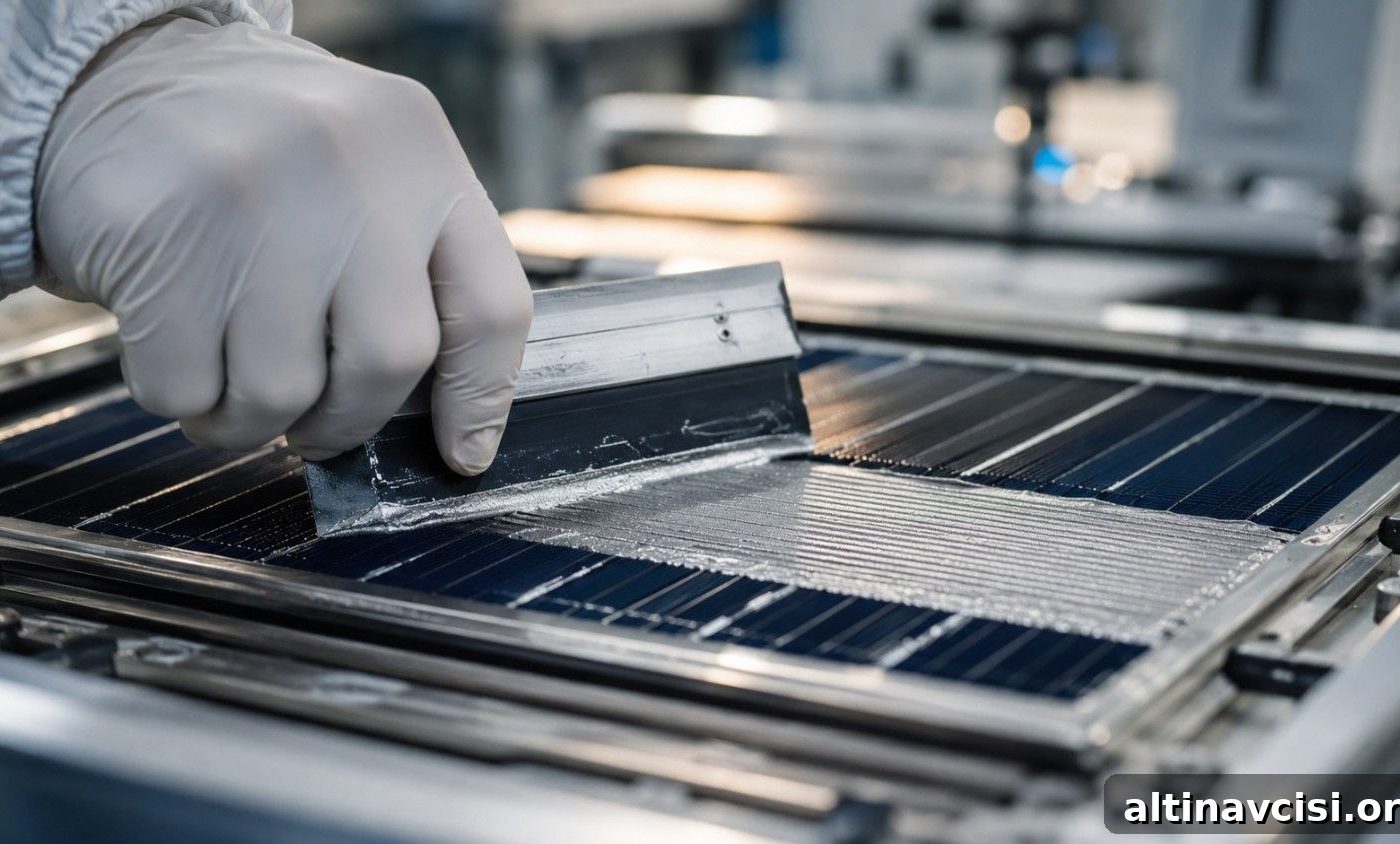
Solar photovoltaic (PV) manufacturing is now the fastest-growing end-market for silver. Silver paste forms the conductive fingers on silicon solar cells — the metallic lines visible on a panel’s surface. While manufacturers have reduced silver per cell through a process called “thrifting,” deployment of panels has far outpaced those efficiency gains.
In 2024, solar PV consumed about 232 million troy ounces of silver, roughly 19% of total silver demand and 34% of industrial demand (Silver Institute, World Silver Survey 2025). A decade ago solar’s share was a small fraction of today’s consumption. Global new capacity additions reached a record 593 GW in 2024 (IEA, Renewables 2024), up sharply from roughly 75 GW in 2016.
Solar silver demand rose approximately 12-fold over the past decade. Even as thrifting continues, absolute silver consumption by solar installations has climbed as cumulative global capacity grows. Emerging cell technologies such as heterojunction (HJT) can require two to three times more silver than older PERC cells, so per-gigawatt silver intensity could rise before longer-term optimization reduces it.
How Much Silver Does an Electric Vehicle Actually Use?
While batteries rely on lithium, cobalt, and nickel, silver is pervasive across a vehicle’s electrical architecture: relays, switches, fuses, connectors, membrane switches, and charging systems all use silver due to its superior conductivity.
A conventional internal-combustion vehicle typically contains roughly 15 to 28 grams of silver. A battery electric vehicle uses higher-voltage electrical systems and more complex power electronics, raising silver content to approximately 25 to 50 grams per vehicle, or roughly double that of a combustion vehicle (Silver Institute, World Silver Survey 2025).
Global EV deliveries reached 17.6 million units in 2024 and are forecast to continue rising in the second half of the decade (BloombergNEF, Electric Vehicle Outlook 2025). Total automotive silver demand across both combustion and electric vehicles reached about 72 million troy ounces in 2024 and will grow as EV penetration increases.
These trends are interconnected: solar deployment, grid upgrades, and EV charging infrastructure all require electrical components that consume silver. Electrification of transport and energy systems tends to accelerate overall silver demand.
How Does Silver Industrial Demand Move Price?
Industrial consumption permanently removes silver from available supply. Unlike gold, which is largely stored and tradable, much of the silver used in technology and infrastructure is not economically recoverable. That creates a durable element of demand that supports price floors over time.
In 2024, mine production totaled about 844 million troy ounces, while total demand reached approximately 1,219 million troy ounces. The resulting shortfall of roughly 195 million troy ounces marked the fourth consecutive annual deficit (Silver Institute, World Silver Survey 2025). That deficit has been offset by drawing on above-ground stockpiles, which are finite and declining.
Sustained deficits and structural growth in industrial consumption are critical dynamics that can tighten available supply and influence medium- to long-term price direction.
What Happens When Both Demand Engines Run at Once?
When industrial demand is strong and monetary conditions favor precious metals concurrently, silver typically outperforms gold. The gold/silver ratio tends to compress during those periods as industrial buyers add to physical demand while investors seek monetary hedges.
Conversely, if industrial demand softens while monetary drivers remain supportive, silver can lag gold. That dual-driver structure increases silver’s volatility, but it also creates meaningful upside when both engines accelerate together.
Stay On Top of Gold & Silver Prices
Get important market alerts sent straight to your inbox.
Sign up on the site to receive timely market notifications.
People Also Ask
Is silver a good investment because of industrial demand?
Industrial demand gives silver a structural floor that gold does not have. More than half of annual silver consumption is tied to manufacturing, electronics, energy infrastructure, and renewable deployment — demand that is often independent of investor sentiment. That structural demand does not guarantee gains, but it provides a persistent base of consumption beneath price.
What percentage of silver is used in solar panels?
Solar PV accounted for approximately 19% of total silver demand in 2024, roughly 232 million troy ounces. It is the fastest-growing industrial end-use and represented about 34% of industrial silver consumption that year.
Will silver run out due to industrial demand?
Silver is not expected to run out imminently, but the market has been running persistent deficits. The Silver Institute documented a shortfall of roughly 195 million troy ounces in 2024, the fourth straight annual deficit. That deficit is being covered by above-ground stocks, which are finite; the timeline for depletion depends on demand growth and the pace of new supply.
How much silver is in an electric vehicle?
A battery electric vehicle typically uses about 25 to 50 grams of silver across its electrical components, roughly double the amount used in a conventional combustion vehicle (15–28 grams).
Why can’t silver miners just produce more to meet demand?
Approximately 70% of global silver is produced as a byproduct of mining other metals such as copper, zinc, and lead. Production decisions are driven primarily by the economics of those host metals rather than silver prices alone. That makes rapid scaling of primary silver supply difficult; increases in silver output typically follow expansions in the host-metal industries.
What Does This Mean for Silver’s Long-Term Price?
Short-term price movements are unpredictable. No one can say with certainty where silver will trade over the next twelve months. But the industrial-demand picture provides structural context that is not speculative: technology adoption curves, renewable energy deployment, and electrification are driving durable consumption growth. Mining supply is constrained by the economics of other metals, which has contributed to multi-year deficits.
Silver’s monetary role—store of value, hedge against currency debasement, and a complement to gold—sits on top of that industrial base. When both industrial and monetary demand strengthen together, silver has historically produced outsized returns relative to gold. That outcome is a function of market structure, not a guaranteed prediction.
For investors who prioritize physical exposure, owning metal rather than leveraged or synthetic claims is one way to align with the structural demand story. Consider custody, purity, and storage when evaluating physical options.
SOURCES
1. Silver Institute — World Silver Survey 2025
2. BloombergNEF — Electric Vehicle Outlook 2025
3. IEA — Renewables 2024
Disclaimer: This article is for informational and educational purposes only and does not constitute investment advice. Consult a qualified financial adviser before making investment decisions.
You may also like:
- Bank of America’s $6,000 Gold Forecast Isn’t a Price Call. It’s a System Call.
- Silver IRA Complete Guide: Rules, Limits, and Custodians Explained
- Silver’s Tesla Moment: The Solid-State Battery Thesis
- Physical Gold vs. Digital Gold: Which Is the Ultimate Safe Haven?
- BRICS Is Hoarding Gold. Here’s What It Means for Your Portfolio.
- Gold to Oil Ratio: The Ultimate Guide for Economic & Portfolio Analysis
- Dollar-Cost Averaging Into Gold and Silver: The Investor’s Practical Guide
- The Silver-to-Dow Ratio: How to Spot the Shift from Paper to Physical
Popular Topics
Picked from the archive
-
01
 Topics
Gold Prices Near Record as Tariffs Return
-
02
Topics
Inflation Under Trump: Fact Check on Price Changes
-
03
Topics
How Gold Is Changing Wall Street’s 60/40 Portfolio
-
04
Topics
Tech Giants Drive 90% of Earnings Growth Despite Trade War Fears
-
05
Topics
Gold and Silver Rally Amid Market Volatility
-
06
Topics
Why Gold Prices Held Steady After Iran Peace News
-
07
Topics
Gold Price Volatility Back to COVID-Era Levels
-
08
Topics
Wholesale Prices Jump Most in 3 Years as Tariffs Hurt US Economy