Should You Invest in Gold in 2026: Bars, Coins, IRAs or ETFs?
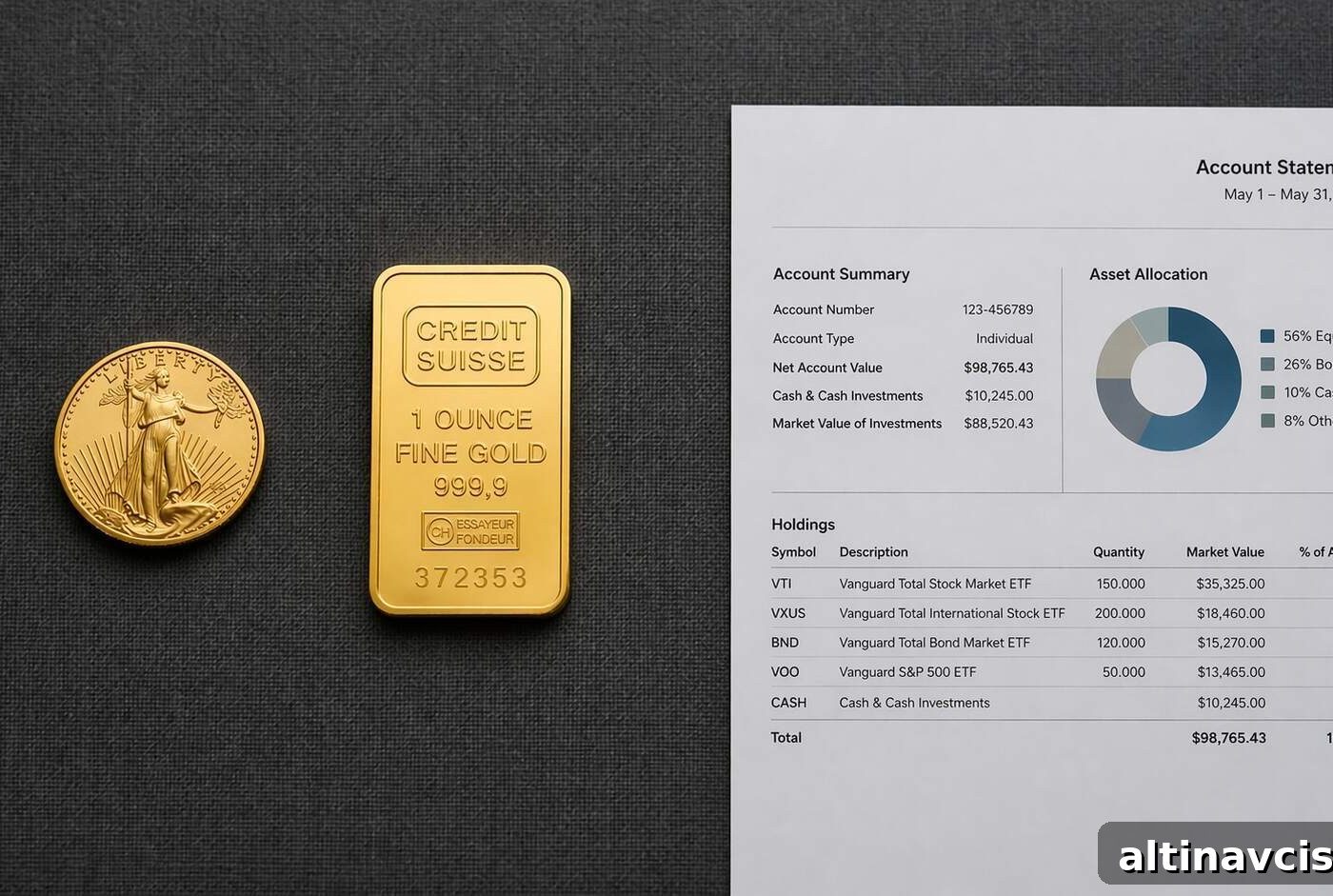
The best gold investment in 2026 depends on your goals. Physical bars deliver the lowest ongoing costs and eliminate counterparty risk, making them ideal for long-term capital preservation. Coins offer greater liquidity and ease of sale at a modest premium. A gold IRA places physical metal inside a tax-advantaged retirement account. ETFs provide instant exposure without storage but impose annual fees and do not confer direct ownership of the metal. The most resilient strategies often combine formats — a physical core for direct ownership together with a tax-advantaged IRA for retirement planning.
What is the best way to invest in gold in 2026?
Selecting the best gold investment in 2026 comes down to three considerations: your investment horizon, how important physical ownership is to you, and whether tax-advantaged treatment matters. No single format excels on all fronts. Bars and coins provide direct, tangible ownership with no intermediary. ETFs grant low-friction access through a brokerage account. A gold IRA bridges physical ownership and retirement-account tax benefits. The practical differences — premiums, storage costs, fees, liquidity, and tax treatment — are where most investors win or lose over time.
Your Gold Buying Guide Many investors overpay when they buy gold and again when they sell. This guide explains what to own and why.
Download the concise guide to buying gold wisely — covers bars, coins, ETFs, and IRAs.
Are gold bars the cheapest way to buy gold?
Yes—gold bars are generally the most cost-efficient method to acquire physical gold. Accredited refiners typically sell bars at premiums around 1–3% above spot price, which is lower than most other physical formats. You pay this one-time premium, then hold an asset with no ongoing management fees. That makes bars especially attractive for long-term buy-and-hold investors focused on capital efficiency.
The downside is flexibility. Bars require secure storage and insurance, and selling can involve logistics and minimum sale sizes. Larger bars lower the premium per ounce but reduce divisibility: you can’t easily sell a fraction of a kilo bar the way you can sell a smaller coin. Bars meet the purity standards required for many retirement account programs, which adds versatility for investors who want physical metal inside an IRA.
Are gold coins better than gold bars for most investors?
Coins typically carry higher premiums—often 3–8% over spot—but that premium buys liquidity and recognisability. Government-minted bullion coins are widely recognised around the world, which makes them easier to sell and simplifies authentication. Fractional coins (1/2 oz, 1/4 oz, 1/10 oz) let investors dollar-cost average in smaller increments, though premiums increase as size decreases.
Some coins have additional advantages under specific tax or retirement rules, making them more flexible in certain structures. For many individual investors, a core holding of 1-oz coins from reputable mints offers a practical balance of liquidity, recognisability, and preservation of value.
Gold ETFs: low friction, but what’s the real long-term cost?
ETFs are the simplest way to add gold exposure to a portfolio. They trade like stocks, require no personal storage, and allow fast entry and exit. Major physically-backed funds store allocated bullion in institutional vaults and charge annual expense ratios—typically a fraction of a percent. Those fees may seem modest, but they compound: over a decade an ETF’s expense ratio can erode a noticeable share of returns.
Additionally, many physically-backed gold ETFs are structured as grantor trusts and can be taxed at collectible rates on gains, similar to physical gold. For tactical exposure or short-term allocation inside a taxable brokerage account, ETFs are extremely convenient. For long-term wealth preservation, however, the cumulative drag of fees and the lack of direct ownership often tip the balance back toward physical metal.
How does a gold IRA work — and is it worth the complexity?
A gold IRA is a self-directed retirement account that holds IRS-approved physical gold rather than—or alongside—traditional securities. It combines the defensive properties of tangible metal with the tax treatment of an IRA. Rules require that metal meet minimum purity standards and be stored with an approved third-party custodian; home storage is not permitted for IRA-held metal.
Custodial, storage, and setup fees typically range from moderate to material depending on account size, which makes small accounts less efficient. However, for investors seeking tax-deferred or tax-free compounding of precious metals over decades, a gold IRA can be an effective tool—especially when structured as a Roth IRA where qualified distributions are tax-free.
Which gold investment format is right for you?
Your choice should reflect your priorities:
- Maximum purchasing-power protection with minimal ongoing costs: Physical bars or coins stored securely. One-time premiums are your primary expense.
- Tax-efficient retirement savings: A gold IRA—consider a Roth structure for tax-free growth if you qualify.
- Instant exposure without storage friction: ETFs—choose lower-cost funds if you plan to hold long term; use ETFs for tactical allocation or ease of trading.
- Flexibility to start small and scale: Coins, especially 1-oz bullion coins, are widely recognisable and easy to trade in small increments.
Most experienced investors blend formats: a physical core for direct ownership plus a tax-advantaged IRA for retirement compounding. This approach captures the benefits of both direct control and tax efficiency while managing liquidity needs.
Stay On Top of Gold & Silver Prices
Get market alerts and price updates delivered to your inbox.
Sign up for timely market alerts and concise analysis on gold and silver.
People also ask
Is gold a good investment in 2026?
Gold has shown strong performance over the last year, supported by central bank buying, inflation concerns, and geopolitical uncertainty. For long-term investors concerned about monetary and fiscal risk, gold remains a credible hedge and portfolio diversifier.
What is the safest way to invest in gold?
Owning physical gold—bars or coins—stored securely and fully owned outright is the safest way to avoid counterparty exposure. Funds, custodial accounts, and brokerages introduce institutional layers that carry some degree of operational or credit risk.
Are gold coins better than gold bars?
Coins cost more per ounce but are easier to sell and more recognisable. Bars offer lower premiums and better per-ounce cost but less divisibility. For most retail investors, a core mix of coins and a few bars often provides the best balance of liquidity and cost efficiency.
Can I hold physical gold in an IRA?
Yes. A self-directed IRA can hold IRS-approved physical gold through an approved custodian and depository. Home storage for IRA metal is not permitted and can trigger tax consequences.
What is the minimum investment for a gold IRA?
Custodians often require minimum initial balances that make fees economical—commonly in the low five-figure range—though the IRS sets annual contribution limits for IRAs. Check custodian requirements before opening an account.
Format first: the gold decision that actually determines your returns
Deciding to own gold is the first step. Choosing the format—bars, coins, ETFs, or an IRA—determines how much of gold’s upside you retain after fees, taxes, and sale friction. Physical ownership removes annual fee drag. A gold IRA adds a tax wrapper at the cost of custodian and storage fees. ETFs are convenient but can become costly over long periods. Match the format to your timeline, liquidity needs, and preference for direct ownership.
Focus on the combination of cost, security, liquidity, and tax treatment that fits your goals rather than pursuing the single cheapest or most popular option.
SOURCES
Trading Economics — gold price and year-over-year performance data; J.P. Morgan Global Research — 2026 gold price forecasts and demand commentary; industry pricing data on bar and coin premiums; issuer materials for expense ratios and IRA rules; IRS guidance on retirement accounts and taxation.
Disclaimer: This article is for informational and educational purposes only. It does not constitute investment advice. Consult a qualified financial adviser before making investment decisions.
You may also like:
- What Happens to Gold When the Dollar Crashes?
- Gold Fell During a War. So Is It Really a Safe Haven?
- Is Gold at Fair Value? What Three Models Say — and Where They Disagree
- Silver Price Predictions for the Next 5 Years: Data-Backed Scenarios
- Tariff Refunds, Dollar Weakness, the AI Bust: Gold’s Case
- How to Buy Gold for Beginners: Step-by-Step Guide (2026)
- Silver Price Forecast 2026-2027: The Bull Case and Bear Case
- How to Buy Silver Bars: The Investor’s Guide
- Why Silver Falls While Gold Rises: What It Means for You
Popular Topics
Picked from the archive
-
01
 Topics
Gold Pauses at $3,357 After Rally as Bulls Target $3,500
-
02
Topics
Gold Rises Amid Fed Uncertainty, Weak Jobs and Crypto Turmoil
-
03
Topics
Powell’s Jackson Hole Speech Could Tip the Stock Rally
-
04
Topics
US-EU Deal Sets 15% Tariffs; China Truce to Continue
-
05
Topics
Gold vs. Stocks 2026: Q1 Returns Investors Need to Know
-
06
Topics
Powell Signals Fed Rate Cut in September as Jobs Weaken
-
07
Topics
Why Gold Hit $5,100: What’s Driving the Rally Next
-
08
Topics
Gold Prices Hold as Fed Faces Tough Interest Rate Decision