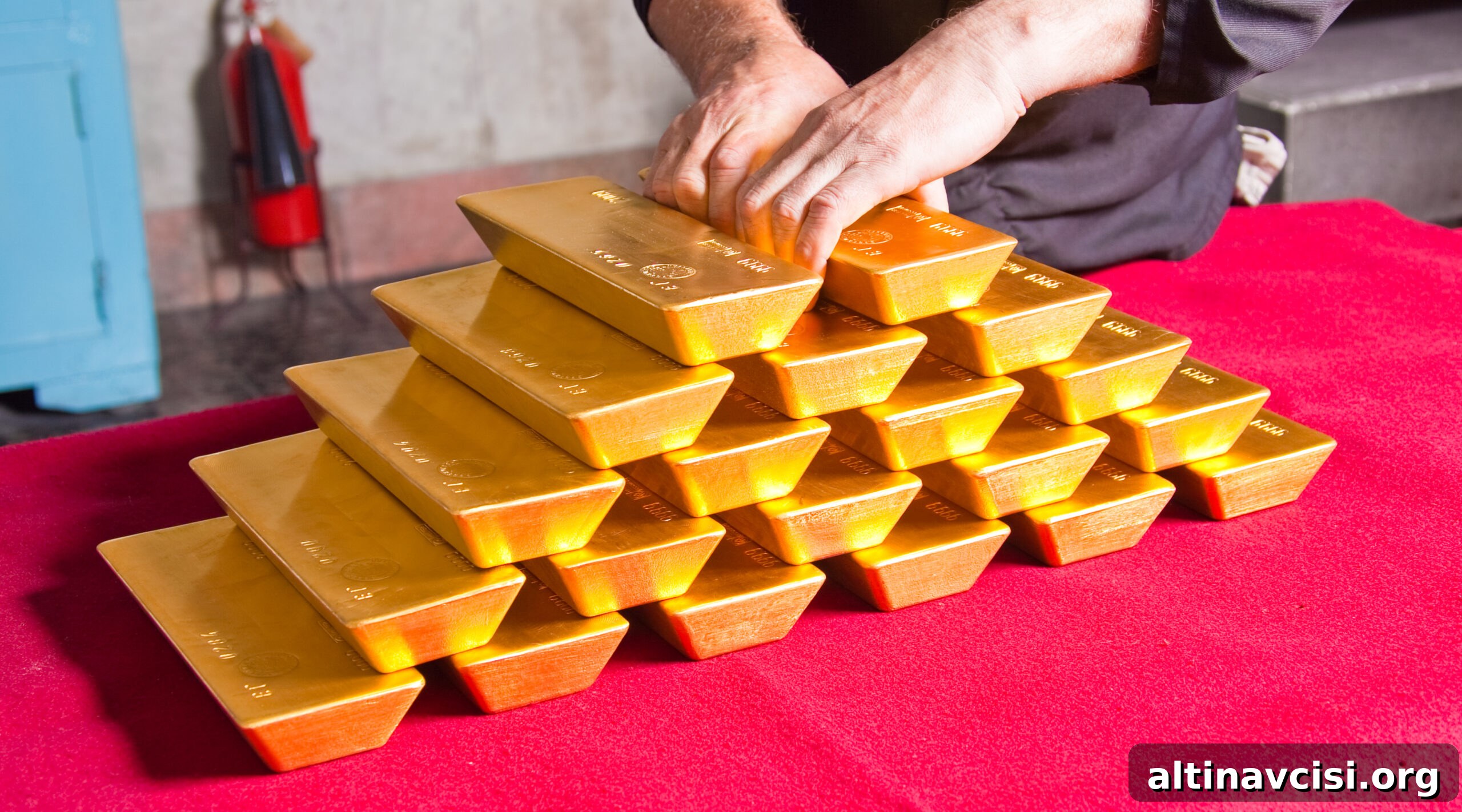
Russia’s strategic gold investments have proven resilient in the face of international sanctions. Since early 2022, the market value of the country’s gold reserves has risen by 72%, bringing their worth to roughly $229 billion. That increase has helped offset nearly one-third of the $322 billion in foreign assets that Western governments froze after Russia’s 2022 invasion of Ukraine.
The foundation for this strategy was laid after the 2014 annexation of Crimea, when Russia acquired about 40 million ounces of gold while global prices were relatively low. Those purchases strengthened the central bank’s holdings and reduced reliance on dollar- and euro-denominated assets that later became subject to sanctions.
Today, Russia is one of the top five central bank holders of gold worldwide. Unlike its dollar and euro reserves, which have been immobilized by Western measures, Russia’s gold and yuan assets remain accessible. It’s important to note, however, that gold is generally less liquid than traditional reserve currencies; converting large quantities into cash can be more complex and may move markets.
At the same time, global demand for gold is elevated, which could improve market liquidity and make transactions easier if Moscow decided to sell reserves to meet financial needs. Even so, selling substantial amounts quickly could still affect prices and attract scrutiny from other countries and market participants. Russia’s gold accumulation thus functions both as a financial insurance policy and as a tool to diversify away from assets vulnerable to geopolitical pressure.
Overall, the deliberate expansion of gold holdings has given Russia a tangible buffer against some of the economic consequences of sanctions. While not a perfect substitute for frozen foreign currency reserves, the strengthened gold position enhances monetary flexibility and provides a store of value that is recognized globally.